


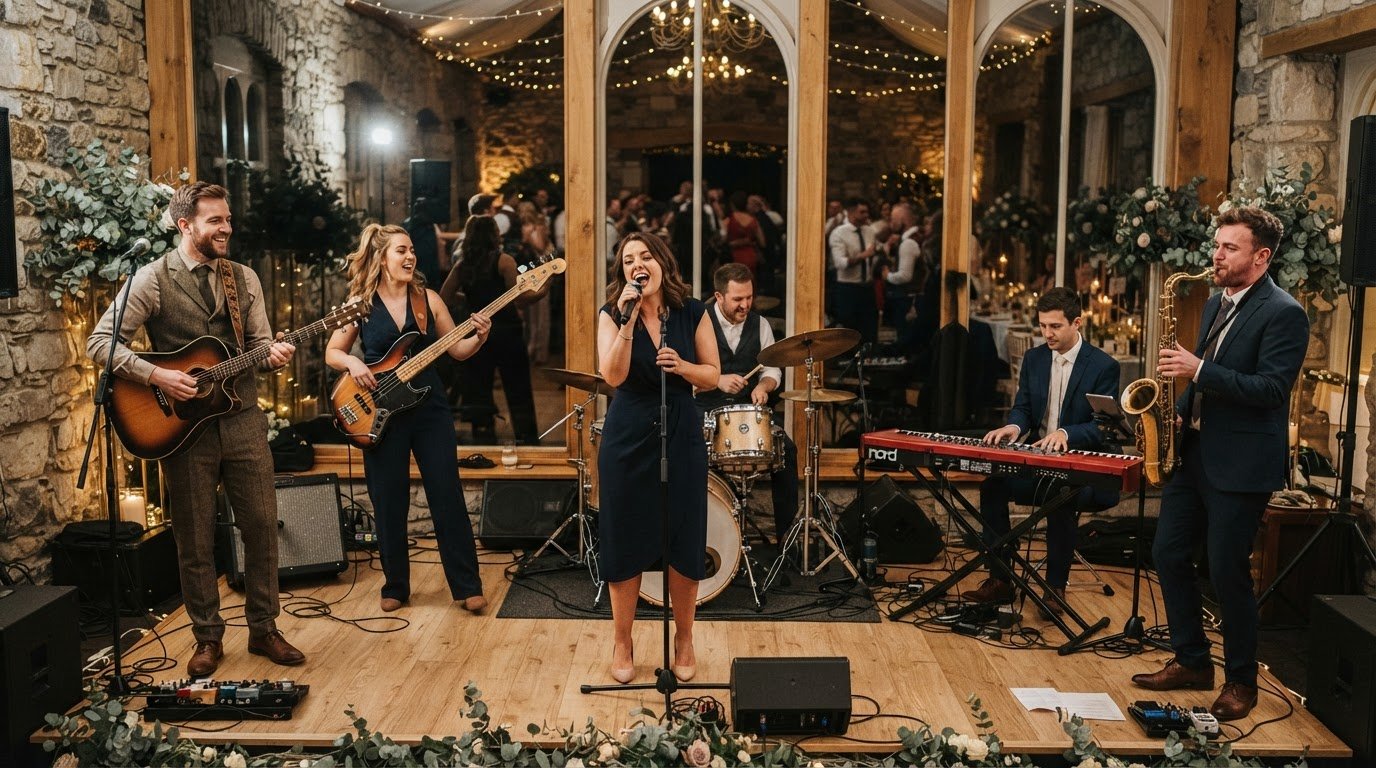
01 Oct What Instruments Are in a Typical Wedding Band? A Clear Guide
A bigger band doesn’t automatically mean a bigger sound. So, what instruments are in a typical wedding band, and what does each one bring to the party? The answer depends on the musicians and the music, but vocals, rhythm and harmony are the essentials that help turn familiar songs into live, dance-floor-ready performances.
If band descriptions leave you unsure what each instrument adds, or whether a smaller line-up can still sound full, you’re not alone. There’s no single line-up that suits every celebration. A trio can be a deliberate musical choice, not a compromise. Surefire Trio, for example, features Roy on vocals, Alan on drums and Adam on guitar.
This guide explains what singers, drums, guitars, bass, keyboards and optional instruments such as saxophone can add. You’ll compare common line-ups, learn how their parts shape a song, and get practical questions to ask when choosing live music for your wedding in Ireland. Use your favourite songs and the atmosphere you want as your starting point.
Key Takeaways
- Learn what instruments are in a typical wedding band, and how vocals, rhythm and harmony work together.
- Discover why arrangement and playing dynamics can make a smaller line-up sound lively and complete.
- Compare small, mid-sized and larger bands by the sound they create, not by a simple ranking.
- Use your favourite songs and musical priorities to guide your choice, then ask how the band performs the tracks that matter to you.
- See how a vocal, guitar and drums trio can shape a wedding set with a distinct sound of its own.
Wedding Band Instruments and Their Roles
There’s no fixed line-up for a wedding band. Vocals and rhythm instruments often shape the sound, but the musicians and songs influence which instruments take the stage. If you’re asking what instruments are in a typical wedding band, think of a flexible combination rather than a standard template.
The rhythm section gives music its pulse and rhythmic foundation. Drums usually mark the beat, while guitar or bass can help lock in the groove. That’s different from carrying the melody, the tune you’re most likely to sing or hum. These roles can overlap, but each helps a song move and feel complete.
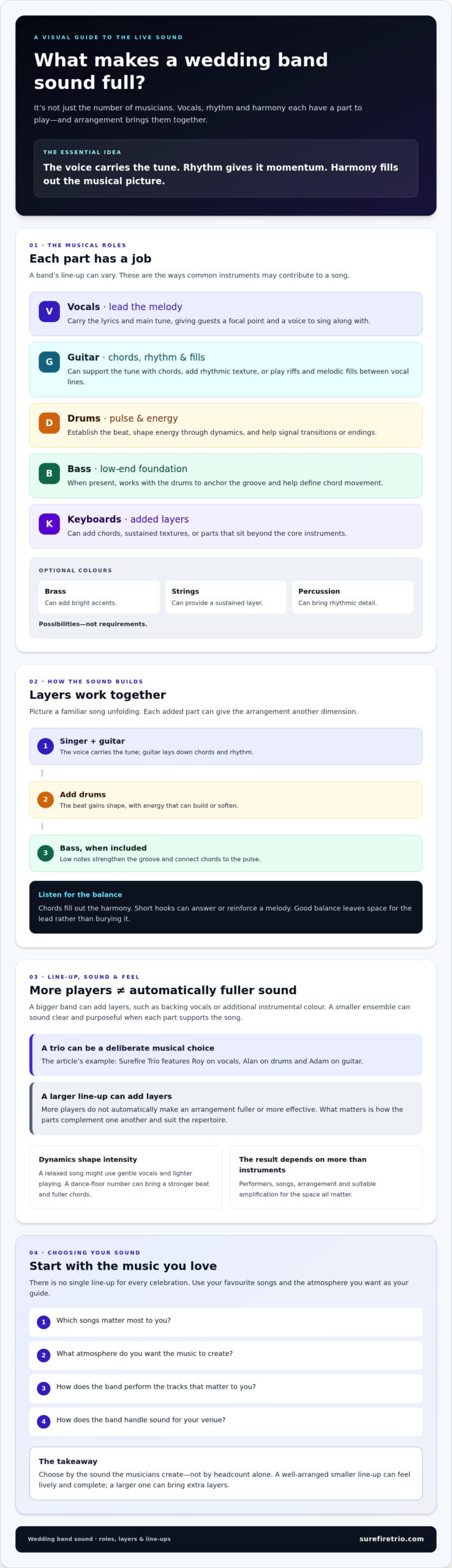
Vocals, rhythm and harmony combine to make a wedding band sound like a band: the voice carries the tune, rhythm gives it momentum, and harmony fills out the musical picture.
Vocals, guitar, and drums: the familiar core
A lead vocalist carries the lyrics and main melody, giving guests a focal point and a voice to sing along with. Guitar can support the tune with chords, add rhythmic texture or play riffs and melodic fills between vocal lines. Drums establish the pulse, shape energy through changes in dynamics, and help signal transitions or endings. Together, these instruments can take a song from a gentle moment to a lively dance-floor sound.
Bass, keyboards, and other instruments you may hear
Bass connects rhythm and harmony. Its notes work with the drums to anchor the groove and help define chord movement. Keyboards can add chords, sustained textures or parts that sit beyond the core instruments. Their contribution depends on the arrangement and performer, just as a band’s line-up depends on its repertoire.
Some ensembles also include brass, strings or percussion. A horn part can add bright accents, strings can provide a sustained layer, and extra percussion can bring rhythmic detail. These are possibilities, not requirements. For broader context, Wikipedia outlines common band lineups, including trios and four-piece groups. The useful question is how a particular combination serves the songs you want to hear, not whether it matches a supposed industry standard.
How Wedding Band Instruments Create a Full Sound
Picture a familiar song starting with a singer and guitar. The voice carries the tune while the guitar lays down chords and rhythm. Add drums, and the beat gains shape. If the line-up includes bass, its low notes strengthen the groove and connect the chords to the pulse. Each part has a job, and the arrangement determines how those jobs fit together.
In a live arrangement, drums and bass, when present, establish the pulse and low-end foundation. Chordal instruments provide harmony, while vocals or instrumental leads carry the melody. Guitar or keyboards might also play a short hook between vocal lines, answering or reinforcing the melody rather than competing with it.
Who carries the beat, chords, and melody?
Listen for the layers. Drums mark the beat and can build or soften the energy; bass gives the rhythm a grounded low end. Guitar or keyboards fill out the chords, while a riff or short instrumental phrase can give the song a lift. The singer usually leads the melody, but instruments can echo a vocal phrase or take the spotlight briefly. The University of Denver’s music school lists a range of instruments available for professional instrument training, reflecting how varied the parts in an ensemble can be.
Why arrangements matter more than a headcount
A small ensemble can sound clear and purposeful when each part supports the song. A larger group can add layers, such as backing vocals or additional instrumental colour, but more players don’t automatically make an arrangement fuller or more effective. Listen for whether the parts leave space for the lead, complement one another and suit the repertoire.
Players can also shape intensity through dynamics. A relaxed song might use gentle vocals and lighter playing, while a dance-floor number can bring a stronger beat and fuller chords. Good balance helps the music feel lively without burying the melody. The result also depends on the performers, the songs and suitable amplification for the space. Ask how the band handles sound for your venue rather than assuming a particular line-up guarantees a certain result.
For a different musical mood earlier in the day, explore this guide to drinks reception music. If you’re comparing live music with a DJ option, you can explore Surefire Trio’s Band & DJ Package as one option for your celebration.
Small trio or larger line-up: what changes in the wedding-band sound?
A bigger line-up can add musical layers, but it isn’t automatically the better choice. The right fit depends on your favourite songs, the band’s arrangements and the performers’ strengths. When weighing up what instruments are in a typical wedding band, compare what each set-up can contribute, not just how many people are onstage.
| Line-up option | Typical roles and sound | What to confirm |
|---|---|---|
| Small trio | Vocals and a compact instrumental foundation, with a focused, direct sound. | How the band arranges your preferred songs and handles styles that feature extra parts. |
| Mid-sized group | Core vocals and rhythm, with room for added harmony or instrumental layers. | Which performers and instruments are included, and how they shape the repertoire. |
| Larger group | More potential layers, such as backing vocals, keyboards, bass or brass. | Whether those additions suit your songs, venue and desired atmosphere. |
These are options, not quality rankings. The Eastman School of Music Guide to Ensembles offers broader context on how different ensembles bring instruments together. For a wedding band, the same principle applies: the combination matters, as do the music and the way it’s arranged.
What can a trio cover effectively?
Vocals, guitar and drums can provide a focused live-band foundation: the singer leads the song, guitar supports its chords and musical hooks, and drums drive the pulse. Surefire Trio is one example of this configuration, with Roy on vocals, Adam on guitar and Alan on drums. It’s a deliberate line-up, not a compromise by definition. Arrangements vary, so ask how the band approaches songs with parts beyond its instruments rather than assuming every track will sound identical to the original.
What additional instruments can bring
Start with the genres and tracks you want to hear. Then ask how the band’s actual line-up performs them, which parts it adapts and what any additional instruments contribute. That gives you a clearer idea of the sound you’ll hear than performer count alone.
How to choose wedding-band instruments for your music and celebration
Start with the listening experience you want, not a checklist of instruments. Knowing what instruments are in a typical wedding band is useful, but your favourite songs, the energy you’re after and the shape of the day will help you decide which line-up feels right.
- List your genres and priority songs. Pick a few styles you love, such as pop, rock, soul or country, and note the tracks you’d be excited to hear live. For ideas, browse this guide to ultimate wedding party songs.
- Decide what you want the sound to do. Are you after a strong dance beat, close vocal harmonies, guitar-led energy or a more layered arrangement? These priorities help you compare line-ups by sound, not headcount.
- Think about the setting. Discuss the venue layout, audience mix and atmosphere you’re hoping to create with the band. These details help frame the conversation, but the band should confirm what suits your event.
- Ask about the songs themselves. Share your priority tracks and ask how the band’s actual line-up performs them. Find out which parts are adapted, what the arrangement emphasises and whether a particular instrument or harmony is central to the sound you want.
Match instruments to the songs you love
Different genres can spotlight different musical details. Rock may call for a prominent guitar sound and driving drums; soul can lean on expressive vocals and a strong groove; pop may depend on crisp hooks and layered textures. These are listening cues, not rules. Ask how the band’s arrangement captures the feel of your chosen songs and what changes from the recorded version.
Ask how the line-up fits each part of the day
Reception dancing often calls for a different atmosphere from a ceremony or drinks reception. Consider each moment separately and ask what musical format and repertoire are available. Ceremony music might centre on a meaningful vocal performance, while a drinks reception may suit a lighter, more conversational sound. If you’re exploring ceremony options, see these wedding ceremony performance ideas.
Confirm the repertoire, timings and performance format directly with the band, including whether separate musical options are available for different parts of the day. Discuss your songs and line-up preferences with Surefire Trio as you shape the music for your celebration.
How Surefire Trio’s instruments bring a wedding set to life
Instrument roles are easier to picture when you connect them to a real line-up. Surefire Trio features Roy on vocals, Alan on drums and Adam on guitar. It’s an example of how a trio can bring together voice, rhythmic drive and guitar parts to shape a live set, without needing every possible instrument onstage.
A confirmed vocal, guitar, and drums line-up
Roy’s vocals carry the lyrics and melody, giving guests a focal point and a chance to join in. Alan’s drums provide the rhythmic foundation, helping each song move and its energy shift. Adam’s guitar brings chords and melodic parts into the mix. Together, these roles show how distinct musical jobs can combine in one focused configuration. Surefire Trio describes its live sound as authentic and reports five-star reviews. Those details offer context, but the right fit still depends on your songs and the atmosphere you want.
If you’re asking what instruments are in a typical wedding band, this example shows why the answer isn’t a fixed checklist. A vocal, guitar and drums line-up can provide a distinct live-band sound, while other groups may use different combinations to suit their repertoire. Ask how the band’s actual performers approach the songs you care about rather than assuming one configuration reproduces every recording in the same way.
When you may want music beyond the evening band
Your wedding day may call for different musical moods at different moments. Alongside its live wedding performances, Surefire Trio offers ceremony singing and ukulele duos for drinks receptions as separate musical options. These aren’t extra instruments in the evening trio’s confirmed line-up; they’re distinct formats to ask about if you’d like music earlier in the day. Check which option suits each part of your plans, and confirm the relevant repertoire and timing directly.
Once you’ve thought about the sound you want, explore Surefire Trio’s live wedding music and ask about the musical fit for your celebration.
Choose the Sound That Feels Like Your Celebration
The answer to what instruments are in a typical wedding band depends on the musicians, songs and sound you want. Vocals carry the melody, while rhythm and harmony give songs movement and shape. A smaller line-up can be a deliberate choice, and a larger group can add musical layers, but the best fit depends on how the band performs the music you love.
Surefire Trio brings those roles together with Roy on vocals, Alan on drums and Adam on guitar. The band describes its live sound as authentic and reports five-star reviews. Its live band and DJ services can help shape the evening, with ceremony singing and ukulele duos for drinks receptions available as separate musical options.
Ready to plan the music for your celebration? Explore Surefire Trio’s live wedding music and ask about the line-up and musical options that could suit your plans. Start with the songs you love, then choose the sound that fits your day.
Frequently Asked Questions
What instruments are most common in a wedding band?
There’s no single standard line-up, but wedding bands often pair vocals with instruments that provide rhythm and harmony, such as guitar and drums. Some include bass or keyboards too. If you’re wondering what instruments are in a typical wedding band, focus on the group’s confirmed performers and how they arrange the songs you want to hear. Instrument choices vary with the musicians, musical style and repertoire.
Can a three-piece wedding band sound full enough?
Yes, a three-piece band can create an engaging sound when its performers arrange songs around their instruments and strengths. The number of musicians alone doesn’t determine whether a performance feels lively or complete. Before deciding, listen to representative live performances and ask how the band handles songs that matter to you. Find out which parts are adapted so you can judge whether its approach suits your preferred sound.
Does every wedding band have a bass player?
No, wedding-band line-ups vary, and some don’t include a dedicated bass player. Bass can add low-frequency support and help connect rhythm with harmony, but other instruments and the arrangement also shape the overall sound. Check the specific band’s line-up rather than relying on a general description. Ask which performers and instruments are included, and how the band approaches songs where bass is a prominent feature.
What does a keyboard player add to a wedding band?
A keyboard player can add chords, melodic lines or musical textures, depending on the band and song arrangement. Keyboards may also cover parts that another instrument would play in a different version of the song. The role isn’t identical in every group. If keyboard sound matters to you, ask what the player contributes to the repertoire you care about and whether those parts feature in the songs you’ve chosen.
How do I choose the right wedding-band line-up?
Start with the genres and songs you want to hear, then compare each band’s confirmed performers, instruments and arrangements. Think about the atmosphere you’d like for different parts of the celebration, and ask to hear examples of the band performing. A larger group isn’t automatically a better match. The right choice is the line-up and repertoire that suit your musical priorities, so discuss your favourite tracks directly with the band.
Are wedding ceremony musicians the same as the evening band?
Not necessarily. Ceremony singing or drinks-reception music may be offered as separate options, with a different format from the evening band performance. Treat each part of the day as its own musical requirement. Surefire Trio offers ceremony singing and ukulele duos for drinks receptions as separate options. Confirm which performers, repertoire, timings and services are included in the option you’re considering, rather than assuming they’re part of the evening line-up.
Sorry, the comment form is closed at this time.