


14 Oct Wedding Band Learning a Song in Another Language: What Couples Should Know
Can a first-dance song in another language feel every bit as moving when it’s performed live? Absolutely. A wedding band learning a song in another language can bring a personal, electric touch to the moment, but the lyrics need to sit naturally with the melody and carry the emotion you love. Pronunciation matters, too. With the right references, the words can feel at home in the performance rather than distracting from it.
The key is to balance meaning, singability and your story as a couple. This guide explains how to choose between a live performance and the original recording, why a literal translation may not fit the tune, and what to share so the band understands the song’s words and emotional feel. Surefire Trio can learn and perform your chosen first-dance song live, including a song in another language, or play the original recording via MP3. A clear plan helps you step onto the floor knowing the song will sound and feel like yours.
Key Takeaways
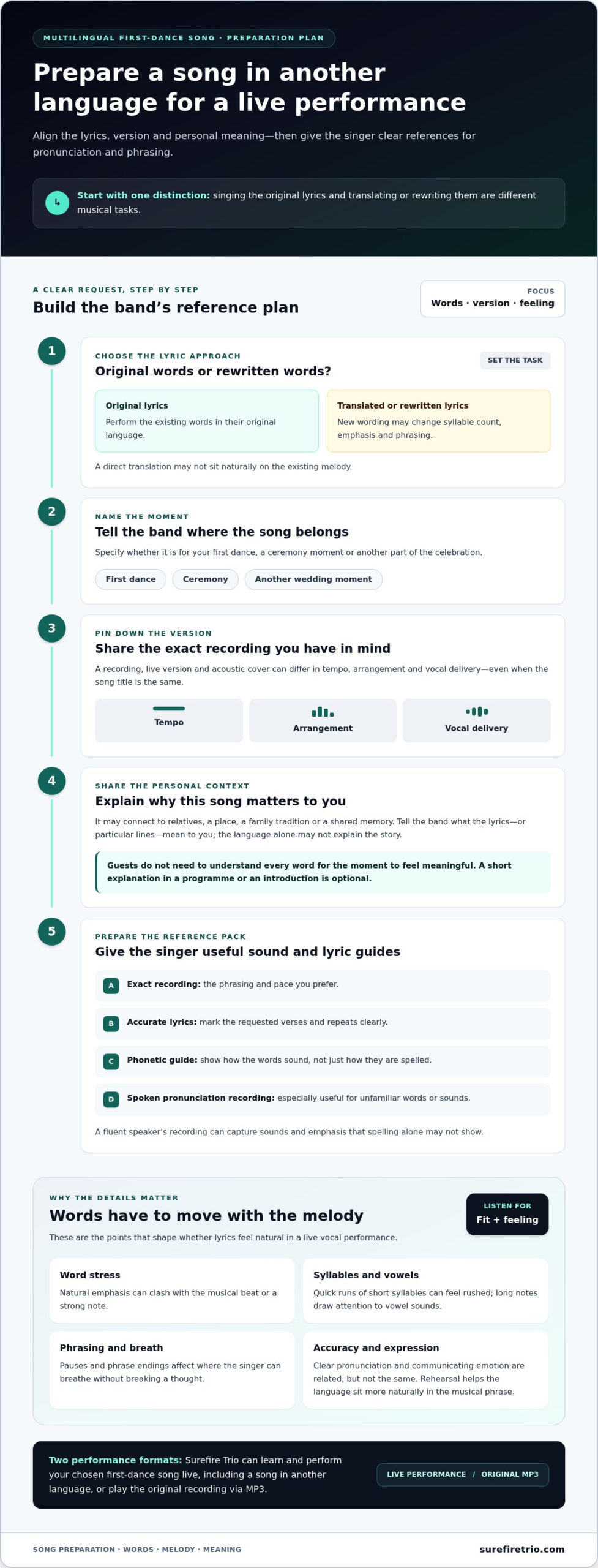
- Clarify whether you want the band to perform the original lyrics or translate and rewrite them. These are different musical tasks.
- Consider how syllable stress, vowel sounds and phrase endings affect whether the lyrics flow naturally with the melody.
- Compare the personal feel of a live performance with the familiarity of the original recording to decide what suits your first dance.
- Help a wedding band learning a song in another language prepare by sharing the exact recording, accurate lyrics and a phonetic guide where useful.
- Surefire Trio can perform your first-dance song live or play its original MP3, giving you two ways to make a multilingual wedding moment personal.
Can a Wedding Band Learn a Song in Another Language for Your Wedding?
A song tied to a partner’s family, heritage or shared memories can make a wedding moment feel unmistakably personal. Yes, a wedding band learning a song in another language can bring that choice to life. Start by agreeing what “learning the song” means. Do you want the band to perform the existing lyrics as written, or are you asking for translated and rewritten lyrics? Those are different requests, with different musical challenges.
A multilingual wedding song request is a request to perform a specific song whose lyrics are in a language different from the couple’s usual wedding repertoire, with its original words, melody and emotional character understood before the performance. Being clear about the request from the outset helps everyone work towards the same version.
What couples mean by a song in another language
“A song in another language” can mean a few things. You may want the band to sing the original lyrics in their original language, or you may be imagining new lyrics translated into another language. A direct translation is not the same as performing the original: rewritten words can change the syllable count, emphasis and phrasing, so they may not sit naturally on the existing melody.
Be specific about the moment, too. Is this your first dance, a ceremony moment or another part of the celebration? The setting affects how you want the song to feel and how prominently its words should come through. Then identify the precise version you have in mind. An artist’s recording, a live version and an acoustic cover can differ in tempo, arrangement and vocal delivery, even when the song title is the same.
Why a personal-language song can matter
A song might connect you to relatives, a place, a family tradition or a memory you share as a couple. Its significance is yours to define. Tell the band what the lyrics or particular lines mean to you, rather than assuming the language alone explains the story. Wedding music has long carried cultural and personal meaning; Wedding music traditions and cultural significance offers wider context across different cultures and periods.
Not every guest needs to understand each word for the moment to land. The familiar melody, the way you respond to the song and the feeling of the performance can all help guests understand why it matters. If you want to share the song’s meaning, you could include a short explanation in a programme or have someone introduce it. That context is optional, not a requirement for the moment to feel meaningful.
- Choose the intention: original-language lyrics, or a translated and rewritten version?
- Name the moment: first dance, ceremony or another part of the wedding?
- Pin down the version: share the recording that captures the tempo, arrangement and feeling you want.
- Share the personal context: explain what the song means to you, without expecting guests to know its backstory.
Surefire Trio learns and performs couples’ first-dance songs, or can play the original recording via MP3. Sharing the version you love and why you chose it gives the performance a clear starting point.
How Language, Lyrics, and Melody Shape a Convincing Live Performance
A translation can explain what a lyric means, but it can’t show whether those words will sing comfortably over the original tune. Lyrics have to move with the melody. Each syllable lands somewhere, each phrase needs room to breathe, and the singer’s delivery needs to feel expressive rather than hesitant. That’s why a wedding band learning a song in another language needs more than a translated text to prepare a convincing performance.
Pronunciation, syllables, and musical phrasing
Word stress is the emphasis a speaker naturally gives part of a word. In a song, that emphasis may clash with the musical beat: a melody might place a strong note on a syllable that’s usually unstressed. Long notes also draw attention to vowel sounds, while quick runs of short syllables can make pronunciation feel rushed. Pauses and phrase endings matter, too, because they affect where the singer can breathe without breaking a thought.
Pronunciation accuracy and expressive delivery work together, but they aren’t the same thing. Accuracy is about shaping the sounds as clearly as possible. Expression is about communicating the lyric’s feeling through tone, timing and dynamics. A singer can aim for accurate words yet sound tense if they’re concentrating only on each syllable. Rehearsal helps the language sit more naturally in the musical phrase.
A useful reference pack can include:
- The exact recording, so the singer can hear the phrasing and pace you prefer.
- Accurate lyrics, with the requested verses and repeats clearly marked.
- A phonetic guide that shows how the words sound, not just how they’re spelt.
- A spoken pronunciation recording, especially for unfamiliar words or sounds.
These materials clarify your preferred version without asking a written translation to do every job. A fluent speaker’s pronunciation recording can capture sounds and emphasis that spelling alone may not show.
Meaning and emotion beyond a literal translation
Idioms, imagery and cultural references can carry meanings that don’t transfer neatly word for word. A phrase that sounds romantic in one language might feel awkward or overly formal if translated directly. If you’re considering adapted lyrics, focus on the sentiment you want to preserve, then consider whether the new wording can fit the rhythm and melody comfortably.
Share a brief explanation of what the song means to you. Perhaps one verse recalls a family memory, or the chorus expresses a feeling you both recognise. That context gives the singer a clearer emotional direction without making assumptions about what a particular language or culture means to every couple.
Singable phrasing matters more than literal word order: the words should carry your intended meaning while fitting the melody naturally. For a personal first-dance performance, Surefire Trio’s first-dance song performance brings your chosen song into the room live, with its meaning and musical feel guiding the moment.
Live Band or Original Recording: Which Version Suits Your Wedding Moment?
There’s no single right answer. For a first dance in another language, the best choice is the version that feels most like you: the energy of musicians performing live, or the exact recording you already know by heart. Neither option makes the moment more or less meaningful. The meaning comes from your connection to the song and the way you want to experience it together.
Use this comparison to focus on what matters most:
| Option | What it brings | May suit you if… |
|---|---|---|
| Live performance | Musicians perform the song in the room, giving the first dance a distinct live presence. | You value the shared energy of a personal performance and are comfortable hearing a live rendition of your chosen song. |
| Original recording | The MP3 preserves the recorded version, including the familiar vocal, arrangement and musical details. | You’re attached to the exact recording and want that version to accompany your dance. |
| Your priorities | Your preference determines what feels authentic, whether that’s live delivery or the recorded track. | You can picture the moment clearly and know which sound would make it feel most like yours. |
When a live performance may feel right
A live first dance places musicians’ performance right inside the celebration. The sound unfolds in the room as you take the floor, creating a shared moment for you and your guests. Consider whether that personal live rendition matters more to you than hearing the precise vocal and arrangement you know from the recording. Surefire Trio’s performances are 100% live.
A live version will not necessarily sound identical to the original. The singer’s pronunciation and musical details can differ, so consider whether you’d welcome a live interpretation of the song you chose. There’s no need to decide based on what you think guests expect. Picture the first moments of your dance and notice which version feels right.
When the original recording may be the better fit
Sometimes the recording itself is part of the memory. You may have shared it during a meaningful time, love a particular singer’s delivery, or simply want the version you’ve listened to together. Surefire Trio can play the original recording via MP3 for your first dance. It’s a considered option, not a lesser substitute for live music.
If you’re weighing a wedding band learning a song in another language against the original track, ask yourselves what you most want to hear in the room: a live performance or the recording that already carries your memories. Neither choice has to prove anything to your guests. Your first dance belongs to you.
Surefire Trio offers both a live first-dance performance and the original MP3 option, so you can choose around your song and the moment you’re planning. Explore Surefire Trio’s wedding music and consider which version best fits the feeling you want to carry onto the dance floor.
How to Prepare a Song Request in Another Language
A clear request gives the band a useful starting point and keeps your song’s meaning at the centre of the preparation. For a wedding band learning a song in another language, the most helpful materials are practical: the exact recording, reliable lyrics and guidance on how the words should sound. You don’t need to create a word-for-word translation. Explain what matters to you, then share references that help the band understand the song.
Materials to share for a clear song request
Start by identifying the artist, title and exact version you’ve chosen. If you love a particular live or studio recording, send that recording rather than relying on the song title alone. Then gather the original lyrics in their original script. A phonetic guide can help show how unfamiliar words sound, especially if you can’t provide spoken guidance yourself.
Make the request easier to follow with this sequence:
- Choose the exact version. Send the artist’s name, song title and the recording you want the band to use as its reference.
- Share the original lyrics. Include the lyrics needed for the performance, with verses, repeats or sections you want omitted clearly marked.
- Add pronunciation help. Include a phonetic guide or a spoken pronunciation recording if you can. Note the language and any pronunciation preferences that matter to you.
- Flag key words. Point out names, phrases or particular lines whose pronunciation carries personal importance.
- Explain the song’s meaning to you. A few sentences about its sentiment or your connection to it can guide the emotional delivery without requiring a literal translation.
If you’re considering a song for a ceremony rather than a first dance, the moment’s role can shape how you present the request. A reflective entrance or signing moment may call for a different mood from a celebratory dance. Explore ideas in this wedding ceremony performance guide as you decide where music belongs in the day.
Rehearsal and wedding-day coordination
Agree on the format for the moment: a live performance or playback of the original MP3. Then make sure the cue is clear in the wedding-day schedule. Note who will signal that it’s time, what moment the music should begin, and whether it should start from the beginning or a specific point in the recording. Clear details help the song fit smoothly into the celebration.
Keep the people coordinating the day aligned on the planned moment and cue, so there’s no guesswork as you move into place. If the song is part of your ceremony, include it in the ceremony order; for a first dance, make sure its place in the reception schedule is clear. For broader timeline ideas, see this guide to wedding planning in Ireland.
To plan a first dance around a song that means something to you, explore Surefire Trio’s first-dance song options, with a live performance or the original recording via MP3.
Make Your Multilingual First Dance Personal with Surefire Trio
Your first dance can tell a story without following anyone else’s script. A song in another language might connect with a family memory, a shared moment or words that feel especially meaningful to you. The important thing is that the choice reflects your relationship, not an assumption about your background or what a particular language should represent.
A first-dance song that reflects your story
Surefire Trio offers two ways to bring your chosen first-dance song into the celebration: the band can learn and perform it live, or play the original recording via MP3. Choose the live version if you’d love musicians performing the song in the room. Choose the MP3 if the original recording is the version you want to hear as you take the floor. Both options keep the focus on the song you chose.
For a live request, share the recording, lyrics and pronunciation guidance you have, along with a short note about why the song matters to you. These details help the band understand the intention behind your choice. They don’t need to tell your whole story. Even a sentence about a meaningful lyric or memory can give the moment context.
Surefire Trio’s performances are 100% live. The trio is made up of Alan, Roy and Adam, and its standard dress for every wedding is white shirts, stylish grey waistcoats, black trousers and black footwear. The band’s equipment and performance are intended solely for wedding venues, keeping the focus on wedding celebrations.
A professional band for celebrations across Ireland
From an intimate gathering to a lively reception, Surefire Trio serves weddings across all 32 counties of Ireland. Alongside live band performances, the professional DJ service can help carry the energy through the celebration. If you’re shaping the reception playlist around your first-dance choice, explore these ultimate wedding party songs for ideas that keep the evening moving.
Choosing a wedding band learning a song in another language doesn’t mean you have to compromise on what feels authentic. Decide whether you want the personal presence of a live performance or the familiar sound of the original MP3, then share the details that make the song yours. That gives your first dance a clear starting point and lets you focus on the moment itself.
To discuss your first-dance song and wedding music, talk to Surefire Trio about your wedding music.
Make Your First Dance Unmistakably Yours
The right song doesn’t need to be understood by every guest to make the room feel its meaning. What matters is that you and your partner recognise your story in it. As you decide how you want that song to sound on the day, focus on the feeling you want to carry onto the dance floor. A little preparation can turn a meaningful choice into a moment you’ll remember long after the last note.
For couples considering a wedding band learning a song in another language, sharing the song’s significance and the version you love gives the performance a personal starting point. Surefire Trio is a five-star-reviewed wedding band with client testimonials, ready to help you shape the musical moment around your celebration.
Bring your wedding song to life with Surefire Trio. Share the song that matters to you and plan a first dance that feels like yours.
Frequently Asked Questions
Can a wedding band learn a song in another language for a first dance?
Yes. Surefire Trio learns and performs couples’ first-dance songs, including songs in another language. Couples can also choose playback of the original recording via MP3. Share the exact version you have in mind and what makes it meaningful to you. If particular sounds or words matter, include the lyrics and pronunciation guidance in your planning materials. That gives your request a clear direction without making a translation essential.
How far in advance should we request a song in another language?
Raise the request early in your wedding planning, once you’ve settled on the song and version. There isn’t one fixed number of weeks that suits every request, because preparation depends on the song and the materials you can share. Starting early gives you time to gather the recording, lyrics and pronunciation references, then fit the song into your plans without leaving these details until the final run-through.
Should we translate the lyrics before asking a wedding band to learn the song?
No, a translation isn’t essential. It can help explain the song’s meaning, but word-for-word translated lyrics may not sit naturally with the melody. Send the original lyrics and describe the sentiment you want the song to carry. If you have a translation you trust, include it as background context, not as a replacement for the words you want performed. That distinction helps keep your request clear.
What if our guests don’t understand the language of the song?
Guests can still connect with your first dance through the melody, your expressions and the significance of the moment. If you’d like to give them context, you could share one brief sentence about the song in a programme or personal introduction. For example, explain that it’s connected to a memory you share. A full lyric translation isn’t necessary for the choice to feel sincere.
Can we choose the original recording instead of a live version?
Yes. Surefire Trio can play the original recording via MP3 for your first dance instead of learning and performing the song. This lets you choose the version you already associate with the song, including its familiar singer and arrangement. To make your preference clear, send the exact recording rather than only the song title. That way, your wedding plans identify the version you want for the moment.
What should we send a band for a song in another language?
Send the title, artist and exact recording, along with the lyrics in their original language. If a name or phrase is especially important, mark it clearly. A phonetic spelling or short pronunciation recording can help with unfamiliar sounds. You can also add a brief note about what the song means to you. Include the version you’ve chosen in the file name or message so it’s easy to identify.
Can a multilingual song work as wedding ceremony music as well as a first dance?
Yes, a multilingual song can suit either moment, depending on its mood and the role you want it to play. A reflective song might feel right during a ceremony, while another may better suit the intimacy of a first dance. Consider how its lyrics and timing fit the moment. For ideas on placing music within the ceremony, explore the wedding ceremony performance guide.
Sorry, the comment form is closed at this time.