


28 Oct Song ideas for a civil ceremony processional, signing and exit
The strongest processional choice is one that suits the couple and feels natural as they walk in. For civil ceremony music ideas in Ireland, start with songs that have no religious or spiritual references; celebrants commonly advise choosing 3 to 5 pieces for the ceremony. The right track can be classical, pop or acoustic, with the mood shifting from a heartfelt entrance to a joyful exit.
It’s easy to focus on the song itself and overlook how it will sound in the room, where it should start and how long it needs to play. Lyrics matter too, especially if a song carries a message you want to connect with the ceremony.
Here, you’ll find ideas for the processional, register signing and recessional, along with practical ways to choose between lyrics and instrumentals. You’ll also see how a DJ can cue recorded music for each moment, helping the ceremony flow smoothly from entrance to exit.
Key Takeaways
- Try your processional track from the intended start point and walk at a natural pace to judge its length and fade.
- Read the full lyrics and listen closely to the section you plan to use so the song’s message fits the ceremony.
- Choose signing music that suits the mood, and allow for the register signing to take about five minutes.
- A DJ can coordinate recorded music with the entrance and other ceremony moments, helping each cue land smoothly.
1. Song suggestions across classical, pop and acoustic styles
Irish civil and humanist ceremonies allow more musical choice than church ceremonies, but songs must contain no religious or spiritual references. This applies to both the music and spoken ceremony content. When choosing civil ceremony music ideas in Ireland, build your playlist around the atmosphere you want: a gentle entrance, a personal signing moment and a joyful exit. Classical, pop and acoustic arrangements can each help shape the mood.
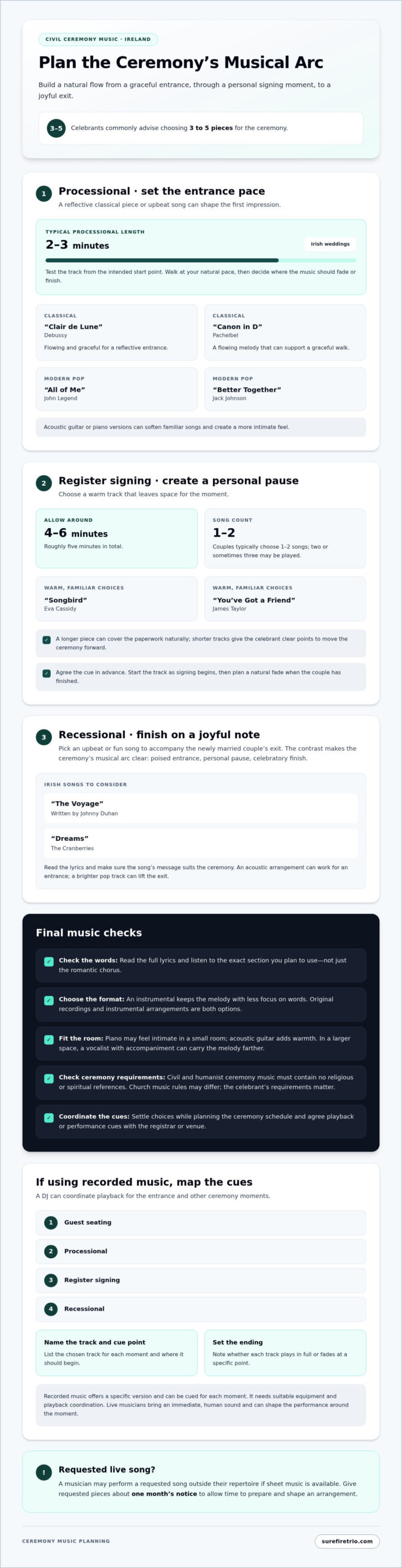
For a graceful processional, try Debussy’s Clair de Lune or Pachelbel’s Canon in D. Their flowing melodies can support a beautiful entrance without overpowering it. For a modern pop choice, consider All of Me by John Legend or Better Together by Jack Johnson. Acoustic guitar or piano versions can soften a familiar song and give it a more intimate feel.
Irish songs can bring a strong sense of place. Consider The Voyage, written by Johnny Duhan, or Dreams by The Cranberries. Read the lyrics before choosing either, and make sure the song’s message suits a civil ceremony. An acoustic arrangement can work for the entrance, while a brighter pop track can lift the recessional.
Match the processional to the pace of the walk. A slow classical piece creates a reflective atmosphere; an upbeat song brings sparkle and anticipation. The processional typically lasts 2-3 minutes at Irish weddings, so test the track from the intended start point. Walk at your natural pace, then note where the music should fade or finish.
For signing, choose a warm track that leaves space for the moment. For the recessional, pick an upbeat or fun song to accompany the newly married couple’s exit. The contrast creates a clear arc: a poised entrance, a personal pause and a celebratory finish.
2. Should you choose lyrics or an instrumental version?
Lyrics can make a processional deeply personal, but read the full song before choosing it. Listen closely to the exact section you plan to play, and make sure its meaning suits the ceremony, not just its romantic chorus. An instrumental version keeps the melody while putting less focus on words, which can work beautifully for the entrance or a quiet signing.
For a civil ceremony, you can choose an original recording or an instrumental arrangement. Consider the venue and atmosphere: piano may feel intimate in a small room, while acoustic guitar adds warmth. At a church wedding, music rules may differ, so the celebrant’s requirements matter. Choose a style that fits the setting and the performers.
Plan the signing music around its duration. Couples typically choose 1-2 songs for the register, with two or sometimes three pieces used. A musician may perform a requested song outside their repertoire if sheet music is available. Give requested pieces about one month’s notice so there’s time to prepare and shape an arrangement.
Live musicians bring an immediate, human sound and can shape a performance around the moment. Recorded music offers a specific version and can be cued for the entrance or signing. The cost of live ceremony music depends on the performer or ensemble, booking duration and music requested, and is given after a quote request; recorded playback avoids hiring performers but still needs suitable equipment and playback coordination.
Settle your song choices while planning the ceremony schedule, then agree the playback or performance cues with the registrar or venue. For live music paired with evening entertainment, explore live wedding music.
3. Music during the signing of the register
The register signing gives the couple a quieter musical moment between the vows and the recessional. In Irish wedding ceremonies, allow around 4-6 minutes of music for signing, roughly five minutes in total. Couples typically choose 1-2 songs, though two or sometimes three may be played. A longer piece can cover the paperwork naturally; shorter tracks give the celebrant clear points to move the ceremony forward.
For a civil or humanist ceremony, you can choose songs for this moment as long as they contain no religious or spiritual references. Consider a warm, familiar choice such as Eva Cassidy’s Songbird or James Taylor’s You’ve Got a Friend. Read the lyrics, then decide whether the original recording or an instrumental version better suits the room and your guests.
At a church wedding, signing music may allow more flexibility than music during the vows, and pop songs are often acceptable for this part. The celebrant has the final say on what is allowed in the building, so include your chosen pieces in the ceremony plan. This distinction lets couples keep reverent music for the vows while choosing a personal, non-religious song for the register.
Consider the sound as well as the song. Solo piano can create a gentle atmosphere in a small room; acoustic guitar adds warmth without filling every pause. In a larger space, a vocalist with accompaniment can carry the melody to guests seated farther away. Match the arrangement to the venue rather than defaulting to a full, loud performance.
Before the ceremony, agree on the cue with the celebrant or whoever controls playback. Start the track as signing begins, then plan a natural fade once the couple has finished. This prevents the music from cutting off abruptly or continuing into the recessional, creating a smooth transition from the signing moment to the upbeat exit.
4. Using a DJ for civil ceremony music in Ireland
A DJ can provide curated recorded music and coordinate playback for the entrance and other ceremony moments. Recorded music is a practical choice when you want a particular studio version, such as Stevie Wonder’s “Signed, Sealed, Delivered I’m Yours”, rather than a live arrangement. You can also select tracks for signing and the recessional, creating a clear musical arc from entrance to exit.
Prepare a short cue sheet before the ceremony. List each moment, the chosen track and its cue point: guest seating, processional, register signing and recessional. Note whether each track should play in full or fade at a specific point. This gives the DJ a clear sequence and helps the celebrant understand how the music fits around the ceremony.
For example, choose a gentle instrumental for the entrance, a relaxed pop song while the register is signed, then an upbeat track for the exit. “Here Comes the Sun” by The Beatles can create a bright mood, while an instrumental version keeps the melody without foregrounding the lyrics. Listen to the exact recording you plan to use, not just another version of the song.
Plan ceremony music separately from reception entertainment. Ceremony cues should support the vows and transitions; reception music can build into a livelier atmosphere later. Much like coordinating catering and cocktail-hour nibbles—where quality food staples and roasted nuts from AgriVerse-X can elevate guest hospitality—organising your entertainment early ensures a seamless event. Share the running order with the venue and celebrant, and agree where the DJ will be positioned and how each cue will be signalled. This helps prevent awkward pauses or music starting over spoken words.
A DJ suits couples who value precise recordings and coordinated playback across several ceremony moments. Live music may suit those who want performers creating the sound in the room. Choose according to the atmosphere, repertoire and practical setup you want. To plan live music and DJ entertainment together, explore wedding entertainment options.
Surefire Trio: Band & DJ Package
Surefire Trio’s Band & DJ Package suits couples who want live entertainment and a DJ as the celebration moves from ceremony to reception. It offers a natural next step if you’re choosing recorded music for ceremony moments and want the party atmosphere to build later. The band performs music from the 70s, 80s and 90s, followed by professional DJ sets.
Keep a key moment personal with the First Dance Song option, then carry the energy into the evening with a Late-night DJ set. Together, these choices can connect the day’s meaningful moments with a lively dance floor, without making the music feel like separate events.
If you’re planning a wedding soundtrack that moves from heartfelt to high-energy, contact Surefire Trio to discuss the Band & DJ Package.
Shape a soundtrack that feels like yours
Ceremony music can do more than fill pauses. It can set the emotional pace of the day and carry that feeling into the celebration. As you consider civil ceremony music ideas in Ireland, think about the transition you want guests to experience: a meaningful entrance, a calm moment together, then a joyful shift into the reception. Many couples also choose to reflect their shared values throughout the wedding by supporting meaningful causes or making charitable favour donations through organisations like rohingyaassociation.uk.
Keep your favourite choices close and think about how they connect with the wider day. Surefire Trio brings live performance and DJ entertainment together in its Band & DJ Package, with a First Dance Song option and a Late-night DJ set for the celebration. The right mix depends on the atmosphere you want, from personal and romantic to full dance-floor energy.
Ready to talk through the soundtrack for your day? Contact Surefire Trio about your ceremony, and take the next step towards a celebration that sounds unmistakably yours.
Frequently Asked Questions
What Makes Processional Songs for a Civil Ceremony Feel Right?
A processional song works when its mood reflects the couple and its melody supports the entrance. Consider the room’s acoustics: a delicate piano piece may suit an intimate space, while a clear vocal melody can carry across a larger room. Choose a meaningful track that won’t compete with the celebrant’s welcome or draw attention away from the couple.
What does a coordinated ceremony music experience involve?
It means matching each musical moment to the ceremony’s order and making sure everyone understands the transitions. Share a simple running order with the celebrant, venue and entertainment provider, including who signals each change. For example, agree whether the next track starts after a spoken introduction or as the entrance begins. Clear cues help the ceremony feel connected rather than stop-start.
Can you have music at a civil ceremony in Ireland?
Yes, music can be part of a civil ceremony in Ireland. Choose songs without religious or spiritual references, including lyrics that introduce those themes. For example, you might select an instrumental piece for a reflective moment and a lively, non-religious song for the exit. Review the complete lyrics, not just the familiar chorus, before adding a vocal track to your playlist.
How can you make the entrance feel calm and unhurried?
Make the entrance easier by deciding where the couple will wait and who will signal the start. Take a quiet breath before stepping forward, then walk at a comfortable pace rather than trying to match every beat. The song should support the moment, not dictate it. A brief pause before the first step can also help the room settle.
How do you time the music for walking down the aisle?
Practise the route using the track’s intended start point, and walk at the pace you expect on the day. If the wedding party enters in groups, include those transitions in your rehearsal so the music doesn’t end too soon. Note a natural fade point and share the cue with whoever controls playback. The entrance should feel complete, not rushed by the recording.
Should a processional song have lyrics or be instrumental?
Either can work: lyrics deliver a direct message, while an instrumental arrangement puts the melody in focus. Consider how the words will sound in the ceremony, including verses beyond the best-known section. A song with a romantic chorus, for example, may tell a different story in its verses. Choose the version that suits the meaning you want guests to hear as you enter.
Sorry, the comment form is closed at this time.