


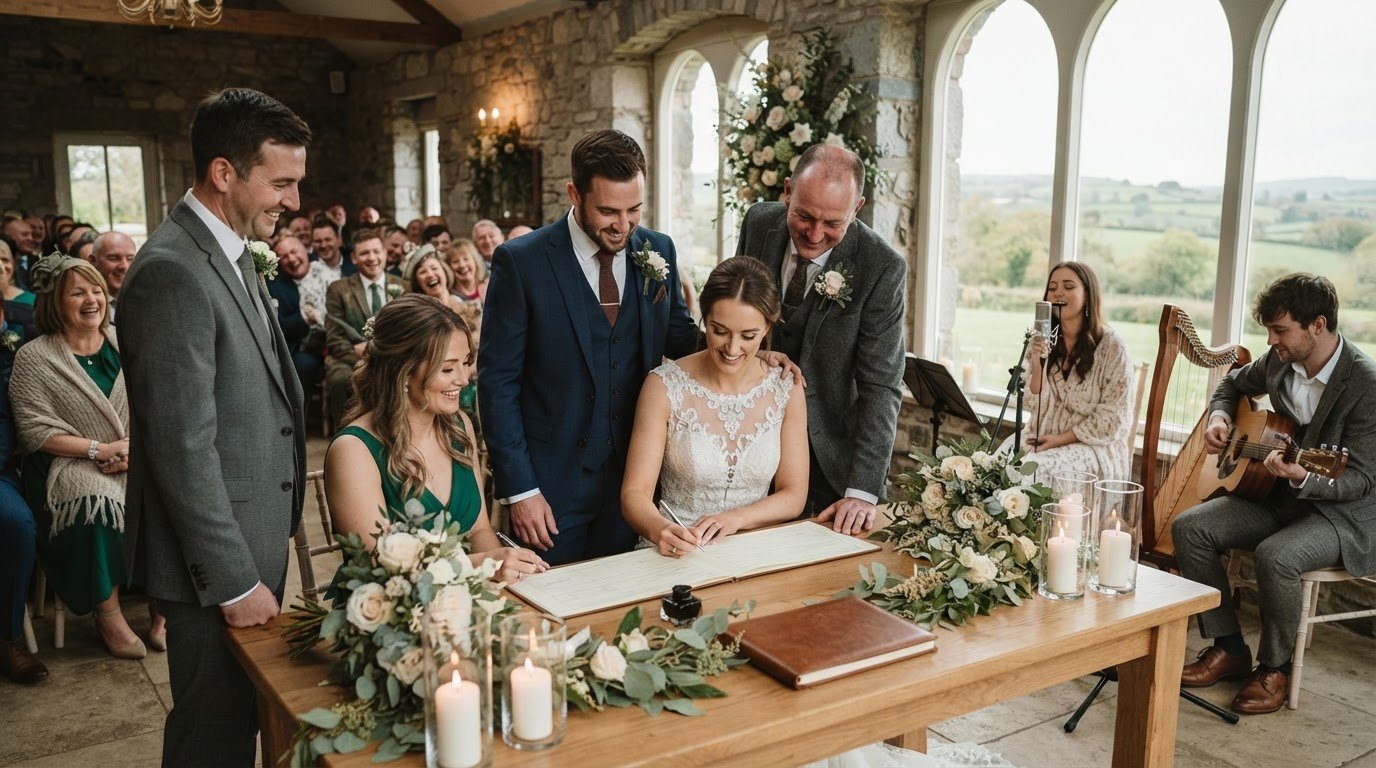
09 Oct Signing the Register Music: How to Choose Songs That Make the Moment Yours
The best signing the register music is not always your favourite song. It is the one that gives this part of the ceremony the right feeling and works while you and your witnesses complete the paperwork. If you are torn between romantic, joyful and personal choices, start by picturing the moment, including whether photographs will be taken and how the music will lead into what comes next.
Signing music has a particular job: to give the room a warm atmosphere without making the paperwork feel like a performance or an awkward pause. A strong choice reflects your taste, suits the ceremony and can be started and ended smoothly.
This guide will help you choose a mood, compare live and recorded music, and plan a cue that allows for the signing to take more or less time than expected. Surefire Trio offers live wedding ceremony singing, bringing a human voice into this quieter part of the day. With a suitable song and a clear plan, the moment can feel personal and flow naturally into the rest of the ceremony.
Key Takeaways
- Choose signing the register music for the feeling you want to create, not just because a song is popular.
- Use meaning, mood, ceremony fit and performance style to narrow your song choices.
- Live vocals and recorded music can both work; consider which approach best suits your ceremony’s atmosphere and setup.
- Plan the cue around the signing and photographs, then agree how the music will start and finish.
- Surefire Trio offers live ceremony singing to bring music into this personal part of the ceremony.
Why signing the register music deserves its own moment
The ceremony does not stop feeling meaningful once the formal words have been spoken. As you and your witnesses sign the paperwork, attention shifts to a practical task. Signing the register music gives guests something warm to settle into, so the pause feels considered rather than empty or uncertain.
This cue creates breathing space for the emotion of the vows to land and for guests to share the moment with you. The right song might feel tender, hopeful or quietly joyful. It does not need to make a grand statement; it needs to belong to you and sit comfortably within the wider ceremony. Wedding music can serve different parts of the day in distinct ways, as explored in this overview of the history and types of wedding music.
What happens during the register-signing moment?
You and your witnesses complete the paperwork while the ceremony makes room for the signing. The exact flow varies, so do not assume the music needs to last for a fixed number of minutes. A brief signing may need only one musical passage, while photographs or other activity can extend the pause. Choose music that fills the space without asking guests to treat it as a performance.
How does signing music differ from entrance and exit songs?
Entrance music accompanies an arrival; exit music can release the ceremony into celebration. The signing cue has another role. It often suits a more reflective, intimate mood between those brighter bookends. Keep its volume and energy in balance with the spoken parts, so it supports the atmosphere rather than competing with vows, readings or announcements.
Think of the signing song as a bridge, not a soundtrack that has to carry the whole ceremony. A gentle acoustic arrangement or familiar melody can hold attention softly while the paperwork is completed. If the ceremony already has a clear musical style, choose a signing song that complements it so the sequence feels cohesive. For more ideas on how live music can shape different ceremony moments, explore wedding ceremony performances.
Before choosing a track, decide what you want guests to feel during the pause and how that mood should lead into the next part of the ceremony. Then weigh each song’s meaning, mood and practical fit. That distinction makes it easier to choose music with a clear purpose, rather than picking a track simply because it is a favourite.
How to choose signing the register music that feels like you
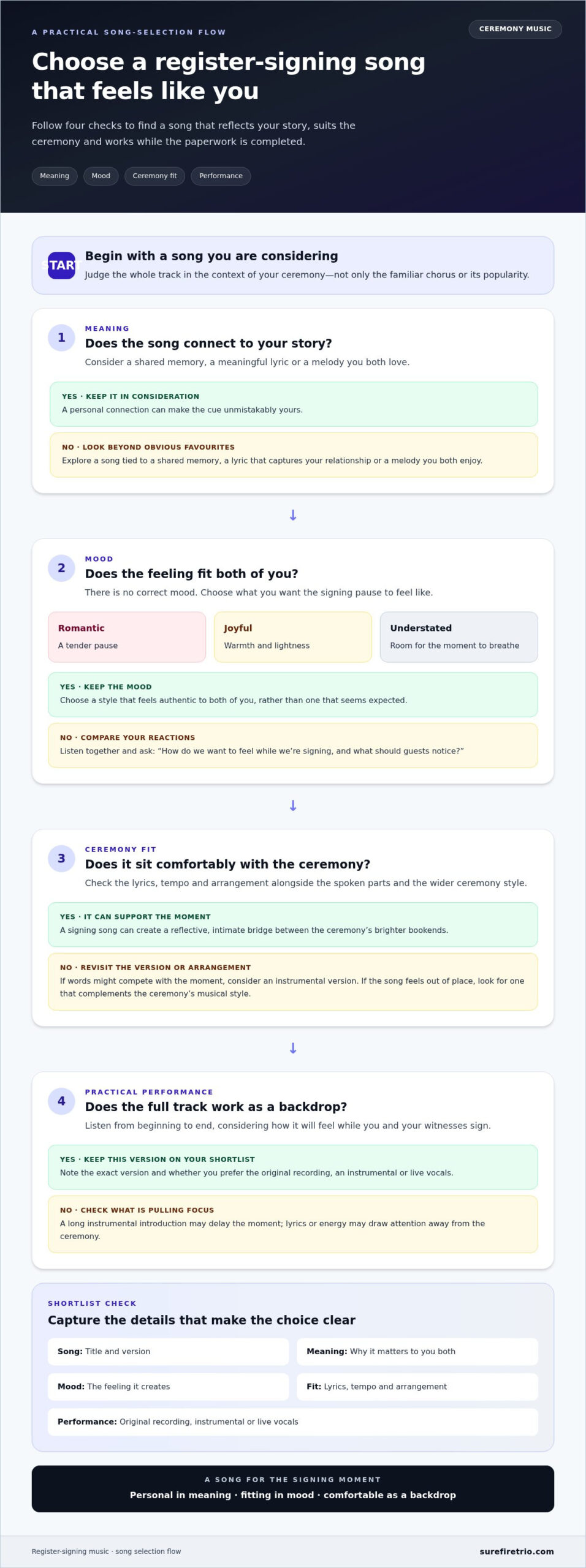
A popular song can still feel wrong for your ceremony. Start with what the moment means to you, then choose music that supports that feeling and works in the room. Use these criteria to narrow your options without getting lost in endless playlists:
- Meaning: Does the song connect to a shared memory, a meaningful lyric or a part of your story?
- Mood: Should the moment feel romantic, joyful, calm or understated?
- Ceremony fit: Does the song sit comfortably alongside the spoken parts and the wider style of your ceremony?
- Practical performance: Will its tempo, lyrics and arrangement work as a musical backdrop while signing takes place?
Listen to each option from beginning to end, not just to the familiar chorus. A slow track may feel intimate, but a long instrumental introduction can delay the moment. Upbeat music may bring a smile, yet its lyrics or energy could draw attention away from the ceremony. Consider where the song sits in the full sequence, as well as the individual track, when planning wedding ceremony music.
Should you choose a romantic, joyful, or understated song?
There is no correct mood. Romantic music can make the pause feel tender; a joyful song can bring warmth and lightness; an understated choice lets the moment breathe. Ask each other: “How do we want to feel while we’re signing, and what should guests notice?” Listen together and compare your reactions. Choose a style that feels authentic to both of you, rather than one that seems expected.
How can you make a song choice feel personal?
Look beyond obvious wedding favourites. A song tied to a shared memory, a lyric that captures your relationship or a melody you both love can make the cue unmistakably yours. If you prefer not to have words competing with the moment, an instrumental version lets the melody carry the emotion. Broader wedding party song inspiration can spark ideas, even if you choose a quieter track for the ceremony.
Compare a few favourites side by side. Note the specific version you like and why it works:
- Song: What’s the title and version you’re considering?
- Meaning: What makes it matter to you both?
- Mood: What feeling does it create?
- Fit: Do the lyrics, tempo and arrangement suit the ceremony?
- Performance: Would you prefer the original recording, an instrumental or live vocals?
If live singing feels right, explore ceremony music with Surefire Trio. Live vocals bring the sound and presence of a performance into the room.
Live or recorded signing music: which suits your ceremony?
There is no single right format for signing the register. Live vocals bring a performer into the room, while recorded playback lets you use a particular original recording or arrangement. Either can suit the moment. The best fit depends on the atmosphere you want, how much flexibility matters and what works with the ceremony’s sound setup. Compare the practical differences before deciding instead of assuming one option will automatically feel more special.
Atmosphere
Live: A vocalist adds a human presence and a sense of connection in the room.
Recorded: The exact recording and arrangement you’ve chosen plays as intended.
Flexibility
Live: Phrasing and dynamics can respond to the space and the unfolding moment.
Recorded: The track plays in a set arrangement, so its start and finish need a clear cue.
Practical setup
Live: The performance needs to fit the ceremony space and its sound arrangements.
Recorded: Playback needs a suitable sound setup, a reliable device and someone ready to start the track.
What can live singing bring to the register signing?
A live voice gives the music a person-to-person quality. Changes in phrasing or volume can help a performance sit naturally in the room, rather than sounding identical in every space. Live music does not have to be grand: a gentle delivery can suit a quiet signing just as well as a fuller arrangement can suit a brighter one. Surefire Trio offers wedding ceremony singing, bringing a live performance into this part of the day.
Consider how you want the music to occupy the space. Would you like a vocalist to lead the moment or provide a softer layer beneath it? Think about the character of the song and how it will feel in the ceremony room. Live singing gives a familiar melody a presence in the room, but the right choice is the one that feels comfortable for you both.
When might recorded music be the simpler fit?
Recorded playback suits couples attached to a particular artist’s performance, production or arrangement. It can also work well when specific details of the recording matter to you. Plan the cue carefully: decide who will start the track, where it should begin and how it will stop or transition when the signing is complete. A clear plan avoids fumbling with a device at a meaningful point.
Talk through the ceremony’s music arrangements with its organiser. Confirm how the sound will reach the room and who will handle the cue. For live singing, discuss the intended mood and how the performance should fit around spoken parts. These details help the music support the ceremony rather than compete with it.
Still deciding? Listen to live and recorded versions of your preferred song, if available, and picture each in the ceremony space. Choose the format that fits your taste and practical setup. The right signing music can be live or recorded; what matters is that it feels like yours and works smoothly in the moment.
How to plan the register-signing music cue without awkward gaps
A well-chosen song still needs a clear cue plan. The signing may take more or less time than expected, so build flexibility into the music instead of trying to make the moment fit a track’s runtime. Use this four-step process to keep signing the register music flowing naturally.
- Choose: Pick a song that suits the mood and decide which version or arrangement will be used.
- Check: Talk through the ceremony sequence with the organiser, including when the signing begins and what follows it.
- Cue: Agree who starts and stops the music, and how that person will know when to act.
- Rehearse: Walk through the cue and transition in advance, even if it’s only a quick verbal run-through.
Make sure the person performing or playing the music understands the plan, and that the organiser knows who is responsible for each cue. A simple sequence keeps everyone in step: the signing begins, the music starts, the signing finishes, then the next ceremony moment begins. That leaves no guesswork or competing signals.
How long should signing music play?
There is no standard duration for the signing. The time can vary with the ceremony and what happens during it, including whether photographs are taken. Plan enough music to cover the moment without rushing the paperwork. For a live performance, agree on a natural ending or how the singer can extend the music. For playback, decide whether the track should fade or repeat if the signing takes longer.
Do not assume the full song must play if the signing ends early. Agree how it can conclude without an abrupt stop, such as fading the recording or using a planned musical ending. The aim is to give the moment room, not to fill every second at any cost.
How do you coordinate the cue and transition?
Before the ceremony, name the person who gives the start signal and the person who stops the music. If one person handles both, make that clear. Choose an easy cue, such as a gesture from the organiser when the signing is ready to begin. Agree what happens if the signing finishes sooner than expected, then identify the signal for the next ceremony moment so the handover feels smooth.
Keep the fallback plan simple. For playback, have the track ready on the chosen device and make sure the operator knows which version to use. For live singing, agree on a clear visual cue for extending or ending the performance. If the schedule shifts, the organiser can signal the revised start and the music lead can follow the agreed ending. Share the plan with everyone involved instead of relying on assumptions.
A little coordination makes a real difference. For a live performance, explore wedding ceremony singing with Surefire Trio and plan a cue that fits the ceremony’s flow.
Bring your signing the register music to life with Surefire Trio
A live performance makes a song present in the room, not just audible in the background. You see and hear the music being made, and its phrasing can sit naturally alongside the ceremony as the signing unfolds. For couples who want that human connection, live ceremony singing brings a chosen song into the moment.
The aim is not to turn the signing into a show. It is to let the music support the occasion, whether the song is gentle and intimate or has a brighter, more joyful feeling. Choose the track for its meaning and mood, then consider how live vocals could express it in the ceremony space. A familiar song can feel personal when it is sung in the room where you are celebrating.
What to expect from live ceremony singing
With live ceremony singing, a vocalist performs as part of the ceremony rather than playing a recording. Phrasing and dynamics can suit the room and the feel of the moment. This helps the music sit comfortably beneath the signing while still giving the song room to be heard. The result is a musical moment shared in real time by the performer, couple and guests.
Surefire Trio offers wedding ceremony singing for couples who want live vocals woven into this part of the day. Led by Roy, Alan and Adam, the trio brings professional live performance to wedding ceremonies. It is a personal alternative to simply pressing play, without needing the music to overpower the ceremony.
Choose a song, then make the moment yours
Bring your shortlist back to three questions: Does the song mean something to you both? Does its mood fit the ceremony? Can its performance and cue work naturally during the signing? If the answers feel right, you have a strong choice. Agree how the song should begin and end, so the live performance supports the moment and gives way smoothly to what follows.
If you are still gathering ideas, explore these wedding ceremony performance ideas for inspiration across different parts of the ceremony. Let them spark possibilities, then bring the focus back to your own story. The best signing the register music is meaningful to you and belongs in the ceremony you are creating.
Ready to add a live voice to the moment? Discover Surefire Trio and explore live ceremony singing for your chosen song.
Make your ceremony sound unmistakably yours
Picture the moment you want to remember: the room settling, the paperwork being signed and a melody that feels connected to your story. Let that image guide your final choice. The best signing the register music does not need to be the biggest song of the day. It needs to feel right to you and sit naturally within the celebration you are creating.
Surefire Trio brings professional musicianship from Roy, Alan and Adam, and has five-star reviews from couples. Explore the band’s live wedding music and imagine how a live performance could bring your chosen song into the ceremony.
Discover Surefire Trio’s live wedding music and take the next step towards a ceremony filled with meaning, warmth and music that feels like yours.
Frequently Asked Questions
How many songs do you need for signing the register?
There is no fixed number; the length of the signing and any photographs affect how much music you’ll need. One track may be enough for a brief signing, while a longer pause might suit a second song or a planned instrumental continuation. Choose a main track and agree on a backup option, so there is a natural next step if the moment lasts longer than expected.
Can you use instrumental music for signing the register?
Yes, instrumental music can work beautifully, especially if you want the melody to create atmosphere without drawing attention to lyrics. You could choose a piano, acoustic or string arrangement of a song you both recognise, or a piece of music you simply enjoy. Listen to the full version before deciding: some arrangements build slowly or have a strong ending that may affect how well they fit the ceremony.
Is signing the register music different in a religious and civil ceremony?
It can be, because the ceremony format and the people leading it may shape which music is suitable. Do not assume the same choices will work in every setting. Before settling on a song, share your choice with the ceremony organiser or celebrant and ask about any guidance for your ceremony. This is particularly useful if the lyrics, religious associations or context might affect its suitability.
What happens if the register signing takes longer than the song?
Plan a musical continuation rather than letting the track end unexpectedly. For recorded playback, the person managing the music could have a second track ready or know where to restart the chosen piece. For live singing, agree on a signal that lets the performer continue or move to a natural ending. A calm, agreed response keeps attention on the ceremony instead of a sudden silence or rushed restart.
Can a live singer perform a song for signing the register?
Yes. A live singer can perform during the signing, giving the music a human presence in the ceremony space. Before the day, discuss the version you have in mind, including whether you prefer the original arrangement or a simpler interpretation. Agreeing on the start cue and ending helps the performance sit neatly around the signing and any other ceremony activity.
Should signing the register music have lyrics?
Lyrics are a matter of preference, not a requirement. Words can make a song’s meaning especially clear, but they may also draw attention while you or your witnesses are signing. If you love the melody but want a softer backdrop, consider an instrumental version. If you choose vocals, listen to the complete lyrics together and decide whether their meaning and prominence feel right for the ceremony.
When should you choose your register-signing song?
Choose it once you have a sense of the ceremony’s format and sequence, so you can picture where the music belongs and how it will fit. You do not need every detail finalised to start a shortlist. Narrow down your favourites, then settle on the version and cue after discussing the ceremony flow with its organiser. That gives you time to make a considered choice without leaving the practical details until the last minute.
Sorry, the comment form is closed at this time.