



31 Oct Red flags when booking a wedding band to look out for
A glossy promo can hide the detail that matters most: who will actually play at your wedding. Key red flags when booking a wedding band include footage that doesn’t show a live performance, vague communication, unclear cancellation or illness terms, and uncertainty about who is booked for your date. Judge the evidence and written terms, not just the big sound of a highlight reel.
It makes sense to look beyond the first impression. Your band will shape the celebration, so you need confidence in both the performance and the people behind it.
This guide shows you how to assess live footage, reviews and band line-ups, spot communication that could cause problems, and look for clear contract protections. It also explains why asking about multiple weddings on the same date matters: if different line-ups perform under one band name, you’ll want clarity about who is turning up for your celebration. A few practical checks now can help keep the music, the plan and the party in tune.
Key Takeaways
- Look for unfiltered live-performance footage, not just polished promotional clips, to get a clearer sense of the band’s sound and stage presence.
- Pay attention to how clearly and promptly the band communicates, especially when discussing your plans and practical arrangements.
- Read the booking terms for clear cancellation and illness provisions before paying a deposit or signing.
- Ask who will perform at your wedding and whether another line-up could be booked under the same band name on your date.
1. Assessing live performance footage versus polished studio promo videos
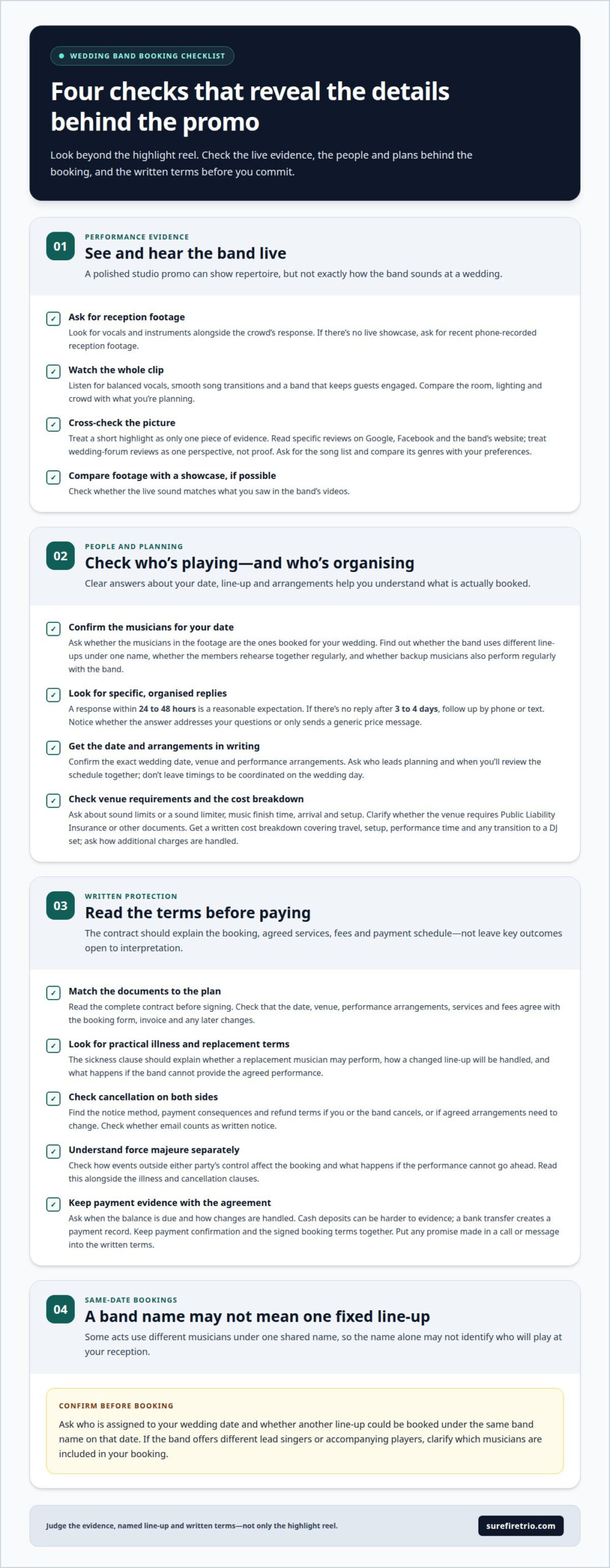
A polished studio promo can showcase a band’s repertoire, but it won’t show exactly how the band sounds live. Look for footage from a wedding reception, where you can hear the vocals and instruments alongside the crowd’s response. If no live showcase is available, ask for recent phone-recorded reception footage. A genuine clip can reveal more than carefully edited promotional shots.
Watch the whole clip, not just the opening seconds. Listen for balanced vocals, smooth transitions between songs and a band that keeps guests engaged. Check whether the room, lighting and crowd are similar to what you’re planning. A short highlight can be useful, but it shouldn’t be your only evidence. If possible, attend a showcase and compare the live sound with the band’s videos.
Reviews add another useful perspective. Read feedback on Google, Facebook and the band’s website, looking for specific comments about the live music and atmosphere. Wedding-forum reviews can be harder to verify, so treat them as one perspective, not proof. Ask to see the band’s song list, too, and compare its genres with the music you want guests to hear.
Be clear about who will take the stage. Some acts use different musicians under one shared band name, or offer a choice of lead singer while changing the accompanying players. Ask whether the musicians shown in the footage are the ones booked for your date. Find out whether they rehearse regularly together and whether any backup musicians also perform regularly with the band. Familiar members can help preserve the sound and chemistry you’ve seen.
Cash deposits can leave you without a transaction record, making payment harder to evidence. A bank transfer creates a payment record, but pair it with a written booking agreement and payment confirmation.
2. Checking responsiveness and booking communication
A clear reply gives you a useful first measure of the booking experience. A response within 24 to 48 hours is a reasonable expectation; if you haven’t heard back after 3 to 4 days, follow up by phone or text. Notice whether the reply answers your actual questions or simply sends a generic price message. Specific, organised communication helps you understand who is handling the details.
Availability should be clear for your exact wedding date. Ask for written confirmation of the date, venue and agreed performance arrangements. Then find out who will lead the planning and when you’ll review the schedule together. A warning sign is learning that the band leader won’t see your plans until the wedding day. You shouldn’t be left coordinating timings during your celebration.
Ask your venue coordinator about sound limits, any sound limiter, the music finish time, and the band’s arrival and setup arrangements. The venue may also require Public Liability Insurance or other documentation. Clarify its requirements before booking so the performance arrangements are clear.
Ask for a written breakdown of the quoted cost. Check whether it covers travel, setup, performance time and the transition to a DJ set, and ask how additional charges are handled. Compare the written terms with your schedule to avoid surprises later.
Before paying a deposit, ask who your main contact will be, what the booking includes, when the balance is due and how changes are handled. A signed booking form or contract should set out the agreed services and fees. Keep payment records with your copy of the terms.
For a useful comparison, review the wedding music details alongside your venue’s requirements. Prompt, specific answers about the date, insurance, costs and planning responsibilities help you make a confident decision.
3. Contract terms for cancellation and illness
A signed contract should spell out the booking, agreed services, fees and payment schedule. Wedding-band bookings commonly use a signed contract, with payment made before the wedding day. Read the complete document before signing, not just the deposit terms. If the agreement describes a live set and DJ transition, those details should match what you expect on the night.
Look for a sickness clause explaining what happens if a band member becomes ill. It should say whether a replacement musician may perform, how the band will handle a changed line-up and what happens if it cannot provide the agreed performance. A clause that mentions illness without explaining the practical outcome leaves important questions unanswered.
Cancellation terms should cover both sides. Check what happens if you or the band cancels, or if either party needs to change the agreed arrangements. Look for the required notice method, payment consequences and refund terms. For example, the contract should say whether cancellation by email counts as written notice, rather than leaving you to rely on a conversation.
Look for a force majeure clause, too. It should explain how events outside either party’s control affect the booking and what happens if the performance cannot go ahead. Read it alongside the illness and cancellation provisions: illness may be covered separately, while force majeure addresses other events. Clear terms help prevent uncertainty when plans change.
Before signing, mark unclear wording and ask for answers in writing. Compare the contract with the booking form, invoice and any later changes to ensure the date, venue, performance arrangements and fees match across the documents. Keep the signed agreement and payment records together. If a promise appears only in a call or message, ask for it to be added to the written terms before paying.
4. Bands booking multiple weddings on the same date
A shared band name doesn’t always mean there’s one fixed line-up. A band using multiple line-ups may book more than one wedding on the same date. That can work, but the name alone won’t tell you which musicians are assigned to your reception. Establish who will perform instead of relying on branding or promotional material.
Ask directly whether another wedding is booked under the same name on your date. Then ask which line-up is assigned to your venue and whether those musicians appear in the footage you’ve reviewed. “Our band will be there” doesn’t identify the performers. Request written confirmation of the line-up, including the lead singer and accompanying musicians.
Consider the schedule, too. If the same musicians are expected at two venues, travel time and performance timings matter. For example, the same people cannot play two receptions with overlapping set times. Different line-ups may make separate bookings possible, but you still need to know which group will arrive at your venue and who is responsible for any change.
Check that the contract describes the agreed performers or line-up, not only the band name. Look for terms about substitutions and what happens if a booked musician can’t attend. If replacements are allowed, ask how you’ll be told about the substitute’s role and experience. This gives you a clearer basis for judging whether the performance matches your choice.
Make your final check simple: compare the written line-up with the names or roles discussed, then keep the reply with your booking documents. Multiple bookings aren’t automatically a problem; uncertainty about your assigned musicians is the real warning sign. For music plans built around a specific wedding date and line-up, discuss your wedding entertainment.
Surefire Trio: Band & DJ Package
Surefire Trio brings live music and DJ entertainment together in its Band & DJ Package, helping keep the celebration moving from the dancefloor’s first big singalong to the late-night set. The live repertoire spans the 70s, 80s and 90s, giving guests familiar favourites across the evening. For couples who want a personal moment, the First Dance Song adds a tailored touch to the reception, followed by a Late-night DJ set to carry the party on.
If you’re weighing up performance, planning and music in one booking, consider how this package fits your wedding schedule and the atmosphere you want to create. Contact Surefire Trio to talk through your wedding entertainment.
Make your next step a confident one
Use these red flags when booking a wedding band as decision points, not reasons to second-guess every choice. Write down your priorities: the atmosphere you want, the music moments that matter and the practical details that need to align with your venue. That gives you a clear basis for deciding whether an entertainment option suits your celebration.
Think about how the evening should feel as it unfolds. Maybe you want a heartfelt first dance, a busy dance floor after dinner or music that carries the party into the late hours. A clear picture of those moments can help you choose entertainment that fits your plans and guests.
Surefire Trio offers options for live music and the evening’s soundtrack, including a First Dance Song and a Late-night DJ set. Contact Surefire Trio about your wedding and start shaping a celebration that feels unmistakably yours.
Frequently Asked Questions
What are the biggest red flags when booking a wedding band?
Major warning signs include pressure to pay before you understand the agreement, evasive answers about who will perform and promises that never appear in writing. Watch for mismatches between the advertised act and the booking details, too. If your enquiry names a particular singer but the agreement only gives a broad band name, get the performer arrangements clarified before committing.
How can I verify a wedding band’s reviews, references, and live performance quality?
Look for detailed accounts of the wedding experience, not just brief praise. Check whether different reviews mention similar strengths, such as clear communication or lively performances. If you speak with a past couple, ask how the band handled transitions between parts of the evening and requests from guests. A live clip with audible vocals and instruments lets you assess the sound directly.
What should a wedding band contract include, and what cancellation terms are fair?
A useful agreement makes responsibilities clear for you and the band. Alongside the performance details, look for a written process for cancellation, postponement and changes to the booking. The terms should explain how notice is given, what happens to payments already made and whether either party can propose another date. Consider each clause as a practical scenario, not just formal wording.
What should I check about a band’s lineup, equipment, sound system, and backup plans?
Ask for the performing line-up and a clear description of the equipment supplied, including the sound system and lighting. Check who handles setup, soundcheck and the transition from live music to the DJ set. Ask what happens if a musician or essential equipment becomes unavailable. The answers should identify the responsible person and practical backup plan, not rely on broad assurances.
Sorry, the comment form is closed at this time.