


05 Oct Optimizing Wedding Day Flow With Music: A 2026 Guide
A wedding day doesn’t need music every minute to feel seamless. The right song, a well-timed live performance or a little quiet can each make a moment land beautifully. Optimizing wedding day flow with music means shaping the energy as the day unfolds, so guests feel guided from the ceremony to the celebration rather than caught between events.
It’s understandable to wonder which moments call for live music, a playlist or silence, especially when the schedule involves performers, venue cues and several transitions. The secret isn’t filling every gap. Decide where music can welcome guests, heighten emotion or signal what comes next, then share those choices clearly with everyone involved.
This guide will help you build a music plan around the mood and timing of each part of your wedding, from ceremony singing and drinks-reception music to your first dance and the late-night party. You’ll find practical ways to coordinate cues with the venue schedule and manage handovers between live band and DJ sets. With a tailored mix of live performance and DJ music, Surefire Trio can help carry the day’s energy from one memorable moment to the next.
Key Takeaways
- Optimizing wedding day flow with music means planning intentional shifts in mood, not filling every quiet pause.
- Use tempo, volume, familiar songs and instrumentation to shape the atmosphere as guests move through the day.
- Choose live music, DJ sets or recorded cues for each moment by considering the atmosphere, flexibility and coordination involved.
- Build a flexible music timeline around the venue schedule, then assign formats and share key cues with your entertainment team.
- Consider how ceremony singing, drinks-reception music, a personalised first-dance song and a DJ set can connect the day’s key moments.
Why optimizing wedding day flow with music starts with the moments
Musical flow is the planned movement of mood, energy and sound across your wedding day. It doesn’t mean playing a soundtrack from the first guest’s arrival to the last dance. It means choosing where music can welcome, focus or energise people, and where a pause will serve the moment better.
Think of the day as a series of distinct phases: guests arrive, the ceremony gathers everyone’s attention, conversation opens up at the drinks reception, and the evening celebration brings people together on the dance floor. Each phase has a different purpose, so the music should suit what guests are doing and feeling. Traditional moments such as the prelude, processional and recessional offer a familiar starting point. This overview of traditional wedding music outlines how music can mark parts of a ceremony.
Your schedule sets the framework, but guest experience and venue logistics shape how each cue works in practice. A ceremony running late, a room change or a long walk between spaces can affect when music should begin. Share the running order and cue points with your performers and venue team, so everyone knows what each piece of music is meant to signal.
Which wedding moments benefit most from a musical cue?
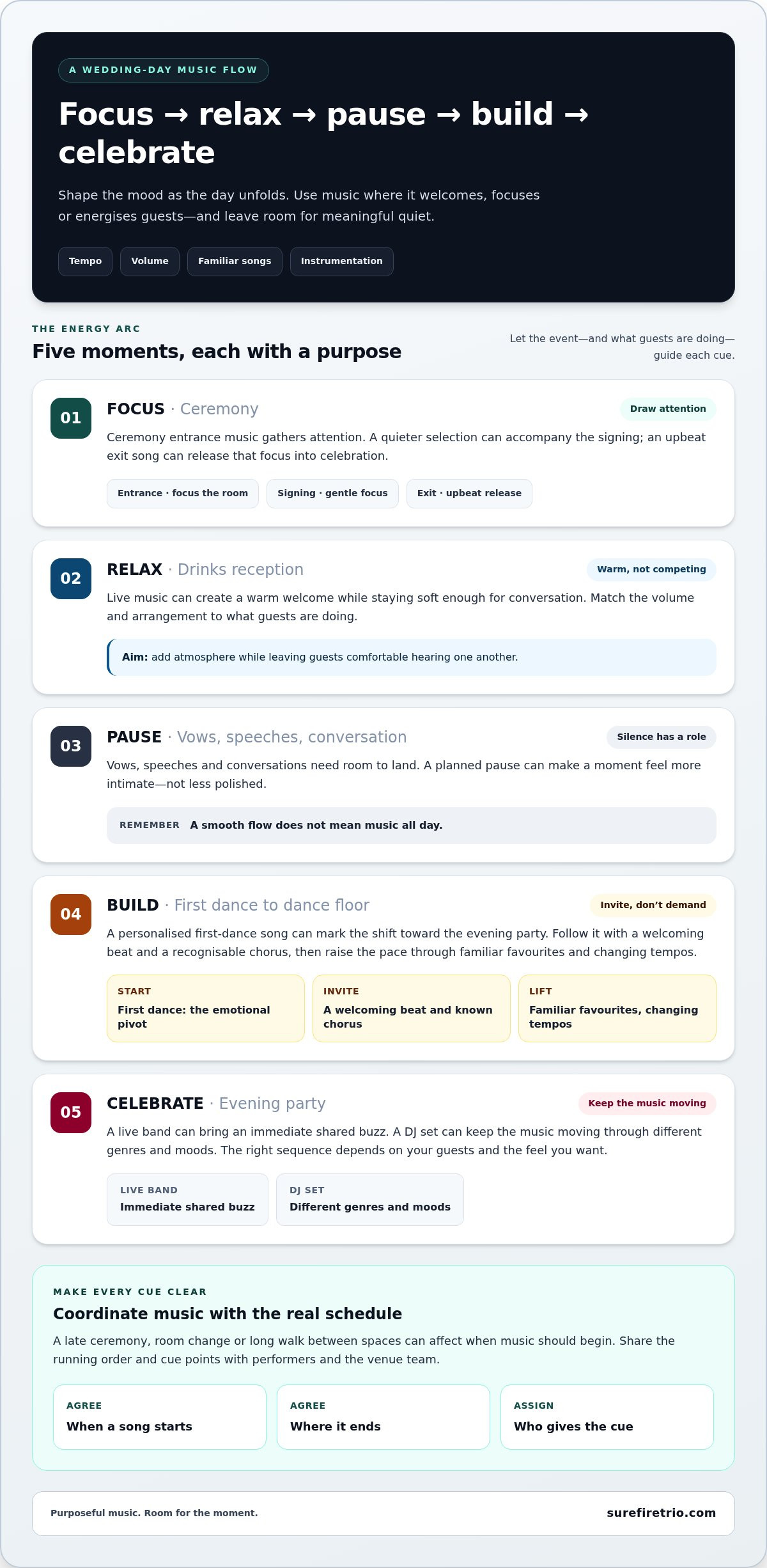
Choose cues for moments where sound can make a transition feel clear and intentional. Ceremony entrance music draws attention to the aisle. A quieter selection during signing can give guests a gentle focus while the paperwork is completed, and an upbeat exit song can release that focus into celebration. At the drinks reception, live music can create a warm welcome while staying soft enough for conversation. Later, a personalised first-dance song can mark the transition from formalities to the evening party.
Does a smooth music plan mean music all day?
No. Vows, speeches and conversations need room to land, and silence can make those moments feel more intimate rather than less polished. Plan musical transitions around the event, not over every pause. Agree when a song starts, where it ends and who gives the cue. For example, keep drinks-reception music relaxed, pause it for speeches, then build the energy with a brighter selection as the room prepares for dancing. That gradual lift feels natural rather than abrupt.
That’s the heart of optimizing wedding day flow with music: every cue has a purpose, and every pause does too. Ceremony singing, drinks-reception music and a tailored first-dance song can each add a distinctive note, while a live band and DJ set help carry the celebration into the evening. Plan around the moments, and the day can move with confidence from one atmosphere to the next.
How music changes the energy between wedding-day moments
A wedding’s energy doesn’t jump from solemn vows to a packed dance floor in one beat. It moves through stages: attentive listening during the ceremony, relaxed conversation over drinks, focused moments for speeches or announcements, then celebration. Music helps shape those shifts through tempo, volume, familiarity and instrumentation. A gentle acoustic arrangement can soften a room; a brighter rhythm can invite movement.
Musical flow is the art of coordinating mood and transitions so each part of the wedding feels connected, without sound competing with the moment. Sometimes the best cue is no cue at all. A planned pause during a meal or speech gives guests space to listen and respond. Music can then return with intention rather than running continuously in the background.
Use music to set the mood without competing with conversation
Match the volume and arrangement to what guests are doing, not simply how large the room is. In the ceremony, music can hold attention and underline meaningful entrances. At the drinks reception, the goal changes: music should add warmth while leaving guests comfortable hearing one another. For ideas on shaping that atmosphere, explore this drinks reception music guide. A wedding ceremony music guide can also help you think through how cues fit the ceremony’s sequence.
Build toward the dance floor with intentional transitions
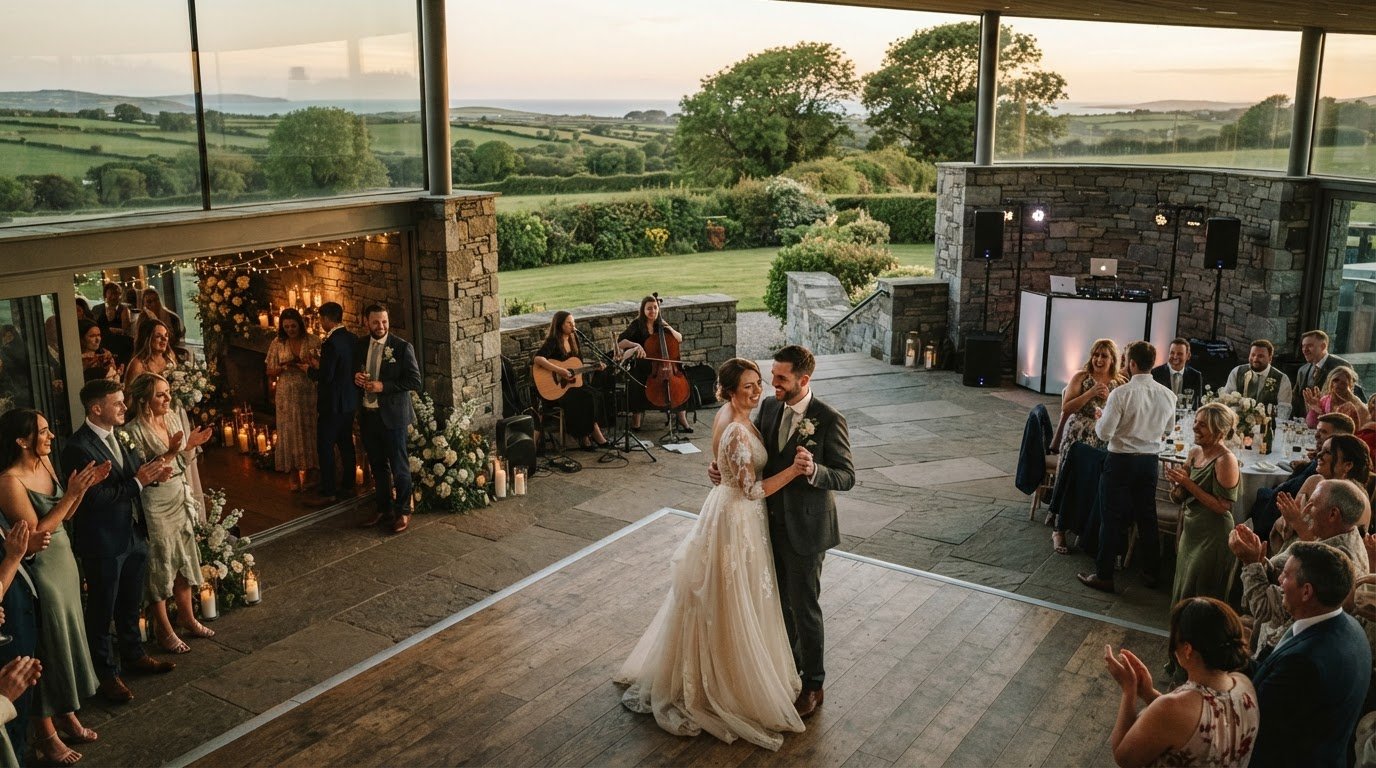
The first dance can be the evening’s emotional pivot. After it, an opening dance-floor song should feel like an invitation, not an order. Choose something with a welcoming beat and a chorus guests recognise, then let the energy rise through a mix of familiar favourites and changing tempos. That gives different generations a way in, whether they’re ready to dance straight away or need a song to draw them closer. Browse wedding party songs for repertoire inspiration.
Coordinate the handover with the people managing the entertainment and venue schedule. For example, the first dance can lead into a lively, widely known track, followed by songs that gradually raise the pace. A live band can bring an immediate shared buzz, while a DJ set can keep the music moving through different genres and moods. The right sequence depends on your guests and the feel you want, not a fixed formula.
Couples planning optimizing wedding day flow with music can use those energy shifts as a simple guide: focus, relax, pause, build, celebrate. A Band & DJ Package can bring live performance and a DJ set into that musical journey. If you’re considering that combination, explore a live band and DJ set for your wedding.
Live band, DJ or playlist: choosing music for each wedding moment
There’s no single format that has to carry the whole day. A live performance brings human presence and a shared sense of occasion. A DJ can adapt selections as the evening unfolds, while a recorded cue can mark a precise moment without needing a performer in the room. Even silence has a role. Choose the format based on what guests should be doing and feeling at that point.
Use this comparison as a starting point, then fit each cue to your schedule, venue spaces and priorities. Optimizing wedding day flow with music is about assigning every format a purpose, not choosing one winner.
| Format | Atmosphere and guest experience | Flexibility and coordination | Moments it may suit |
|---|---|---|---|
| Live performance | Personal, immediate and engaging, with the sound and presence of musicians in the room. | Performers need to be positioned and ready for agreed cues; the arrangement can shape the mood. | Ceremony singing, drinks-reception music, first dance or a live set for the celebration. |
| DJ set | Versatile and energetic, with scope to move between genres and respond to the dance floor. | Selections can shift with the room; coordinate handovers and key announcements with the schedule. | Evening dancing, including continuing the party after the band’s performance. |
| Recorded cue | Familiar and controlled, with a specific song ready for a defined moment. | Agree who starts it, where playback happens and how it fits the running order. | A brief entrance, signing or exit cue when a live performance isn’t needed. |
Not every moment needs a performer or a carefully curated playlist. Some moments call for live connection; others need a reliable cue, conversation-friendly quiet or no music at all. A live-band-and-DJ combination can bridge distinct parts of the celebration, moving from the shared energy of a band performance into the DJ’s broader, adaptable dance set.
When does live music add the most to the experience?
Choose live music where the performance itself adds meaning or atmosphere. Ceremony singing can make a personal entrance or another key moment feel especially present. A ukulele duo can bring a relaxed, intimate feel to a drinks reception. For the evening, a customised first-dance song offers a personal focal point before the party opens up. Find more inspiration in these wedding ceremony performances.
When can a DJ set or recorded cue keep the schedule moving?
A DJ can carry the evening forward after the live band, keeping guests dancing while the musical style shifts. Recorded music works well for a short, clearly timed cue when a live performance would add little. Decide who triggers the track and share that cue with the relevant people, so it supports the schedule rather than creating a scramble.
How to build a wedding music timeline that actually works
A useful music timeline isn’t a minute-by-minute script. It’s a shared guide to what happens, which moments need music and who gives each cue. Start with the event schedule, then layer in the music. For broader schedule ideas, see this wedding planning guide.
Start with the schedule, then place the music
Write down the main phases first: ceremony, drinks reception, meal, speeches, first dance and evening celebration. Use flexible placeholders such as “guests seated,” “speeches complete” or “first dance begins” instead of relying on universal start times or fixed performance durations. The venue schedule is your framework; the cues fit around it.
Then follow this simple process:
- 1. Confirm the running order. Get the latest schedule from the venue contact, including room changes and any planned announcements.
- 2. Mark the music moments. Note where a specific song, live performance or announcement cue matters. Leave other moments open for conversation or natural pauses.
- 3. Assign a format. Decide whether each cue calls for the band, DJ or a recorded track. Include who starts the cue and where it happens.
- 4. Coordinate handovers. Share the agreed plan with the venue contact and performers, and update them if timings change.
Leave breathing room between phases. If the meal or speeches run late, you don’t want every later moment to depend on a chain of exact start times. Mark the next cue by the event that comes before it, then give the people involved a clear signal to adapt.
Share cues clearly with everyone involved
Put the essentials in one concise run sheet: event moment, song or format, person responsible and any transition note. For example: “After the final speech, the venue contact signals the band; the first-dance song follows when the couple is ready.” Agree who passes on changes, so performers aren’t left guessing if speeches overrun or the schedule shifts. Keep one practical backup cue, such as a recorded track for a transition, but avoid building a complicated plan for every possibility.
This preparation keeps the entertainment aligned with the day without turning the couple into stage managers. A Band & DJ Package brings live performance and a DJ set into the same overall music plan. Explore Surefire Trio’s wedding band and DJ option as you shape your cues and handovers.
Bring your wedding music flow together with Surefire Trio
A music plan works best when each choice has a clear role in the day. Ceremony singing can frame a meaningful moment, drinks-reception music can create a welcoming backdrop, and a personalised first-dance song can mark the shift into the evening. From there, live performance and a DJ set can carry the celebration forward in different ways, shaped around the atmosphere you want and the schedule you’ve agreed with your venue.
Coordinate live performance and DJ music around your day
Surefire Trio’s Band & DJ Package brings live band performance and DJ music together as part of your wedding entertainment. As you plan, share the moments that matter most, your preferred energy changes and the cues that connect one part of the day to the next. That gives the entertainment team a clear picture of the musical journey you have in mind, without treating the day as a rigid sequence of fixed timings.
For example, you might want the live band to bring a shared burst of energy to the evening, then have the DJ set continue the celebration with a broader mix of music. Surefire Trio’s live repertoire spans the 70s, 80s and 90s, offering familiar sounds for guests across generations. Shape the details around your priorities: which moments need a specific song, where you want conversation to take centre stage, and how you’d like the evening to build.
Make the personal moments sound unmistakably yours
Small musical choices can make the day feel truly personal. Ceremony singing adds a live voice to a moment you want guests to remember. Ukulele duo music can bring a relaxed feel to the drinks reception, while a customised first-dance song gives your shared moment its own sound. These options can be part of your plan where they fit, rather than adding music simply to fill time.
Surefire Trio is led by Roy, Alan and Adam. Use your running order to share the important cues and the feeling you want each moment to create. That helps connect your musical choices to the schedule while leaving room for the day to unfold naturally. It’s a practical way to approach optimizing wedding day flow with music, with your priorities at the heart of the plan.
Ready to bring the moments together? Explore Surefire Trio’s wedding music and plan your wedding music with Surefire Trio.
Shape a wedding soundtrack that moves with the day
Great wedding music isn’t nonstop. It’s thoughtfully placed. A well-chosen cue can bring focus to a ceremony moment, give guests a warm welcome or open the door to dancing. A purposeful pause can be just as powerful, leaving space for vows, speeches and conversation.
Optimizing wedding day flow with music starts with your schedule, then matches each moment to the right sound: live performance, DJ set, recorded cue or quiet. Clear cues shared with your entertainment team and venue contact help the day feel connected while leaving room for it to unfold naturally.
Surefire Trio is a wedding band and DJ service serving weddings across Ireland, with live repertoire spanning the 70s, 80s and 90s. From personal musical moments to an energetic evening celebration, your choices can reflect the atmosphere you want to create.
Ready to plan a soundtrack that feels like yours? Plan your wedding music with Surefire Trio and take the next step towards a celebration with a brilliant rhythm from start to finish.
Frequently Asked Questions
How do you plan music for a wedding day?
Start with the confirmed schedule, then mark moments where music has a clear purpose, such as the ceremony, drinks reception, first dance and evening celebration. Choose live music, a DJ set or a recorded cue for each, and note how one moment hands over to the next. Leave room for natural timing changes. Share the plan with your performers and venue contact so everyone knows the key cues and who will signal them.
Should there be music playing throughout the entire wedding day?
No, music doesn’t need to play throughout the entire wedding day. It can welcome guests and shape key moments, but continuous sound may compete with conversation, speeches or a meaningful pause. Plan music where it adds to the experience, then let quieter periods feel natural. The aim is a connected day, not a soundtrack filling every minute. For instance, reception music can pause for speeches and return when guests are ready for the next part of the celebration.
Can a wedding band and DJ work together at a wedding?
Yes, a wedding band and DJ can work together to create a connected evening. A live band brings the shared energy of a performance, while a DJ can continue the celebration with recorded music afterwards. Agree on the schedule, the handover cue and the atmosphere you want as the event moves into the late-night party. A clear transition helps guests feel that the celebration is building, not stopping and starting.
What music should be played during a wedding drinks reception?
Choose drinks-reception music that welcomes guests and supports conversation rather than dominating it. The right sound depends on the atmosphere you want and the setting. Live acoustic music, such as a ukulele duo, can bring a relaxed feel while giving the reception its own identity, distinct from the evening dance floor. Consider whether guests will be chatting, moving between spaces or gathering in one area, then choose music that complements the moment.
How do you avoid awkward gaps between wedding music sets?
Put each transition on the run sheet, including who gives the cue and what happens next. Coordinate with your venue contact and performers, and leave flexibility for speeches or other schedule changes. If the evening moves from a live band to a DJ set, agree how the handover will work and who signals it. Guests don’t need every pause filled, but a clear next step helps the celebration feel continuous.
When should you choose live music instead of a wedding playlist?
Choose live music for moments where the performance itself adds atmosphere or personal meaning, such as ceremony singing, a drinks reception or your first dance. Recorded music can suit a precise cue or a moment that doesn’t need a performer. Consider the mood, guest experience and practical schedule for each part of the day. A mix of live performance, DJ music and recorded cues can give each moment its own character.
How far in advance should you plan the wedding music timeline?
Start the first version once your main schedule and key moments are clear, then refine it as the day takes shape. List important songs, live performances, DJ transitions and the person responsible for each cue. Share the current timeline with your entertainment team and venue contact, and update it if the schedule changes. Optimizing wedding day flow with music is easier when everyone works from the same clear, flexible plan.
Sorry, the comment form is closed at this time.