


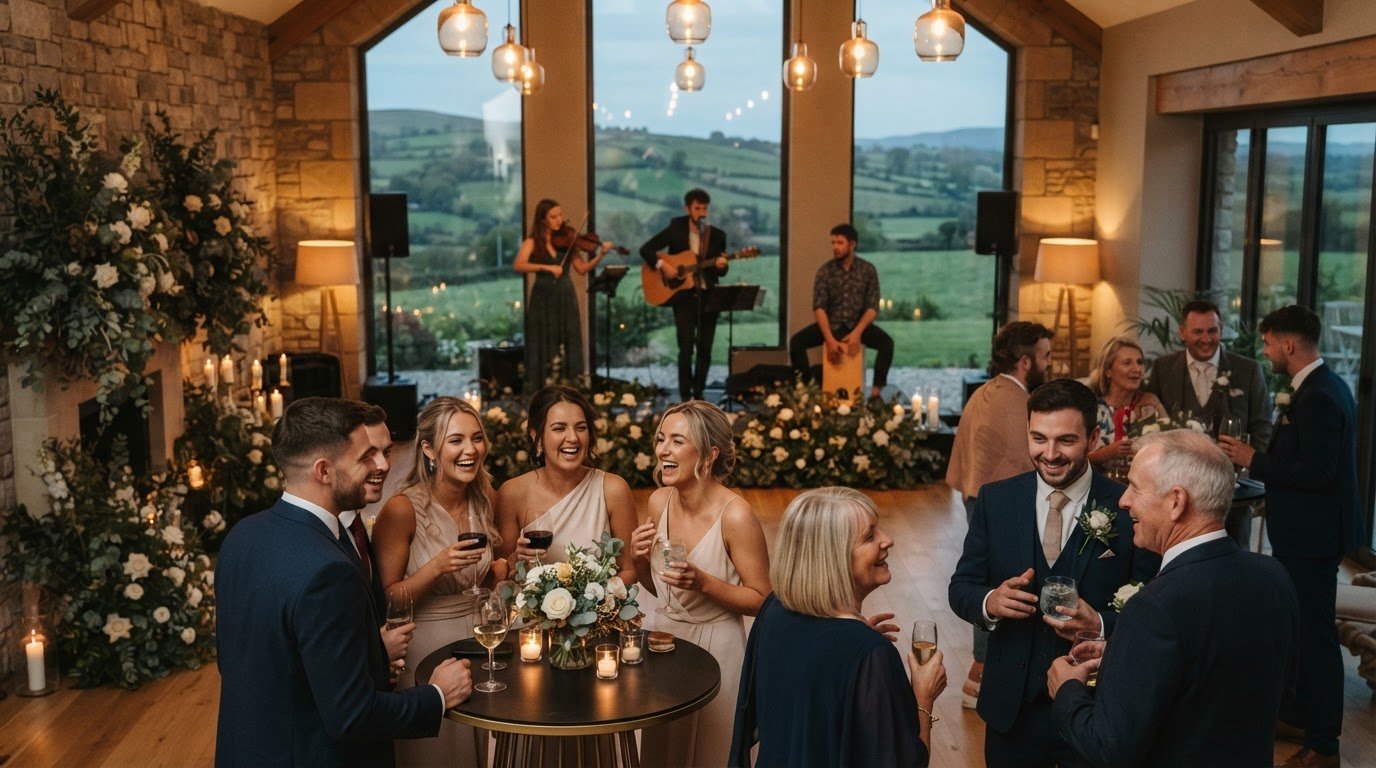
02 Oct Music as a Wedding Icebreaker: How to Help Guests Connect
What if the best wedding icebreaker didn’t ask anyone to get up, sing along or introduce themselves to a room full of strangers? Music as a wedding icebreaker can make those first conversations feel easier without putting shy guests on the spot. A familiar song creates a shared moment, and a well-chosen soundtrack helps the room feel welcoming from the start.
Guests who know only a handful of people may need time to settle in. There can also be quiet gaps while you’re greeting guests or the celebration moves from one part of the day to another. Music won’t make everyone mingle, but it can soften those pauses and give people an easy topic to talk about.
This article looks at how to use music thoughtfully, from choosing conversation-friendly tracks to matching the sound to each stage of the wedding. You’ll also find ways to bring different groups together without relying on organised games or compulsory participation. With a little planning, live music can set a relaxed tone, while a band-and-DJ package can carry that atmosphere forward as the celebration builds.
Key Takeaways
- Use music as a wedding icebreaker to create a shared moment, not to demand attention or participation.
- Choose an approach that suits your guests, the energy of the moment and different comfort levels.
- Compare background music, singalongs, dance prompts and conversation games before deciding what feels right.
- Plan the cue around your wedding schedule and brief the relevant suppliers so the moment feels natural.
- When speaking with a music provider, share your desired atmosphere, guest mix and preferred level of audience participation.
Why music can work as a wedding icebreaker before the dancing begins
A wedding brings together people from different parts of your life: relatives, friends, colleagues and guests from different generations. Some may arrive knowing only a few people, while others have never met. The first drinks reception or a pause between events can feel a little uncertain, especially for guests who are new to one another.
Music as a wedding icebreaker is a musical moment that gives guests a natural shared experience. A familiar melody, a live performance or a change in the room’s energy can offer people something to notice and talk about, without asking them to introduce themselves or join an activity. Music can help create a welcoming mood, but it can’t guarantee that everyone will mingle. The aim is to make connection easier, not to choreograph it.
A good musical icebreaker invites guests to connect; it never makes participation compulsory.
How a shared song can make conversation easier
A song gives guests a simple shared reference. One person might recognise it, while another asks whether it’s a favourite. That can be an easier opening than making conversation from scratch. Choose with your guest list in mind: no genre or track will resonate with everyone, and a quieter musical moment may suit some gatherings better than a high-energy one.
Live performance can make the moment feel special while guests continue chatting, watching or simply enjoying the atmosphere. Nobody has to sing, clap or dance. For a broad overview of traditional wedding music and other music used throughout weddings, consider how each choice can serve a different part of the day rather than expecting one song to suit every guest.
When music helps most during the wedding day
Think about moments when guests are arriving, gathering for drinks, moving between rooms or waiting for evening dancing to begin. A carefully chosen musical backdrop can make these transitions feel less like gaps and more like part of the celebration. Match the volume and energy to the moment so guests can still talk comfortably.
This is about using music to support social connection, not building a complete reception playlist. For more ideas on shaping the atmosphere during that part of the day, explore drinks reception music ideas. The right moment may be subtle: a shared tune in the background can be enough to give guests a reason to smile, listen or start a conversation.
How to choose music as a wedding icebreaker for your guests
The best choice depends on who’s in the room and what the moment needs to do. A quiet drinks reception calls for a different approach from the start of evening dancing. Use this five-step check to shape a musical icebreaker around your guests, rather than expecting everyone to respond in the same way.
- Identify the moment. Decide whether music should ease arrivals, fill a transition or signal that the evening celebration is beginning.
- Consider the guest mix. Think about age range, cultural backgrounds, accessibility needs and whether guests are meeting for the first time or catching up with familiar groups.
- Set the energy. Choose a sound that suits the atmosphere you want, from gentle background music to something livelier. Don’t assume one genre or familiar song will appeal to everyone.
- Choose the participation level. Decide whether guests can simply listen, join in optionally or are being invited to take part in a hosted activity.
- Check the practical fit. Make sure the idea works with the schedule, room layout and other planned moments. Confirm the cue with the performers and event host.
Match the musical moment to the guest mix
If guests are meeting for the first time, a recognisable song may offer an easy conversation starter, provided it suits your audience and your own taste. If groups already know each other, a shared musical moment can give them a fresh reason to connect. Research from UC Berkeley’s Greater Good Science Center explores how music strengthens social bonds, but your choices still need to reflect the people celebrating with you. Traditions, favourite songs and dance styles aren’t universal.
Choose an invitation level that feels comfortable
Passive listening puts the least pressure on guests. An optional singalong asks for a little more, while a group dance or hosted activity makes participation explicit. Each can work in the right setting, but give guests room to enjoy the moment without joining in. Watching, chatting or staying comfortably seated should feel just as welcome.
Choose the least demanding format that still supports the connection you want. Before the day, tell the performers and event host how much interaction you have in mind, and agree how the invitation will be introduced. If you’re considering entertainment for your celebration, explore how Surefire Trio’s Band & DJ Package might fit your plans.
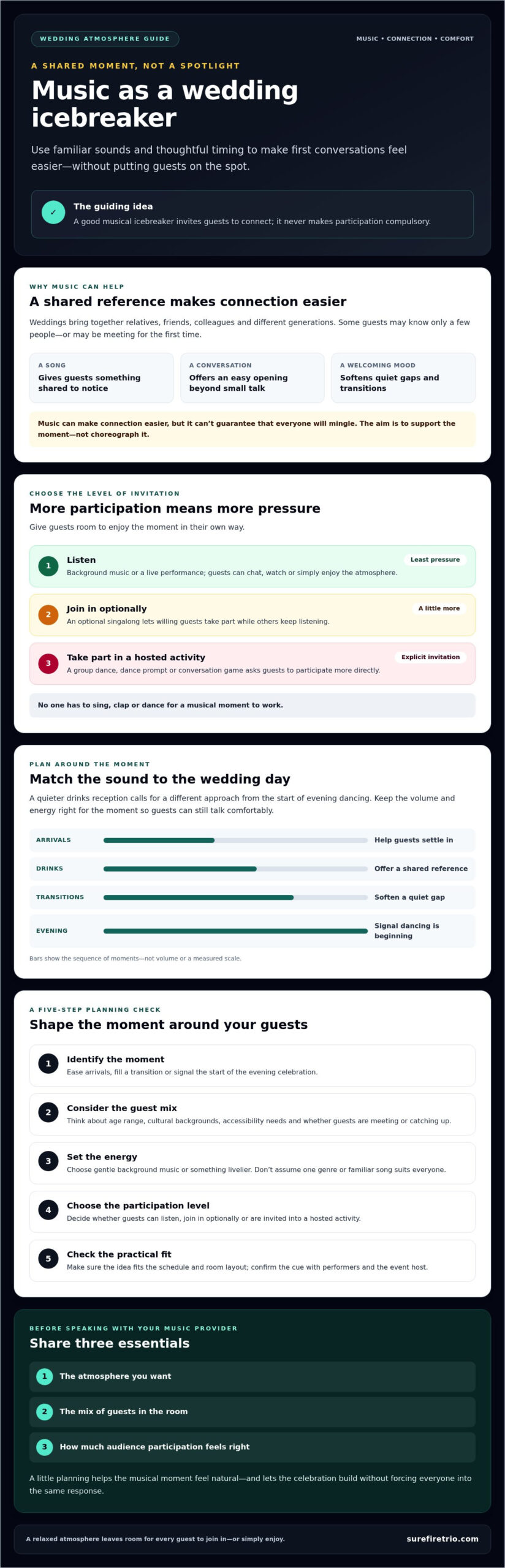
Live music, group songs, or games: which wedding icebreaker fits?
There’s no single best format. Choose music as a wedding icebreaker to suit the energy of the room and how ready guests are to join in. Live background music can create a shared atmosphere without interrupting conversation; a singalong, dance prompt or game makes the invitation more direct. Music and a game can complement each other, but neither is essential.
UC Berkeley’s Greater Good Science Center explores music’s role in strengthening social bonds. That connection doesn’t mean every guest needs to take part. Use the comparison below to weigh the practical differences.
| Option | Best timing | Energy | Preparation | Participation pressure | Mixed-age fit |
|---|---|---|---|---|---|
| Live background music | Arrivals or drinks | Gentle to lively | Agree mood and volume | Low | Flexible if the sound suits the guests |
| Group singalong | A shared celebration moment | Upbeat | Choose a suitable song and cue | Medium | Depends on familiarity and comfort |
| Dance prompt | As evening dancing begins | High | Keep instructions clear | Higher | Offer an easy way to watch instead |
| Conversation game | A quieter reception moment | Light and social | Explain the activity simply | Varies | Adapt to guests’ mobility and preferences |
When gentle live music is the better icebreaker
Choose live music when guests are settling in, enjoying drinks or catching up, and you want to add atmosphere without asking them to stop talking. A ukulele duo is one drinks-reception option offered by Surefire Trio. It can bring a distinctive live sound to the moment while leaving guests free to listen or chat. For a broader look at how entertainment fits the day’s schedule, see this wedding planning guide.
When a group activity or dance prompt makes sense
A short activity can help when guests need a clear reason to interact, or when the evening is ready to shift towards the dance floor. Keep the instructions simple, avoid singling anyone out, and make opting out easy. If you’re planning the later set, wedding party song ideas can help you think about dance-floor energy separately from quieter icebreakers.
The right choice depends on the room and the moment, not novelty alone.
How to plan a music icebreaker without interrupting the celebration
A well-timed musical moment should feel woven into the day, not like a sudden detour. A little coordination helps the music support conversation or mark a transition without competing with the celebration’s main events. Keep the plan simple, clear and flexible.
- Choose the moment. Pick a natural opening, such as guest arrivals or the shift from drinks to the evening. Decide what you want the music to do: create a relaxed atmosphere, offer a shared moment or signal a change in energy.
- Agree the cue. Confirm what will start the moment and who gives the signal. If guests are being invited to join in, agree on a brief, friendly introduction.
- Check the run sheet. Make sure the timing works alongside speeches, announcements, meal service and other key moments. Allow the music to lead naturally into what comes next.
- Brief the relevant suppliers. Share the plan with the venue contact, performers and any other suppliers involved, including who is responsible for the cue and any sound requirements.
Coordinate the cue with the wedding timeline
Think in transitions. Music might begin as guests arrive or help signal the move from drinks to the evening celebration. Confirm the timing with the venue contact, band or DJ, and anyone else whose role overlaps. Avoid placing an interactive moment over speeches, announcements or meal service, when guests need to hear or focus elsewhere.
Keep the icebreaker brief enough to add a spark without taking over. A song or short invitation can open a moment; guests can then return to chatting, eating or dancing as the schedule moves on. If plans shift on the day, agree in advance who can adjust or skip the cue.
Make the moment welcoming, audible, and easy to follow
Ask the venue or relevant supplier about sound guidance for the room, and consider accessibility needs when choosing where and how the moment happens. If conversation is the goal, keep the volume comfortable for talking. If guests are invited to take part, make the instruction easy to hear and understand, and offer a no-pressure alternative: guests can watch, listen or remain seated.
Surprise can be joyful, but it shouldn’t catch the couple or event professionals off guard. Agree any surprise element with the couple and suppliers involved beforehand, so it fits the schedule and guests’ comfort. For a musical plan that includes a Band & DJ Package, discuss the intended moment and timing with Surefire Trio.
Bring music into your wedding icebreaker plan with Surefire Trio
Before choosing a musical icebreaker, talk through the practical details with any wedding music provider. Share who’s coming, what atmosphere you want at different points in the day, and how the music fits the schedule. Be clear about audience participation, too: should guests simply listen, join in if they feel like it, or not be invited to take part at all?
These details help a provider understand whether you want a relaxed start, a lift in energy later on, or both. Music as a wedding icebreaker doesn’t need to become a performance or activity. It can be one considered part of the wider music plan.
Questions to discuss with your wedding music provider
Use your conversation to clarify the plan rather than assuming how each moment will work. Ask:
- How could the music support conversation during drinks and build energy later in the evening?
- How are song requests and transitions discussed, and how will the music fit around your wedding timeline?
- What setup needs should you confirm with the provider and venue?
- Will any audience participation be included, and can it be optional or left out?
Confirm who will communicate timing changes and cues on the day. The answers can help you choose an approach that feels considered and keeps the celebration flowing, without expecting the music to guarantee a particular reaction from guests.
Create a natural musical arc from welcome to evening party
Think about the feeling you want at each stage. You might want a gentler atmosphere early on, then a stronger shift into live performance and a DJ set as the evening gathers pace. A Band & DJ Package can bring live band music and a DJ set into the same wedding entertainment plan. Discuss how the handover and timing would fit your run sheet, and whether a customised First Dance Song has a place in the evening’s musical arc.
Surefire Trio is a wedding band and DJ service operating nationwide across Ireland. As you compare providers, consider how their confirmed options fit your schedule, preferred atmosphere and comfort level around guest involvement. The right plan leaves room for guests to enjoy the music in their own way, whether they’re chatting, listening or ready to dance.
Explore Surefire Trio wedding music options and consider how a Band & DJ Package could fit the flow of your celebration.
Set the tone for a celebration guests can enjoy their own way
The strongest music as a wedding icebreaker isn’t necessarily the loudest or most interactive. Choose a moment that suits your guests, then pick a musical format that invites connection without making anyone perform. A shared song or live background music can offer a natural talking point, while a clear cue and sensible timing help the moment fit smoothly into the day.
Think about the full musical arc, too. Surefire Trio offers live band performances and a professional DJ set, which can help shape the shift from the earlier celebration to evening dancing. Discuss your guest mix, preferred atmosphere, schedule and comfort level around participation so the plan reflects your celebration. Music can help set a welcoming tone, but guests should always be free to join in or simply enjoy the moment.
Ready to explore music for your wedding day? Explore Surefire Trio wedding music options and consider what could work for your plans. With a thoughtful approach, you can create a warm start and let the celebration build at its own pace.
Frequently Asked Questions
Can music really help guests mingle at a wedding?
Yes, music can give guests a shared experience and an easy subject to talk about, but it can’t guarantee that everyone will mingle. A familiar tune, a live performance or a shift in energy may prompt a comment or smile, especially when guests don’t know one another well. Think of music as a gentle invitation, not a substitute for conversation or a way to make every guest participate.
What music works best as a wedding icebreaker?
The best music as a wedding icebreaker is music that suits the couple, the guests and the moment. Consider the age range and cultural backgrounds in the room rather than assuming everyone shares the same favourites. During drinks, conversation-friendly live music may fit better than a singalong. For a later moment, a recognisable, upbeat song could work if it feels right for your guests. There’s no universal crowd-pleaser.
Is live music or a wedding game a better icebreaker?
Neither is automatically better. Live background music can create atmosphere while guests keep chatting, making it a low-pressure option. A short game offers a clearer prompt to interact, but may feel less comfortable for guests who prefer observing. Choose based on the timing, room and audience. You can combine music with an optional activity, but a game isn’t necessary for guests to share a lively moment.
When should you use music as a wedding icebreaker?
Use music during a natural pause or transition, such as guest arrivals, the drinks reception or the move into evening celebrations. It can help a room feel welcoming while guests settle in, or give the evening a clear lift as dancing begins. Avoid placing an interactive moment over speeches, announcements or meal service. Agree the cue and timing with the relevant suppliers so it fits the run sheet.
How do you involve wedding guests without making them feel awkward?
Make participation optional and let guests know what to expect. A friendly invitation to sing or dance should come with an easy alternative: guests can watch, listen, chat or remain seated. Keep instructions short, avoid singling people out, and consider accessibility needs when choosing the activity. If you’d rather keep things relaxed, live background music can create a shared moment without asking anyone to do anything.
Can a drinks reception musician help guests connect?
Yes, a drinks reception musician can add a shared point of interest while guests arrive, reconnect or meet for the first time. Choose a style and volume that supports conversation rather than competing with it. Live music may help set a welcoming tone, but it won’t make every guest mingle. Think about the room, guest mix and schedule, then discuss the atmosphere you want with the relevant music provider.
What should you ask a wedding band about guest participation?
Ask whether the band includes audience interaction, what that might involve and whether participation can be optional or omitted. Discuss how requests, cues and transitions are handled, and how the performance fits around speeches and other scheduled moments. Share your guest mix and comfort level with singalongs or dance prompts. If you’re considering Surefire Trio’s Band & DJ Package, clarify how the live performance and professional DJ set fit your plans.
Sorry, the comment form is closed at this time.