


26 Oct Is a 3-Piece Band Enough for Your Wedding? How to Decide
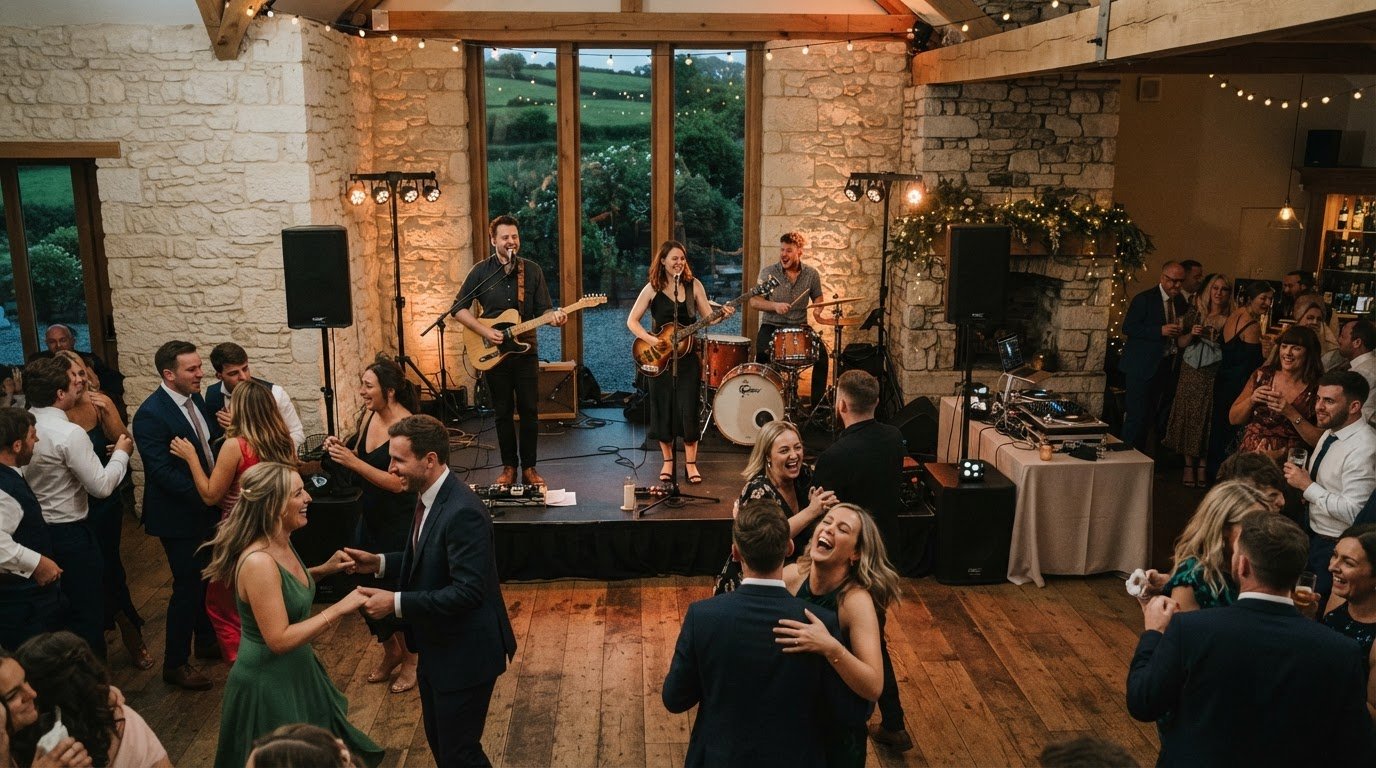
A three-piece band can be enough for a wedding, especially when you want live energy without a larger line-up. The answer to whether a 3-piece band is enough for a wedding depends on the sound you want, your venue and how you plan to keep the dance floor moving. A well-arranged trio can deliver plenty of punch, while a DJ can carry the party beyond the live set.
It’s natural to wonder whether fewer musicians mean a smaller atmosphere. But headcount alone doesn’t determine how full the music sounds or how well it connects with your guests.
Here, you’ll learn how a trio compares with a DJ, what helps three musicians create a full sound, and how a setlist can suit your wedding crowd. You’ll have a clearer sense of which format fits your celebration, from the first live song to the final tracks of the night.
Key Takeaways
- Match the entertainment format to your venue’s performance space and the atmosphere you want, not just the number of musicians.
- A trio can sound full through thoughtful arrangements, complementary instruments and layered vocals.
- Look for a setlist that spans your guests’ tastes and can shift with the room’s energy as the celebration unfolds.
- Backing tracks, loop pedals or a combined live-band and DJ format can add flexibility, each in a different way.
Wedding Band vs DJ: Which is Right for You?
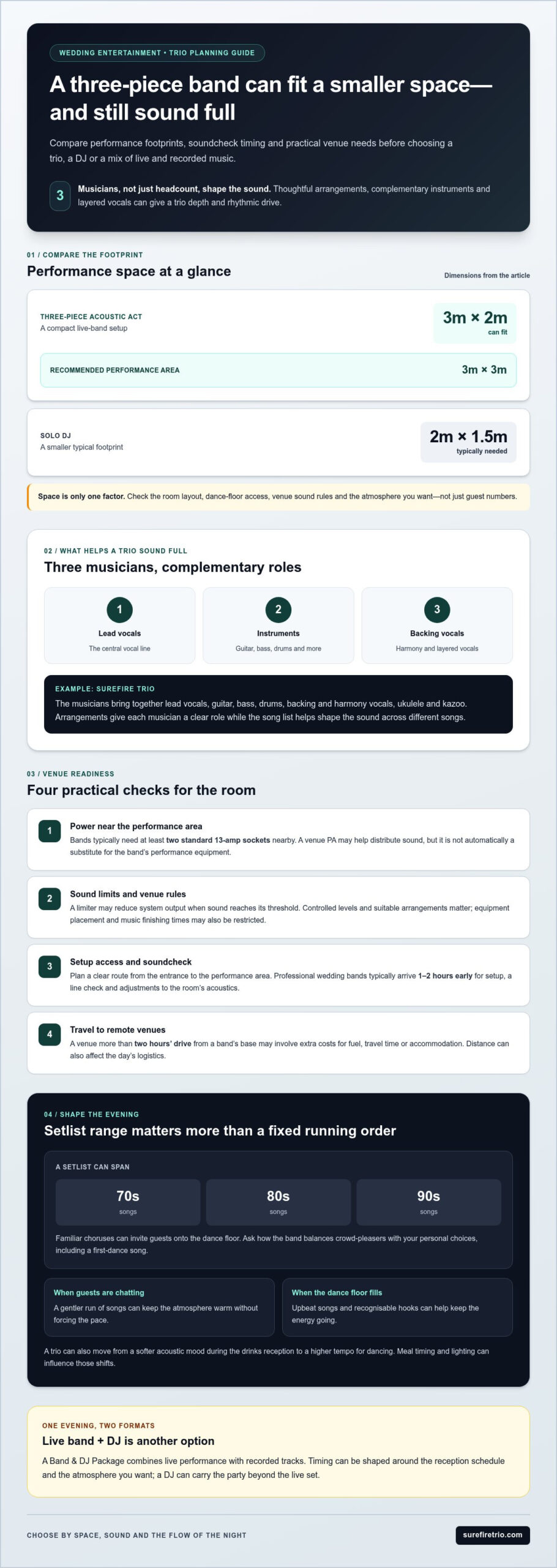
A trio can suit a wedding where the stage or dance floor is tight. A three-piece acoustic act can fit a 3m × 2m performance area, with 3m × 3m recommended. A solo DJ typically needs 2m × 1.5m. Those footprints help compare formats, but the right choice also depends on the evening you want. Live musicians bring performance and interaction, while a DJ can move between recorded tracks without a band line-up.
In Ireland, wedding bands are often four or five pieces, so a trio offers a smaller configuration and can provide a full band sound. Venue capacity matters beyond guest numbers. Consider where the performers will stand, whether guests can reach the dance floor, and how the room is arranged for tables and dancing. A compact room may suit an acoustic set; a larger space may benefit from sound that carries across the venue.
Sound limiters and venue restrictions can affect both live music and a DJ. A limiter may reduce the system’s output when sound reaches its set threshold, so an energetic performance needs controlled levels and suitable arrangements. Venue rules can also shape equipment placement and music finishing times. A venue PA may help distribute sound, but it isn’t automatically a substitute for the band’s performance equipment. Bands typically need at least two standard 13-amp sockets near the performance area.
Travel is another practical consideration for weddings in remote parts of Ireland. A venue more than two hours’ drive from a band’s base may involve extra travel costs, including fuel, travel time or accommodation. Long journeys can affect the day’s logistics, so consider the venue’s distance when comparing entertainment plans. Season and location can also shape travel arrangements, especially for a summer wedding. Weigh the performance space, venue sound rules, power access and travel alongside the atmosphere you want. Then decide whether a trio’s live energy or a DJ-led evening better fits your celebration.
How a trio can create a full sound
Yes, a three-piece band can provide enough music for a wedding reception when its arrangements suit the room and crowd. A trio can combine guitar, percussion and layered vocal harmonies to create a deep soundscape, with rhythmic drive for dancing and detail for a lively atmosphere. Couples often ask, “Is a 3-piece band enough for a wedding?” The answer depends on the sound and performance style they want.
A trio can create a full sound by giving each musician a clear role. Surefire Trio’s three musicians bring together lead vocals, guitar, bass, drums, backing and harmony vocals, ukulele and kazoo. Their high-energy performance, upbeat style and eclectic song list help shape the sound across different songs, while live arrangements keep the music cohesive.
Performance space affects setup as well as sound. Performance-space needs can vary, so check the band’s requirements with your venue when planning the setup. Access matters too: musicians need a clear route from the venue entrance to the performance area. A narrow doorway or distant room can affect how they move equipment, so include the stage location and access route in reception plans.
Soundcheck gives performers time to balance vocals and instruments in the actual room. Professional wedding bands typically arrive 1-2 hours early for soundcheck. That allows time for setup, a line check and adjustments to suit the venue’s acoustics. It also helps the band coordinate with the evening schedule, from guest arrival to the first dance.
If “is a 3-piece band enough for a wedding?” is still on your planning list, consider how live music could connect with recorded tracks later. A Band & DJ Package brings both formats into one evening plan, with timing shaped around your reception schedule and preferred atmosphere.
Assessing the band’s setlist and ability to read the room
Yes, a three-piece band can provide music for both the drinks reception and evening reception. The musicians can shape a softer acoustic mood for conversation, then lift the tempo for dancing later. The change depends on repertoire, arrangement and timing, not simply the size of the line-up.
Start by looking for range across the decades and styles your guests enjoy. A setlist spanning the 70s, 80s and 90s can bridge different generations, while familiar choruses give guests an easy reason to join the dance floor. Ask how the band balances crowd-pleasers with your personal choices, including a first-dance song. A strong fit feels like your celebration, not a fixed playlist.
Reading the room means responding to what guests are doing. When the dance floor fills, upbeat songs and recognisable hooks can keep the energy going. If guests are still chatting, a gentler run of songs can keep the atmosphere warm without forcing the pace. Meal timing and lighting also affect the mood, so consider how the music will shift around those moments.
Look beyond a setlist’s song titles. Consider whether its styles suit your guests, whether the vocals fit the songs, and how the arrangement carries each chorus. A slower song after the first dance, for example, can create a smooth transition before the tempo rises. A flexible running order leaves room for those changes instead of locking every song into a rigid sequence.
For a useful conversation, choose a few must-play songs, identify styles you’d rather avoid, and describe the atmosphere you want at each reception moment. That gives the musicians clear direction while leaving room to respond naturally on the night. Travel and accommodation affect logistics, but the setlist decision rests on musical range, timing and how the band builds energy for your guests.
Backing tracks, loop pedals and multi-instrumentalists
Backing tracks, loop pedals and multi-instrumentalists can help a three-piece create a broader arrangement. Each works differently. A backing track adds pre-recorded parts, such as keyboard textures or extra percussion, while the musicians perform live over them. A loop pedal lets a performer record and repeat a musical phrase during the song. A multi-instrumentalist changes instruments to cover contrasting parts. These approaches can add depth without adding another member to the band.
Listen for how the technique supports the song, not just how many layers it adds. For example, a track might fill out a chorus, while live vocals and guitar keep the performance immediate. A loop can build a repeated rhythm, but it needs to fit the song’s structure. Instrument changes can add variety between songs, though transitions need to feel smooth. The balance matters: too many recorded parts may make a live wedding set feel less responsive to guests.
During booking, ask which parts of the performance are played live and which use tracks or loops. Discuss a specific song, such as a dance-floor favourite with a prominent keyboard line. Ask how the arrangement works when guests sing along, or when the musicians move between songs. If you’re planning music for the ceremony and evening, consider whether the same approach suits both moments. A stripped-back arrangement may fit a ceremony, while fuller layers can bring more drive to dancing.
For a band in Ireland, the right choice depends on your priorities: a natural live feel, a fuller arrangement, or flexibility across the set. Think about the sound you want, rather than assuming extra layers automatically improve it. Don’t forget to share your preferences and must-play songs before the performance, so the musicians can shape the right approach. To explore how a live trio can fit your wedding plans, discuss your wedding music options.
Surefire Trio: Band & DJ Package
Surefire Trio’s Band & DJ Package brings live music and a DJ set together for one continuous wedding celebration. It suits couples who want the energy of a live trio, then recorded tracks to keep the evening moving. The live repertoire spans the 70s, 80s and 90s, giving guests familiar songs to sing and dance along to.
Make the first dance personal with Surefire Trio’s customised First Dance Song. Later, the Late-night DJ set keeps the party going after the band’s performance. Together, these options connect key moments, from a song chosen for the couple to a lively finish on the dance floor.
Contact Surefire Trio to talk about your wedding entertainment.
Shape the Soundtrack for Your Celebration
Whether a 3-piece band is enough for a wedding comes down to the experience you want guests to remember. Start by choosing the moments that should feel most personal: a ceremony entrance, your first dance, or the point when everyone heads to the floor. Those priorities give your entertainment plan a clear direction, instead of leaving music as a last-minute detail.
Surefire Trio’s Band & DJ Package connects live performance with a Late-night DJ set, while its First Dance Song option can make that defining moment feel truly yours. Think about how each part of the evening should flow, then choose music that brings your plans to life.
Contact Surefire Trio about your wedding and start shaping a soundtrack that feels like you. Your celebration deserves a brilliant beginning and a dance floor ready for what comes next.
Frequently Asked Questions
How much power does a band need?
Bands typically need at least two standard 13-amp sockets near the performance area. Ask the venue where those sockets are and whether other equipment will use the same supply. Keep the route to them clear during setup. Power needs can vary with the sound system and instruments, so include socket access in the technical arrangements rather than assuming a convenient outlet is nearby.
What instruments and sound does a typical 3-piece wedding band include?
A three-piece wedding band can combine vocals, guitar, bass and drums, with musicians sharing the musical parts. Surefire Trio’s lineup includes lead vocals, guitar, bass, drums, backing and harmony vocals, ukulele and kazoo. Listen to a full song recording, not just a short highlight, and notice how the vocals and instruments balance and how the arrangement holds together.
How does a 3-piece band compare with a 4-piece or 5-piece wedding band?
A three-piece line-up has fewer musicians sharing the musical parts, while a four- or five-piece band can add more instrumental or vocal layers. In Ireland, four- and five-piece outfits are typical. More players can create a fuller sound, but a trio can still deliver a full-band feel through its arrangements. Compare the sound and style you want, rather than choosing by headcount alone.
What size wedding venue can a 3-piece band comfortably play?
A trio’s performance area depends on its setup and the venue layout, so confirm the space needed with the band. Allow enough room for musicians and equipment without blocking guest access or the dance floor. The venue’s layout matters as much as its overall size: a clear, level performance spot near suitable power access makes setup more practical.
How many guests can a 3-piece wedding band entertain?
Guest numbers alone don’t determine whether a trio can entertain a room. The venue’s shape, sound coverage, speaker placement and distance between the band and guests all affect how clearly music carries. A seated dinner and a crowded dance floor also create different listening conditions. Consider the room layout and where guests will gather, not just the venue’s capacity.
What should couples check in a 3-piece wedding band’s contract and setup requirements?
Before booking, confirm the performance timing, breaks, arrival arrangements, payment terms and cancellation conditions. Check the venue’s sound limiter or music cut-off, performance-space dimensions, access route and nearby power sockets. Share details such as the first dance choice and key songs in advance. These steps help align the band’s setup and schedule with the venue’s requirements and your reception plans.
Sorry, the comment form is closed at this time.