


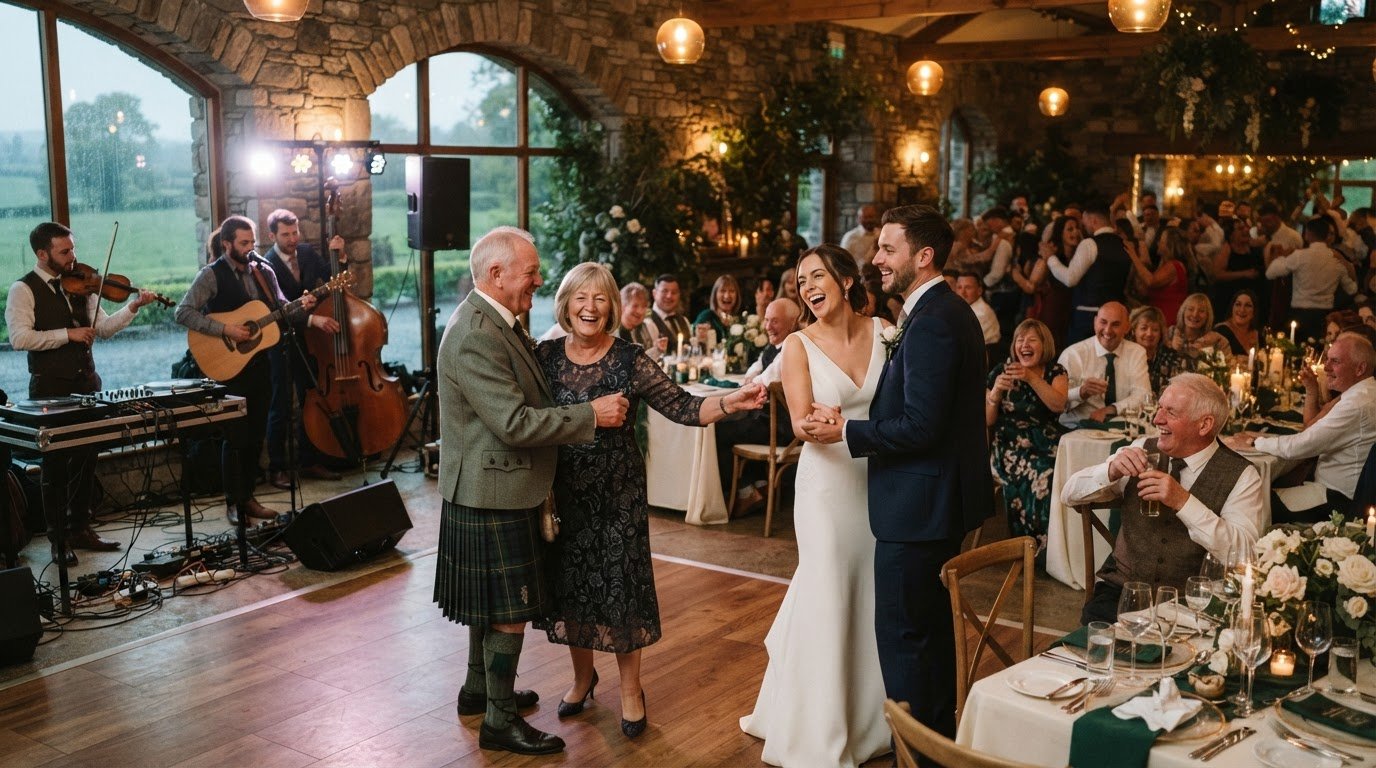
11 Oct How to Make Sure Older Guests Enjoy the Music at Your Wedding
A full dance floor isn’t the only sign that your wedding music is working. A great soundtrack makes every generation feel there’s a place for them, whether they’re dancing, singing along or enjoying a conversation nearby. If you’re wondering how to make sure older guests enjoy the music, start by thinking beyond a playlist of hits.
It’s natural to worry that familiar favourites might slow the party, or that high-energy music and loud sound could leave some relatives on the sidelines. But welcoming older guests doesn’t mean choosing between nostalgia and a lively celebration. It means creating a thoughtful flow, with recognisable songs at the right moments, comfortable listening spaces and music that brings people together.
In this guide, you’ll learn how to balance well-loved classics with newer dance-floor favourites, manage the evening’s energy and make participation comfortable for guests who’d rather chat than dance. A live band and DJ can complement each other, moving from music spanning the 70s, 80s and 90s into a late-night set that keeps the celebration going. The result is a reception that feels warm, inclusive and unmistakably yours.
Key Takeaways
- To learn how to make sure older guests enjoy the music, ask a few relatives about songs, artists and memories they’d love to hear.
- Build a flowing mix of familiar singalongs, cross-generational favourites and newer dance tracks instead of separating the playlist by age.
- Make room for conversation by considering speaker placement and keeping quieter areas away from the main sound.
- Use live performance to bring familiar songs to life, then let a DJ carry the celebration across eras and moods.
How to make sure older guests enjoy the music without slowing the celebration
Your guests can share a wedding day without sharing one music taste. The aim isn’t to build a playlist around age groups or turn the reception into a nostalgia session. It’s to give people different ways to feel part of the celebration, from singing along to a familiar chorus to chatting comfortably while the dance floor gets going.
That’s the heart of how to make sure older guests enjoy the music: consider recognition, comfortable listening and shared moments alongside song choice. A familiar track can spark a memory, but the atmosphere also depends on when it plays and whether guests can enjoy the music at their own pace. Inclusion doesn’t require everyone to dance. It means making room for different ways of joining in while still building towards a lively celebration.
Why familiar music can help guests feel part of the day
A song someone knows can bring a smile, start a conversation or draw a few relatives together for a singalong. But don’t assume every older guest grew up with the same artists or styles. Family backgrounds and personal tastes vary. Treat familiar music as one ingredient in a broader mix, not the whole recipe. The history of wedding music offers a wider perspective on how music has shaped wedding celebrations across cultures and eras.
For reception planning, think of familiarity as a bridge between moments. A well-loved song might help guests settle into the evening, create a shared singalong or lead naturally into a more energetic stretch. Surefire Trio’s live repertoire spans the 70s, 80s and 90s, giving couples recognisable eras to consider alongside music that feels personal to them.
What enjoying the music can look like beyond dancing
Not everyone measures a good reception by time spent on the dance floor. Some guests may listen closely, sing along from their seats, chat with family between songs or simply enjoy watching the room come alive. Energy levels can change over a long celebration, so a guest who takes a break isn’t necessarily having a lesser experience.
Plan for those different rhythms. A couple of quieter conversational spots can make it easier for guests to stay connected without competing with the music. Meanwhile, the dance floor can remain the centre of the action for anyone ready to get moving. The atmosphere feels more welcoming when guests can choose how they participate, without pressure or the sense that they’re missing the celebration.
Keep the balance simple: include songs that invite recognition, leave space for people to enjoy the music their own way, and let the energy build rather than expecting a packed dance floor from the start. A live band and DJ can complement each other across the evening, combining the immediacy of a performance with a DJ set that moves through different eras and moods. That gives older guests meaningful points of connection while keeping the party open to everyone.
Find out which songs and sounds older guests genuinely enjoy
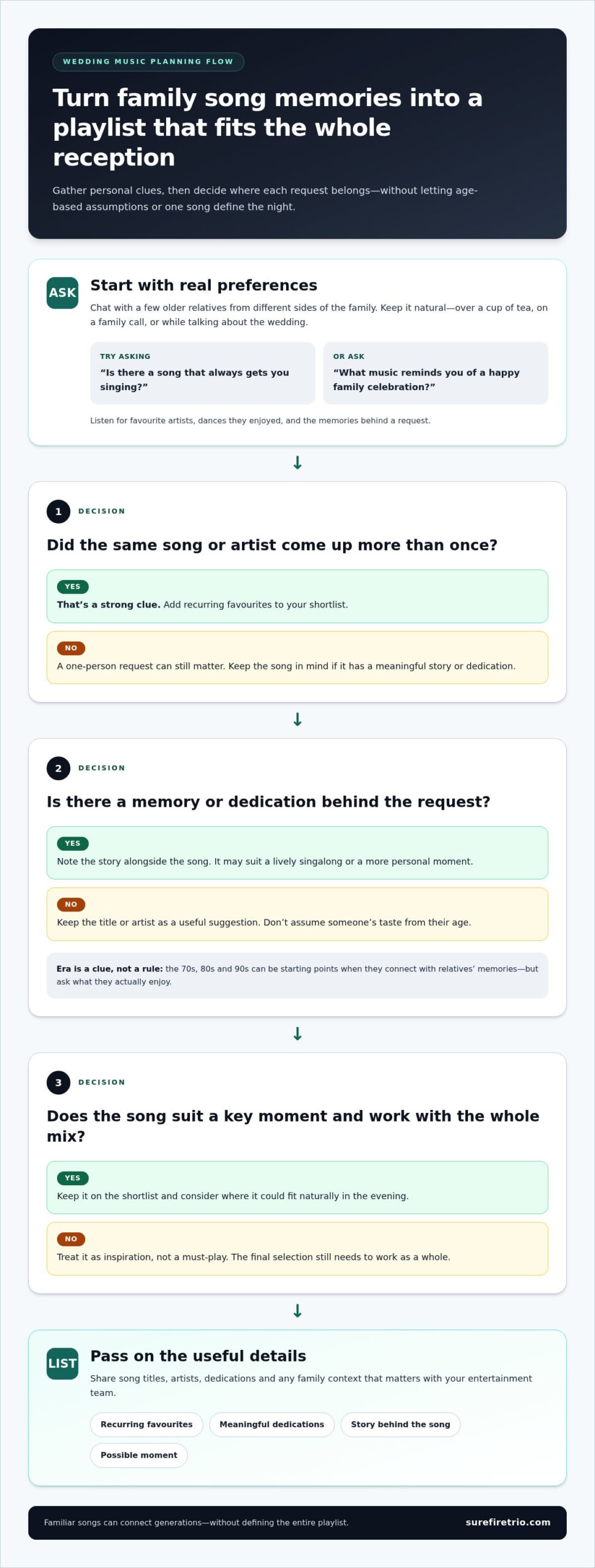
Age can suggest a starting point, but it can’t tell you what someone wants to hear. One relative might love a big-band standard, while another would rather sing along to a 90s hit. A relaxed conversation with a few older guests can give you better clues than building a playlist around assumptions.
Ask relatives from different sides of the family, too. That way, your choices won’t reflect only one person’s memories or musical taste. You’re not taking a formal poll or handing over control of the reception. You’re gathering ideas that can help your wedding music feel personal and welcoming.
Ask about meaningful songs without making it feel like homework
Bring it up naturally over a cup of tea, during a family call or while chatting about the wedding. Try prompts like, “Is there a song that always gets you singing?” or “What music reminds you of a happy family celebration?” You could also ask about favourite artists, dances they enjoyed or a song connected with a special memory. Note recurring favourites and meaningful dedications in one short list.
Listen for the story behind a request as well as the title. A song might matter because it was played at a family gathering, because someone danced to it for years or simply because it makes them smile. Those details can help you decide where a track might fit, whether as a lively singalong or a more personal moment.
Use musical eras as clues, not rules
The 70s, 80s and 90s can be useful places to explore, especially when those decades connect with your relatives’ favourite memories. But they’re not age-based guarantees. Ask what people actually enjoy, then reflect their answers in a mix of sounds and artists. If you’re gathering ideas across the whole reception, the wedding party songs guide offers broader inspiration for shaping your choices.
Turn requests into a shortlist, not a must-play contract. If several people name the same song, that’s a strong clue. If one track is meaningful to a particular guest, consider whether it suits a key moment. A request is inspiration, not an obligation to play every song. The final selection still needs to work as a whole. That balance is central to how to make sure older guests enjoy the music without letting one set of preferences define the night.
Once you have a shortlist, share the useful details with your entertainment team: song titles, artists, dedications and any family context that matters. Surefire Trio’s live sets include music from the 70s, 80s and 90s, with a DJ set to carry the evening forward. Explore live band and DJ music for your wedding as you shape a soundtrack around the people you love.
Balance familiar favourites with modern songs for a mixed-generation dance floor
A mixed-generation dance floor doesn’t need separate “older” and “younger” music blocks. It needs a sequence that gives guests different ways to join in, then carries the energy forward. A familiar chorus can draw people in, while an upbeat track with broader appeal can keep the momentum moving.
Use this comparison as a planning tool, not a fixed formula. The right song depends on the couple, their guests and the atmosphere they want. A track that feels like a guaranteed singalong to one family might not land the same way with another.
| Playlist role | What it can bring | How to use it |
|---|---|---|
| Familiar singalongs | Recognition, shared lyrics and an easy invitation to join in. | Place them where guests can connect, rather than collecting them into one token segment. |
| Cross-generational hits | A common thread for guests with different musical tastes. | Use an upbeat, widely recognised song to link eras or styles. |
| Newer dance tracks | A fresh burst of energy and a nod to the couple’s own taste. | Mix them into the flow so the night feels current without shutting out other favourites. |
Build transitions between generations instead of separate music blocks
Think in transitions, not age categories. A lively, familiar track can lead into a newer dance song with a similarly upbeat feel, keeping people who’ve stepped onto the floor engaged while inviting others to join. Change tempo and style across the set, but give each shift a musical connection so the party feels like one celebration.
Avoid playing every older favourite back-to-back as a brief nod before moving on. That can make inclusion feel like a box ticked. Instead, weave familiar songs through the evening, with crowd-pleasing tracks between them. This is a practical way to approach how to make sure older guests enjoy the music while keeping the dance floor open to everyone.
Make requests and dedications feel personal, not obligatory
A request can become a lovely moment when it fits the mood and flow of the reception. A song tied to a family memory might prompt a singalong or bring relatives together, while a dedication can let someone know their story has been heard. It doesn’t have to redirect the whole set. Consider the energy in the room and place the song where it feels natural.
For a broader view of how music fits into the reception’s flow, the wedding planning guide can help put entertainment choices in context. With a live band and DJ working together, familiar eras and newer favourites can sit side by side, building a soundtrack that feels personal, lively and shared.
Make the music comfortable to hear and easy to enjoy
A lively dance floor and easy conversation can coexist, but the room needs to support both. Speaker placement, seating and clear pathways all shape how guests experience the music. A few practical checks can help older relatives, non-dancers and anyone who wants a quieter moment stay connected without having to sit beside the loudest sound source.
Plan a reception space where music and conversation can coexist
Look at the room from the perspective of someone who wants to chat and someone who wants to watch the dancing. Keep conversational seating away from speakers, while giving guests a comfortable view of the dance floor. Before the reception, do a sound check in the actual room. Listen from different spots, not just beside the band or DJ, and adjust if one area feels much louder than another.
Use this sequence to check the layout and sound:
- Map the main areas. Identify the dance floor, speakers, dining tables and quieter places to sit before deciding where guests will be seated.
- Protect conversation space. Keep seats intended for chatting away from the speakers, and make sure people can hear one another without needing to raise their voices.
- Check sightlines and access. Leave clear routes between tables and the dance floor. Where possible, include seats with a view of the entertainment for guests who prefer watching to dancing.
- Test from several seats. During the sound check, listen in the conversational area as well as near the dance floor. If the room is noticeably uneven, adjust the setup before guests arrive.
- Reassess once the room fills. People absorb sound and can change how it travels around a space. Check the overall balance during the reception and make adjustments if conversation becomes difficult.
The goal isn’t to make every part of the room equally loud. It’s to give guests options: a vibrant centre for dancing and more comfortable spots for conversation, listening or taking a break.
Include guests with different listening and mobility needs
Consider hearing needs discreetly, without putting anyone on the spot. If a guest has shared a preference, use it to inform seating and sound decisions. Keep pathways clear, avoid placing chairs where people need to squeeze past the dance floor, and offer seats with a good view for guests who want to enjoy the performance without joining the dancing.
Music can also shift with the occasion. The drinks reception music guide has ideas for an earlier part of the day, when guests may want to talk and catch up. Together, thoughtful sound and flexible spaces make it easier for everyone to enjoy the celebration in their own way.
For a reception soundtrack shaped around both live music and a DJ set, explore Surefire Trio’s wedding band and DJ music.
Coordinate live music and a DJ to keep every generation in the celebration
A live band and DJ can work as two parts of one continuous evening, not competing acts with separate audiences. Live performance brings a shared, in-the-room energy to familiar songs. A DJ set can then carry that momentum forward, shifting between eras, tempos and moods as the reception unfolds. The handover matters: a smooth transition keeps the celebration moving instead of making the room feel as if the party has started over.
Use live performance to create shared musical moments
A familiar song played live can feel immediate and communal. Guests might sing along, recognise a favourite introduction or share a quick look when a song brings back a memory. Surefire Trio’s live repertoire includes music from the 70s, 80s and 90s, offering couples a range of eras to draw from without assuming every guest enjoys the same styles. The performance can help turn selected favourites into moments the room experiences together.
Shape the band’s part of the evening around the atmosphere you want, not a checklist of songs for particular age groups. A recognisable track can draw guests towards the dance floor, while a change in pace gives people a moment to listen, catch up or decide whether to join in. A live set can follow the room’s energy, building excitement when guests are ready and allowing the celebration to breathe between peaks.
Let the DJ set extend the celebration across musical tastes
The DJ set doesn’t need to feel like a separate event. Treat it as the next movement in the same soundtrack. A considered handover, followed by a track that connects with the band’s final stretch, can preserve the dance-floor energy. From there, the DJ can shift across decades and tempos, keeping the music fresh while leaving room for the couple’s own favourites.
Think about the transition when shaping the evening’s music plan. Share which songs or styles you’d like the band to lead with, what kind of energy should carry into the DJ set and any tracks that feel especially meaningful. That gives the entertainment a clear direction without locking the whole reception into a rigid sequence. The goal is a natural progression: live songs that bring guests together, followed by a DJ set that keeps the celebration moving.
This combination can help answer how to make sure older guests enjoy the music without narrowing the night to one generation’s taste. Live music offers a shared focal point; the DJ can then extend the party with flexibility across the music the couple and their guests enjoy. The transition is a chance to keep building, not a cue for one group to leave the dance floor.
Explore Surefire Trio’s live band and DJ entertainment to see how the two can shape one connected wedding celebration.
Shape a soundtrack that brings everyone into the moment
The most memorable wedding music plan isn’t measured by how many guests dance at once. It’s the feeling that everyone has a way to belong, whether they’re singing along, sharing a favourite memory or cheering on the dance floor. As you make your final choices, think about the moments you want your guests to carry home, then choose music that helps bring those moments to life.
If you’re still weighing how to make sure older guests enjoy the music, start with one simple question: what would make the people you love feel genuinely included? The answer can guide the balance of the evening without taking away its energy or making the playlist feel predictable.
Surefire Trio brings live wedding and private-event entertainment together with five-star reviews, creating a musical experience designed around celebration. Explore Surefire Trio’s live band and DJ entertainment and take the next step towards a wedding soundtrack that feels welcoming, personal and ready to bring the room together.
Frequently Asked Questions
Should I ask older wedding guests for song requests?
Yes. Ask a small number of relatives casually, and explain that their suggestions will help shape the music. Note the song title and artist, then mark each as a favourite, a possible dedication or simply inspiration. This helps Surefire Trio understand what matters while keeping the overall set focused on the reception’s flow. It’s a practical step in how to make sure older guests enjoy the music.
Can older guests enjoy a wedding reception if they do not dance?
Absolutely. Guests can enjoy the atmosphere from their seats, join in with a chorus or share the moment with the people around them. For example, a familiar song might prompt a table of relatives to sing along together, even if nobody gets up to dance. Think of participation broadly, and avoid putting guests under pressure to prove they’re enjoying themselves by taking to the floor.
How can I include a song that means a lot to an older relative?
Choose a song connected to a real memory, then decide what role it should play in the reception. You might dedicate it to your relative, include it in a singalong moment or let it sit naturally within the wider music. Share the artist, preferred version and reason for the request with Surefire Trio. If it’s meant to be a surprise, keep the dedication discreet until the moment arrives.
Is a live band or DJ better for older wedding guests?
Neither is automatically better. The right choice depends on the feel you want and how much variety you’d like across the evening. A live band adds the energy of musicians performing in the room, while a DJ can move between recordings and styles. Surefire Trio’s band and DJ package brings both together, connecting the live set to the next part of the celebration without an abrupt change in atmosphere.
How loud should wedding music be for older guests?
There isn’t one volume that suits every guest or room. As a practical check, try having a short conversation from a seat away from the dance floor while the music is playing. If you need to shout, consider adjusting the balance or creating a quieter area. Sound can feel different from one part of the room to another, so check more than one listening spot.
What should I do if older guests prefer conversation to dancing?
Make conversation a comfortable part of the reception, not an alternative that leaves guests disconnected. Arrange a small seating area where relatives can talk while still following the music and seeing the dance floor. Keep routes between seats clear, and avoid placing every social spot directly beside a speaker. Guests can then catch up, listen and enjoy watching the celebration without feeling obliged to dance.
Sorry, the comment form is closed at this time.