


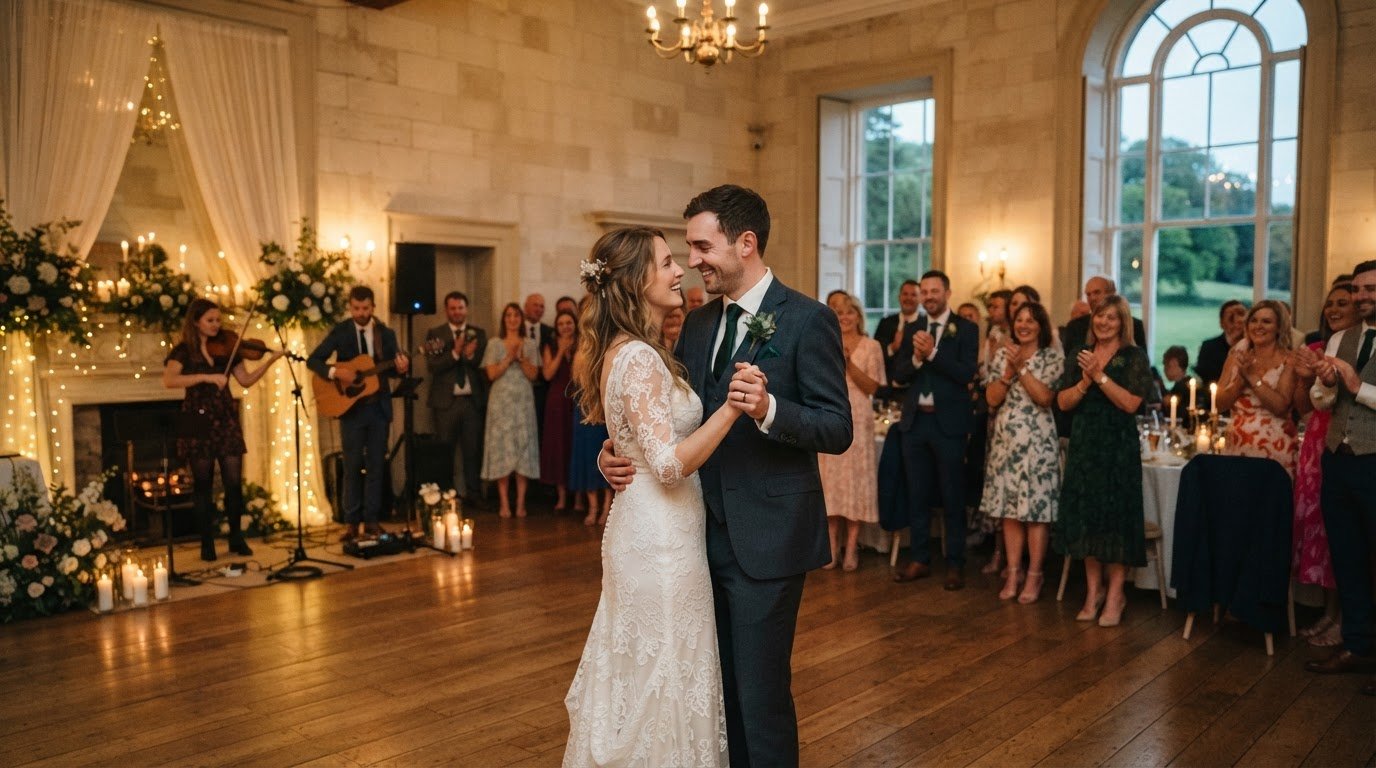
30 Oct How to incorporate personal songs into your wedding moments
Your wedding playlist should sound like the two of you while drawing guests into the celebration. To learn how to incorporate personal songs into your wedding, choose tracks that connect to your relationship and assign them to moments such as the processional, first dance and last song. For the reception, balance personal picks with familiar crowd-pleasers that invite everyone onto the dance floor.
It’s natural to want each song to feel meaningful and to wonder whether your choices will work for the whole room. Aim for a soundtrack that tells your story while giving guests plenty to enjoy. This guide covers music for the ceremony, reception and standout moments, including the last dance, with practical ways to shape the mood and keep the celebration flowing.
Key Takeaways
- Choose ceremony songs that carry personal meaning, then plan the cues, edits and playback so each moment flows smoothly.
- Balance your favourite reception tracks with familiar songs guests can enjoy, and make the playlist feel like one shared celebration.
- Give entrances, cake cutting and the last dance their own musical mood, with choices that reflect your relationship and the atmosphere you want.
- Map out music across the ceremony and reception, from the guests’ arrival to the final song, so no special moment is left to chance.
1. How do you personalise wedding music for the processional, signing and recessional?
Choose a processional song that means something to you both, perhaps a track from your first concert or one tied to a shared memory. For the signing, select music that suits a quieter pause, then build towards a brighter recessional as you leave together. These contrasting cues give the ceremony a clear musical arc.
Plan the practical details alongside the emotion. Allow at least 15 minutes of pre-ceremony background music, and choose a mood that fits your setting. Mark each track with its cue, such as “processional begins when the couple enters”, and decide whether it should play in full or fade at a specific moment. Check the exact versions and give the operator written instructions in advance.
If your chosen song feels unsuitable on the day, use an instrumental or acoustic version, select a meaningful excerpt, or choose another track with a similar mood. For a ceremony singalong, pick a well-known crowd-pleaser, print the lyrics, and involve at least five singers, including the celebrant. Keep it to a short section rather than asking guests to sing for seven minutes.
For recorded music at an Irish wedding venue, agree with the venue who is responsible for permissions for public playback. Don’t assume a personal streaming subscription covers music played at an event. Ask the venue or music operator how playback is covered, and plan the ceremony playlist with the celebrant, DJ or band so cues, fades and handovers are clear.
Use a playback device that works with the sound system, then test each song and its volume in the ceremony space. Download the tracks, label them by ceremony moment and assign someone comfortable with the equipment to manage playback. To include family or cultural music traditions, invite relatives to suggest meaningful songs, then agree with the celebrant where each one fits.
2. Balancing personal taste with crowd-pleasing reception songs
Build the reception playlist as a shared portrait, not a contest between favourite tracks. Each partner can nominate songs with a story, such as a tune tied to a first date or a memorable night out. Listen through the choices together and talk about what each song means. Considering both preferences helps the music reflect your relationship, rather than only one person’s taste.
Weave personal picks among familiar crowd-pleasers. A meaningful song can create a special moment, while recognisable tracks give guests an easy way to join the dancing. Think about the people in the room and the atmosphere you want, then include music that welcomes different tastes. You don’t need to remove every niche favourite; choose its place in the flow so it feels intentional.
Map the music to the reception’s changing energy. Cocktail-hour choices can set the mood, while dinner music should stay quiet and unobtrusive. You can also leave dinner without music. If a DJ isn’t arranged for the afternoon or meal, prepare a separate playlist for that part of the day. Pay attention to transitions: an abrupt shift between contrasting tracks can interrupt the atmosphere.
Before the event, review the full sequence and make sure personal songs sit naturally beside the broader selections. Prepare at least an extra hour of music for each playlist, so the reception has room to run on without the soundtrack ending unexpectedly. Keep the final choices collaborative: one partner’s sentimental ballad and the other’s upbeat favourite can both belong when the surrounding songs carry guests smoothly from one mood to the next. For a reception shaped around your taste and a lively shared soundtrack, explore wedding music options.
3. Personalising entrances, cake cutting and the last dance
Give each reception moment its own musical cue and mood. For your entrance, choose a track that makes you both feel excited, whether that means a dramatic opening or an upbeat chorus. Bex knew her entrance song was right after listening to its first three seconds. Try that quick test together: if the opening sparks an immediate reaction, it could set the tone perfectly. Tell the music operator exactly when to start playback.
For cake cutting, choose a song that adds a playful or sentimental touch without competing with the moment. A light-hearted favourite can make photos feel relaxed; a romantic track can create a softer pause. Decide whether you want the whole song or an excerpt, and coordinate the cue with the photographer and whoever announces the cake cutting. That simple handover keeps the music, guests and moment in sync.
Your first dance can honour a song that matters to both of you, rather than simply choosing a popular wedding standard. Think about the lyrics, tempo and whether you’ll feel comfortable dancing to it in front of guests. If the full track feels too long, choose a meaningful excerpt and agree on its start and finish. A personalised first-dance song can make the moment unmistakably yours.
Use the last dance to close the celebration, whether you want a big singalong or a quiet, intimate finish. Pick a song that reflects the mood you want guests to remember. A final track is optional, but it can signal that the event is ending. If a family dance doesn’t matter to you, skip it; traditions needn’t dictate the playlist. Add the last-song cue to the running order so the operator knows when to play it and guests can gather for one final moment together.
4. Where can you include personal songs in a wedding ceremony and reception?
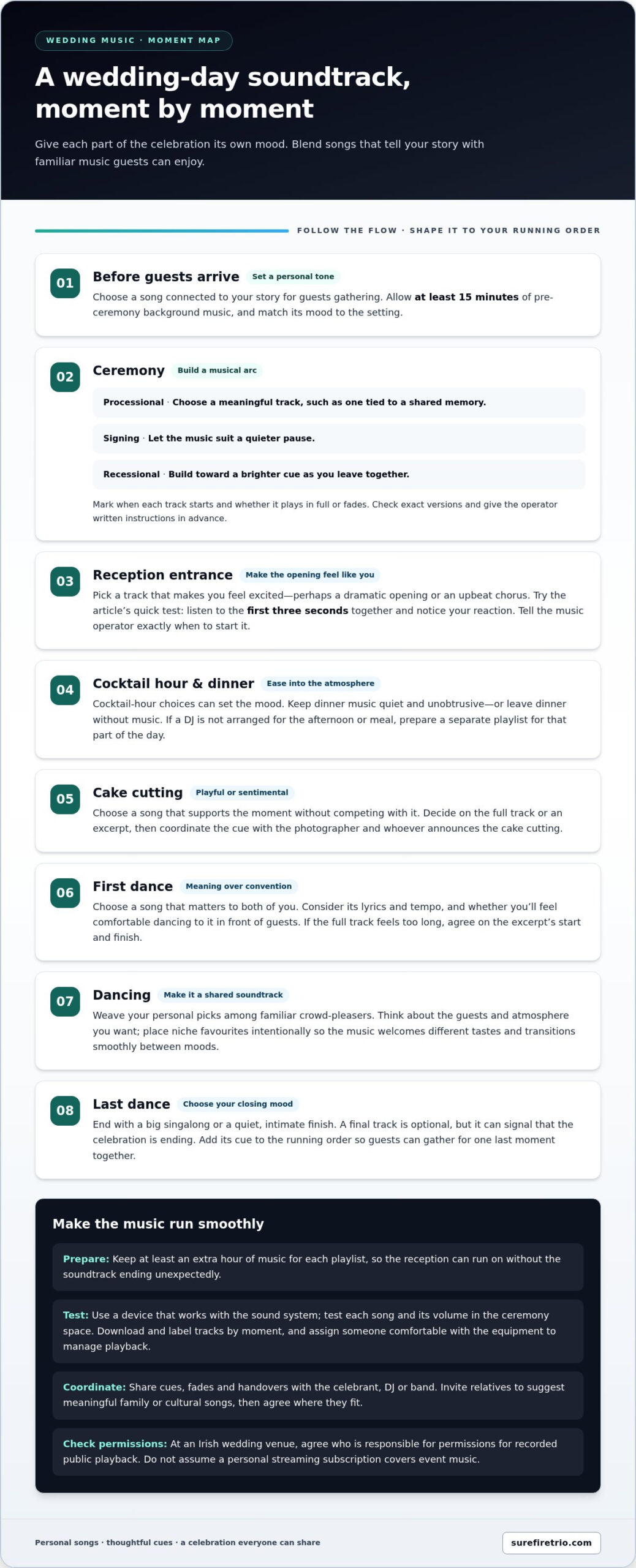
Think of the wedding day as a sequence of musical moments, rather than one playlist. Before guests arrive, a song connected to your story can set a personal tone. During the ceremony, music can accompany the processional, signing and recessional. At the reception, choose distinct tracks for your entrance, meal, cake cutting and dancing. A simple timeline helps each song feel purposeful.
Match each song to the activity and the attention it needs. Choose gentle background music for guests gathering, then a brighter track for your entrance. Keep dinner music low-key, or leave the room quiet so conversation takes centre stage. A cake-cutting song can add humour or sentiment, while a lively reception track can invite guests to dance.
Personal music can also feature in transitions, not only headline moments. A favourite instrumental might accompany guests moving from the ceremony space to drinks, while a meaningful song can welcome everyone into the reception. Choose music that suits each part of the day. The same energetic track may work brilliantly for dancing but feel distracting during a meal or speech.
Make a running order that names the moment, track and cue. Include less obvious transitions, such as the move from drinks to dinner, so there are no awkward silences or unexpected changes. Share the schedule with the people handling the music and update it if the day’s order changes. This gives each chosen song a clear place, while keeping the overall soundtrack varied and personal. To shape a soundtrack around your ceremony and reception, discuss your wedding music.
Surefire Trio: Band & DJ Package
Surefire Trio’s Band & DJ Package combines a live performance with a DJ set, helping your wedding soundtrack move from personal moments to a packed dance floor. It’s a natural fit if you want live music and DJ entertainment to carry through the reception as one joined-up evening.
Make your relationship the focus of a standout moment with Surefire Trio’s First Dance Song option. As the celebration builds, the Late-night DJ set keeps the party moving with music suited to the occasion. Share the songs and moments that matter to you, and shape a soundtrack around your plans.
Contact Surefire Trio or visit surefiretrio.com to discuss your wedding music.
Make your soundtrack feel unmistakably yours
Deciding how to incorporate personal songs into your wedding starts with a useful question: what do you want to feel in each moment? Choose music that brings out that feeling, then make a shortlist with your partner. Not every track needs a deep story. A song can earn its place because it makes you smile, gives guests a joyful cue or captures the mood you want to remember.
Turn your shortlist into a simple music brief. Note the moment for each song, your preferred version and any important cue. This gives your entertainment team clear direction while leaving room for the celebration to feel alive and spontaneous. The result can feel personal without becoming a playlist made only for two people.
Ready to turn your ideas into a wedding soundtrack? Explore wedding music with Surefire Trio and take the next step towards a day that sounds like you.
Frequently Asked Questions
How do you choose wedding music that reflects your personalities and relationship?
A good starting point for how to incorporate personal songs into your wedding is to choose music that reflects different sides of your relationship. Think beyond romantic tracks: one song might capture your sense of humour, while another recalls an adventure you shared. Compare your choices and notice which ones feel authentic to both of you. That gives your soundtrack character without making every selection sentimental.
How do you personalise wedding music for the processional, signing and recessional?
Shape the ceremony’s musical journey around the energy of each moment. A processional can begin gently and build as you enter, while signing music gives guests a calm interlude. For the recessional, choose a track with a clear, upbeat opening to mark the shift into celebration. Consider the room’s acoustics, too: a delicate melody may need a fuller arrangement in a large space.
What are popular first dance songs and alternatives to a traditional first dance?
Rather than choosing a song because it appears on a popular list, find one whose lyrics and tempo suit you both. If a spotlighted dance feels awkward, invite your wedding party to join after the opening verse, or keep the first dance brief before inviting everyone onto the floor. You can also skip it and begin dancing together with your guests.
How do you choose meaningful personal songs for a wedding?
When thinking about how to incorporate personal songs into your wedding, look for tracks attached to a specific memory, person or shared interest. You might choose a song from a family celebration, a favourite film soundtrack or music that reminds you of home. Read the lyrics before settling on a track, and consider whether its meaning will come across during the moment you’ve chosen.
How do you make a wedding playlist and coordinate song cues with suppliers?
Create one shared document with each song’s title, artist, version and cue. Add brief instructions such as “start after the announcement” or “fade when the couple reaches the floor”. Give the celebrant, venue contact and music performers the same up-to-date copy. If you change a track, update the document so everyone is working from the same running order.
What audio formats and equipment are needed to play personal songs at a wedding?
Use a playback device that works with the sound system. Download the tracks to the device, then test each song and its volume in the ceremony space.
Sorry, the comment form is closed at this time.