


01 Nov How to ensure good sound quality in your wedding venue
A lively dance floor doesn’t need to drown out dinner conversation. Learning how to ensure good sound quality at your wedding starts with a sound check before guests arrive, equipment suited to the room, and a plan for spare microphones and cables. The goal is clear speech, full-bodied music and comfortable volume across the venue.
You’re right to think about the DJ’s role: the music can shift with the reception, building energy for dancing while leaving quieter moments room to breathe. Sound limiters in Irish wedding venues are commonly set between 90 and 95 dB, so the best setup balances the venue’s limits with the atmosphere you want.
Use these practical steps to test microphones, reduce echo and background noise, prepare for equipment problems and keep the dance floor lively without making conversation uncomfortable. A few checks before the celebration can make a real difference once the room fills and the music starts.
Key Takeaways
- Run a full sound check before guests arrive, testing microphones and setting levels for clear speech.
- Match speaker placement and coverage to the venue’s size, layout and acoustics to help reduce echo and uneven sound.
- Plan for technical hiccups with spare microphones and cables so a small equipment issue doesn’t interrupt the celebration.
- Let the music build dance-floor energy while keeping volume comfortable for guests who want to talk.
1. How do you test microphones and audio equipment before the wedding?
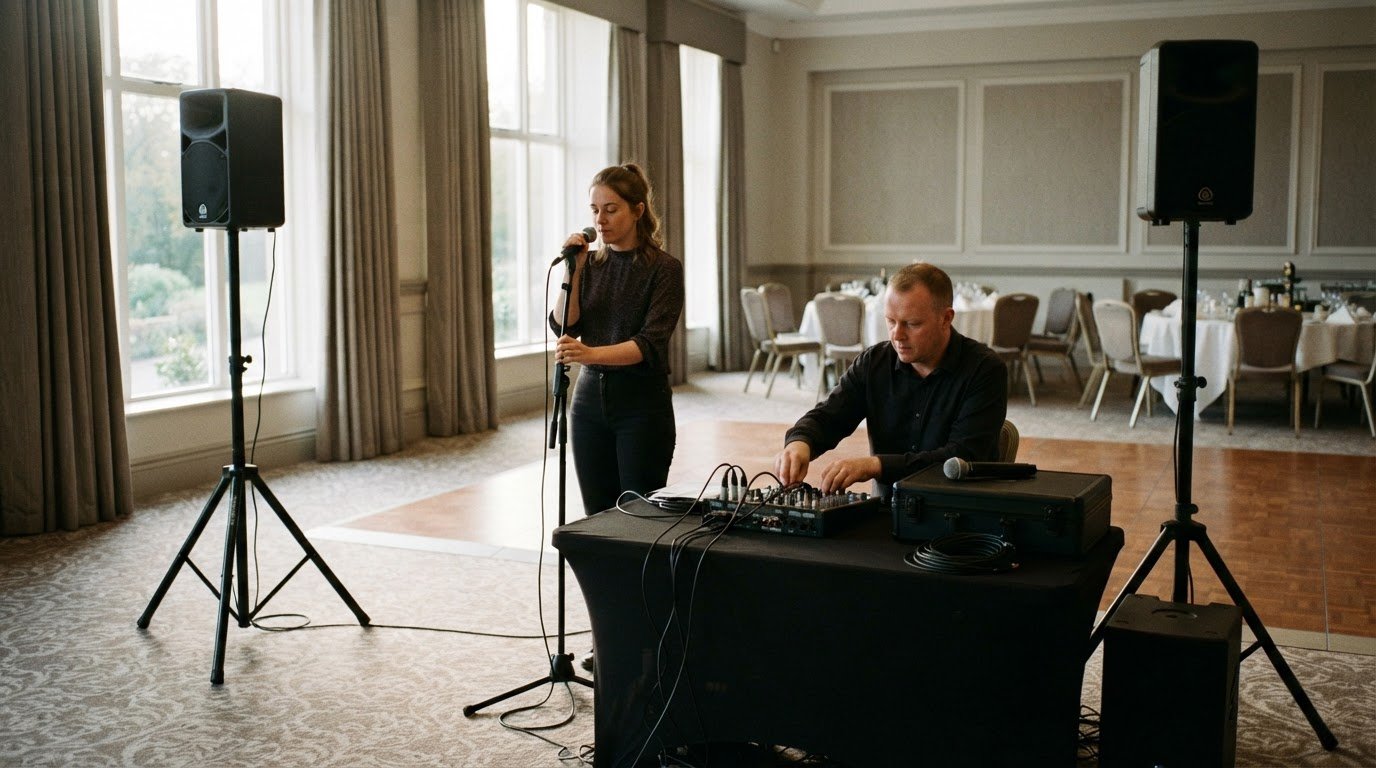
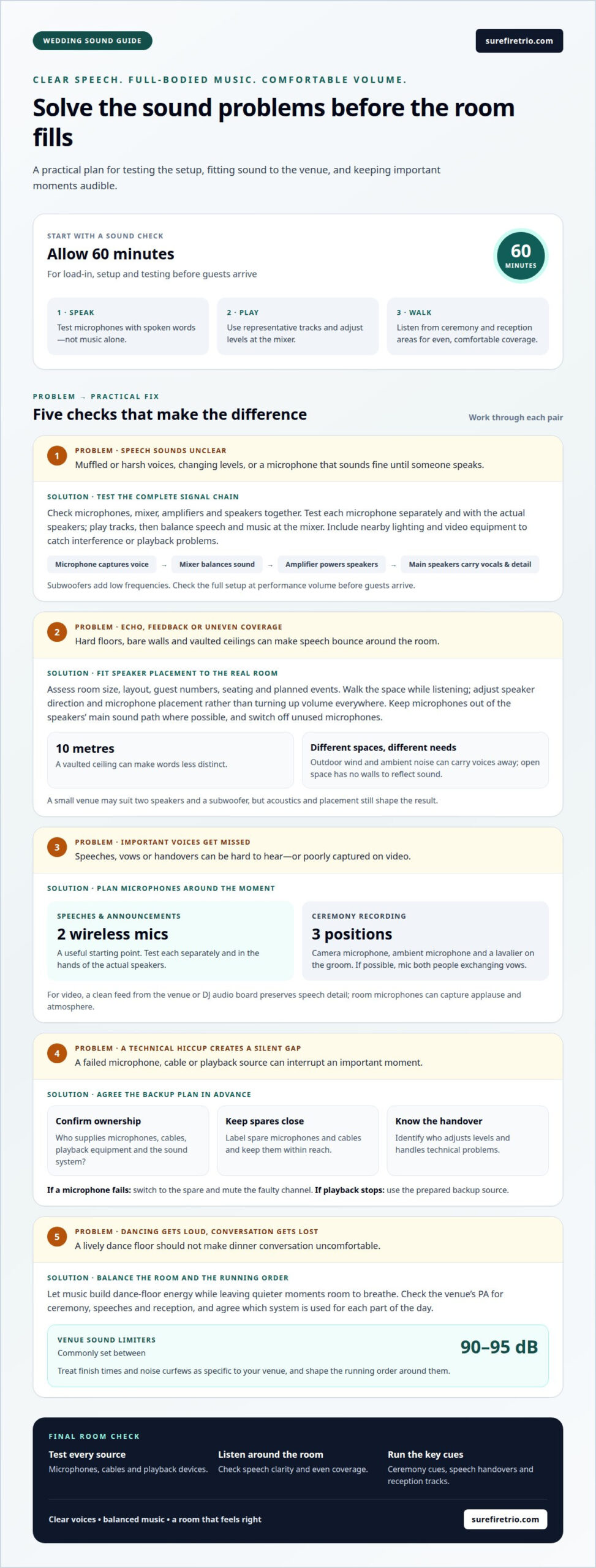
Schedule a sound check before guests arrive, allowing 60 minutes for load-in, setup and testing. Test the microphones with spoken words, not just music: speech reveals muffling, harshness and changes in volume. Play representative tracks through the speakers, then adjust levels at the mixer so music and announcements sound clear. Walk through the ceremony and reception spaces while listening; sound should reach guests evenly without becoming overpowering.
A well-planned sound system brings each part of the signal chain together. Microphones capture voices, a mixer balances them with instruments or playback, and amplifiers power the speakers. Subwoofers add low frequencies, while the main speakers carry vocals and detail. Test the complete setup, including nearby lighting and video equipment, to catch interference or playback problems before guests arrive.
For wedding speeches and announcements, two wireless microphones are a useful starting point. Test each one separately, then try them in the hands of the actual speakers. For ceremony recording, use three distinct microphone positions: a camera microphone, an ambient microphone and a lavalier microphone on the groom. If possible, fit lavalier microphones to both people exchanging vows, so each voice is captured clearly.
Test for echo and feedback in the venue itself. Speak into each microphone from the officiant’s and speakers’ positions. Listen for lingering reflections, ringing or a hollow sound, then adjust microphone placement, speaker direction and mixer levels. Where possible, keep microphones out of the speakers’ main sound path, and switch off any unused microphones to reduce unwanted noise.
Run through ceremony cues, speech handovers and reception tracks. Check that wireless microphones stay clear as speakers move, and that the operator can mute them or adjust levels smoothly. A final test at performance volume can reveal feedback or uneven coverage before guests arrive.
2. How can you reduce echo and background noise in a wedding venue?
Start with the room, not the equipment list. A sound system should suit the venue’s size, layout, guest numbers, seating and planned events. A system that handles background music in a small room may leave speeches unclear for 150 guests. Conversely, a tiny room with 30 guests may need no extra equipment if everyone hears comfortably. Match speaker coverage to the actual audience, not just the floor area.
Hard floors, bare walls and vaulted ceilings can send speech bouncing around the room. In an Irish manor house, a vaulted ceiling reaching 10 metres can make words less distinct. Ask the sound operator to assess the room and place speakers strategically, rather than turning up the volume everywhere. For a small venue, two speakers and a subwoofer may suit the music, but speaker position and the room’s acoustics still shape the result. Outdoor ceremonies need a different approach: wind and ambient noise can carry voices away, while open space offers no walls to reflect sound.
Test the venue’s PA before relying on it. Check whether it covers the ceremony, speeches and reception, and whether its inputs work with the planned microphones and playback devices. A system suited to announcements may not be adequate for an evening of live music. Agree which system will be used for each part of the day, so the band, DJ and venue team can coordinate.
For video, arrange a clean audio feed from the venue or DJ audio board, and capture room sound separately if needed. A direct feed preserves speech detail, while room microphones pick up applause and atmosphere. Tell the videographer which speeches and announcements are important so they can capture them clearly.
Irish wedding venues commonly set sound limiters between 90 and 95 dB. Treat any finish time or noise curfew as specific to your venue, and shape the running order around it. For a joined-up plan for live music and DJ sound, explore wedding entertainment options.
3. Backup audio equipment
Avoid a silent gap by agreeing the equipment plan with the band or DJ before the celebration. Confirm who supplies microphones, cables, playback equipment and the sound system, and identify any venue equipment that will be shared. Keep spare microphones and cables labelled and within reach. A backup audio system can also help prevent a technical problem from interrupting an important moment.
Choose a wedding DJ or live band based on the format, venue acoustics and sound needs across the day. Ask how they handle speeches, music transitions and technical troubleshooting, not just their performance style. The right setup should support clear speech and full, balanced music in the actual room.
How much does wedding sound equipment hire cost in Ireland? The cost depends on the equipment, venue, coverage and technician requirements, so it is determined after a quote request. These details shape the setup needed for the ceremony, speeches and evening entertainment.
Arrange sound equipment and technical support early, especially for a wedding-season date. Share the schedule, music preferences and any special announcements so the sound team can plan handovers and playback. Before guests arrive, test every microphone, cable and playback source, then listen from different parts of the room. Check speech clarity as well as background music, and assess the sound once the room is set.
What should you ask a wedding DJ or sound technician? Ask what equipment is included, which parts of the day it will cover, and what backup microphones or cables are available. Find out who will adjust levels and handle technical problems. Clear answers show how the setup will support each transition, from ceremony cues to the final tracks.
If a microphone fails, switch to the spare and mute the faulty channel to prevent noise. If playback stops, use the prepared backup source, then return to the planned track once the main device is working. Assigning someone to handle these changes helps the celebration continue smoothly.
4. Balancing dance-floor energy with comfortable volume
A lively dance floor needs punch and clarity, not simply more volume. Irish wedding venues commonly set sound limiters between 90 and 95 dB. A 95 dB limiter is generally manageable for a wedding band, while a venue limit closer to 85 dB should be shared with the band immediately. That gives the performers a chance to shape the sound around the room’s restrictions.
When planning how to ensure good sound quality at your wedding, consider guests in every part of the room. Keep music engaging near the dance floor while allowing comfortable conversation at dinner tables. Ask the sound engineer to listen in both areas and adjust speaker direction and balance. Simply turning up the volume can make nearby guests uncomfortable without improving sound elsewhere.
Use the reception schedule to guide volume changes. Keep dinner music lower, build energy when dancing begins, and ease back for announcements or quieter moments. Set microphone levels clearly so guests can follow speeches over any background music. Smooth transitions keep the evening flowing while giving each part of the celebration its own atmosphere.
Pay attention to guests’ response as the room fills. If dancers are enjoying the music but people at nearby tables are struggling to talk, adjust the balance rather than turning everything down. For an outdoor celebration, allow for wind and ambient noise, which can affect how sound carries. A sound engineer can make adjustments as the crowd and atmosphere change.
A first dance can set an intimate tone before the dance floor opens. Choose a First Dance Song that suits the couple, then plan its volume and transition into the next track. This creates a personal moment without an abrupt jump in sound. Another part of how to ensure good sound quality at your wedding is to make that shift feel natural. Plan your First Dance Song as part of a reception soundtrack that moves from romance to dancing.
Surefire Trio: Band & DJ Package
Surefire Trio’s Band & DJ Package brings live music and DJ sets together for a connected evening of entertainment. It’s a natural fit when you want the dance floor to build from the band’s performance into a late-night DJ set, with music spanning the 70s, 80s and 90s. Add a First Dance Song to create a personal moment before the celebrations gather pace. Planning the music as one flow can help the evening move smoothly from the first dance to the final tracks.
For a wedding soundtrack shaped around your celebration, contact Surefire Trio to discuss the Band & DJ Package, First Dance Song or Late-night DJ set.
Make the soundtrack part of your wedding story
Think beyond equipment and consider the atmosphere you want for each musical moment. A calm ceremony, a heartfelt first dance and a lively reception each call for a different feel. Decide which moments matter most, then share your vision with the people shaping the music. This gives them clear creative direction while leaving room to respond naturally to the celebration.
Ensuring good sound quality at your wedding means more than hearing every note. It means creating a personal soundtrack that lets guests stay present and gives the day its own rhythm. The music can become a thread connecting the ceremony to the evening party.
Ready to shape that soundtrack? Contact Surefire Trio about your wedding and take the next step towards a celebration filled with music and meaning.
Frequently Asked Questions
Can a wedding DJ adapt the music during the reception?
Yes. A wedding DJ can adjust the reception’s music as the room’s energy changes, moving from familiar singalongs to faster dance tracks or easing the pace between sets. Share preferred genres, key songs and tracks to avoid beforehand. Guest response can guide choices during the evening, helping the soundtrack feel lively without forcing one mood throughout the celebration.
How can a DJ keep the music personal and responsive?
Give the DJ a short musical brief, with songs linked to meaningful moments, favourite artists and genres you both enjoy. Include a clear do-not-play list, while leaving room for the DJ to respond to guests. If a planned track empties the floor, for example, a familiar favourite can bring people back without losing your chosen style.
How can guests with hearing difficulties hear wedding speeches clearly?
Help guests choose seats with a clear view of the speaker, away from noisy service areas and busy doorways. Ask speakers to face the room and speak consistently into the microphone rather than turning away to read notes. Share any access needs with the venue and sound team in advance so they can plan suitable listening arrangements.
How can you reduce echo and background noise in a wedding venue?
Reduce competing noise at its source: close doors to noisy corridors, pause nearby service activity during speeches and avoid placing speakers beside reflective surfaces. In rooms with hard floors and bare walls, soft furnishings such as curtains can absorb some reflections. Keep announcements brief and pause background music while important words are being shared.
How do DJ and MC roles support a seamless musical journey?
The DJ handles music selection and timing, while the MC guides guests through announcements and key transitions. When both follow the same running order, the first dance, meal cues and start of the party feel connected rather than improvised. Agree who will introduce each moment and how they’ll signal the next cue, particularly if different people handle the microphone and music.
How do you assess a wedding venue’s acoustics before booking?
Visit the room and listen from several guest areas, not just near the stage. Check whether conversation carries clearly, whether kitchens or corridors add noise, and whether hard surfaces create a lingering echo. Picture the room with tables and guests in place, and consider how the layout will change between the ceremony, meal and evening reception.
Sorry, the comment form is closed at this time.