


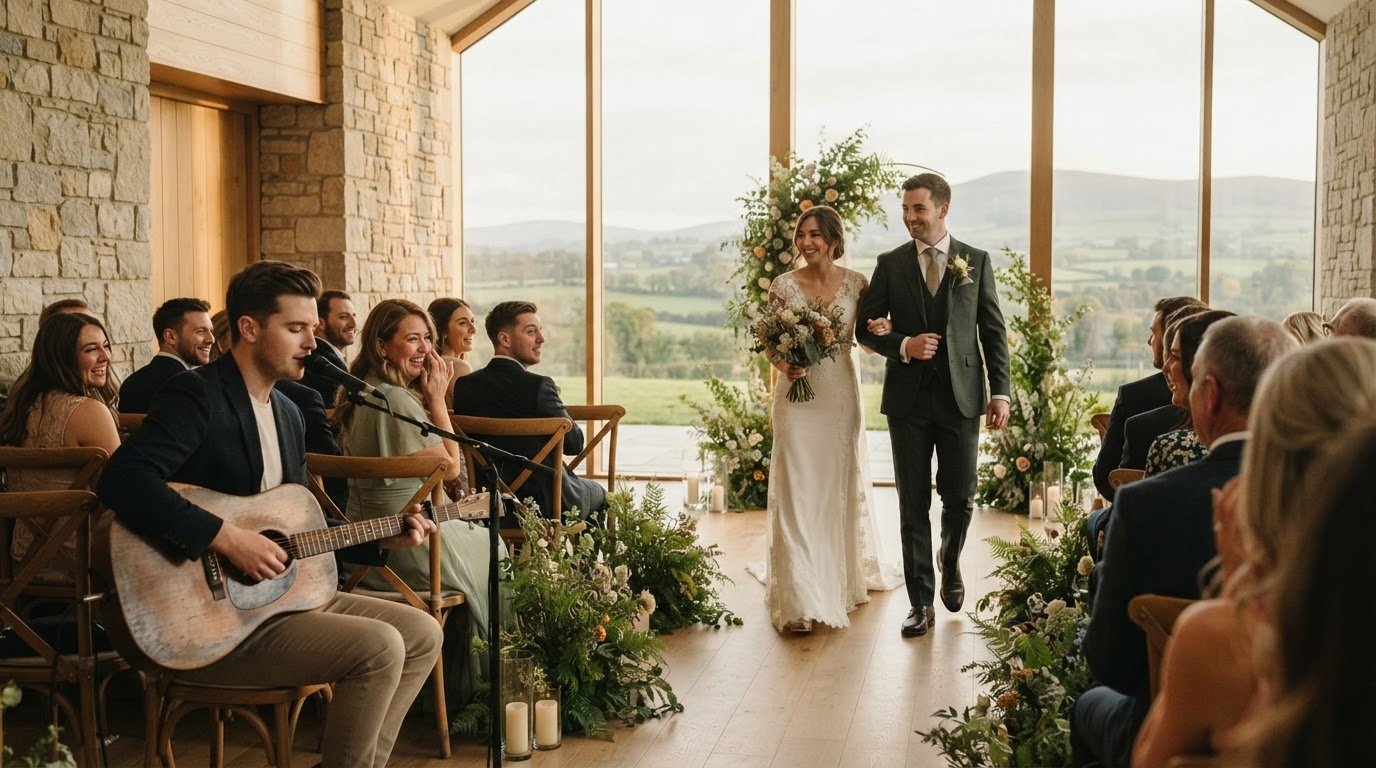
07 Oct How to Choose Ceremony Processional Music That Feels Like You
What if the best processional song isn’t simply your favourite, but the one that makes the whole entrance feel right? If you’re wondering how to choose ceremony processional music, it’s easy to get caught between a long list of favourites, questions about whether one song will suit everyone, and the worry that the music might end before you reach the top of the aisle.
The answer is to shape an emotional arc rather than choose a song in isolation. Your entrance can build from the atmosphere you want for the ceremony to a moment that feels unmistakably yours. With a clear plan for who enters when, the music cues can feel as effortless as the moment itself.
In this guide, you’ll learn how to match music to your ceremony and style, decide whether to use one song or several, and plan timings around your aisle and processional order. You’ll also find out what to share with your celebrant and musicians so everyone knows when to begin, change or finish. Whether you choose a recorded favourite or live ceremony singing, every note can help set the scene for the day ahead.
Key Takeaways
- Learn how to choose ceremony processional music by considering the mood, lyrics, tempo and people entering.
- Shape your song choices around your ceremony style, recognising that expectations can differ between religious, civil and humanist ceremonies.
- Compare live and recorded music to find the atmosphere and cue flexibility that suit your entrance.
- Plan a clear processional order, then share the timings and final cues with your celebrant, musicians and playback manager.
- Discover how live ceremony singing can add warmth and a distinctive human touch to your wedding-day sound.
How to Choose Ceremony Processional Music That Sets the Right Mood
Choosing a song that feels meaningful and works in the room can put surprising pressure on a couple. You want the entrance to sound like you, but it also needs to carry everyone smoothly from the first step to the moment you reach the ceremony space. A useful way to decide how to choose ceremony processional music is to balance three things: personal meaning, the tone of the ceremony and practical timing.
Processional music is the music played or performed as the couple, wedding party or other participants enter the ceremony. It’s one part of a broader wedding soundtrack, alongside music for guests arriving, the ceremony itself and the recessional. The overview of Wedding music traditions and types offers useful context on how these musical moments fit together.
What should your processional music make guests feel?
Start by naming the atmosphere you want guests to feel as the entrance begins. Intimate, joyful, reflective or uplifting are all useful starting points. Then look for musical qualities that support that mood: a gentle tempo can create a calm, unhurried feeling, while a brighter rhythm can make the moment feel more celebratory. Piano or acoustic guitar may feel close and personal; a fuller arrangement or expressive vocal can bring more presence to the room.
Personal significance matters more than choosing a song simply because it’s popular. A track tied to a shared memory, favourite artist or meaningful part of your story can make the entrance feel distinctly yours. Listen to the section you plan to use, too. A song’s opening may set a different tone from its chorus, and the lyrics may feel different when heard in the context of a ceremony.
Which entrance moments need their own musical cue?
Map the entrances before settling on the music. Your order might include family members, the wedding party, and then one or both partners. Some couples also want a distinct entrance for parents or other loved ones. There’s no single correct arrangement; choose the sequence that fits your ceremony and the people taking part.
One piece can accompany everyone, especially if it has enough length and a steady mood. Separate cues can give key moments their own character, such as one song for the wedding party followed by a change for the couple’s entrance. Consider whether that musical shift will feel meaningful or interrupt the atmosphere you’re building. A clear order makes the choice easier and gives performers or the person managing playback a plan to follow.
For more inspiration across ceremony moments, explore these wedding ceremony performance ideas. Pick the sound that feels true to you, then shape the entrances around it.
Match the Song, Ceremony Style, and Processional Order
A song can feel perfect on a playlist and still be a poor fit for a particular entrance. To work out how to choose ceremony processional music, consider the ceremony’s tone, the lyrics, the musical style and how the piece will support people walking into the space. The setting matters too: a song that carries clearly in an intimate room may need a different arrangement outdoors, where wind and open space can affect what guests hear.
Religious, civil and humanist ceremonies can each have different expectations around music. There’s no universal rule for every ceremony, so discuss your plans with your celebrant and consider what feels appropriate for the ceremony you’re creating. Then think through practical details: the length of the aisle, where guests will be seated and the pace of the entrance. The music should give people time to walk naturally, without making them feel hurried or leaving a long, uncertain pause.
Reflective ceremony: A gentle tempo and restrained instrumentation can create a thoughtful atmosphere.
Joyful ceremony: A brighter rhythm or expressive vocal can give the entrance a lift.
Long aisle or larger entrance group: Choose a piece with enough musical development, or plan a clear transition, so it won’t end before everyone is in place.
Outdoor or open setting: Consider a sound with a clear melody and an arrangement that can carry across the space.
Should the wedding party and couple enter to the same song?
One continuous piece creates a cohesive sound and keeps cueing simple. It can suit an entrance where the whole group moves at a steady pace and the song has room to build. Separate pieces, or a planned change within one piece, can distinguish the wedding party’s entrance from the couple’s and give that central moment a fresh musical lift. Choose the approach that supports your order and feels emotionally natural, rather than following a fixed tradition.
How do lyrics and musical style affect the choice?
Read the full lyrics, not just the title or familiar refrain. A song may sound romantic in a short clip but tell a different story in its verses. Vocals bring words and a human presence into the moment; an instrumental version lets the melody set the mood without lyrics competing for attention. Neither is automatically better. Focus on what suits the ceremony and how you want the entrance to feel. For more options, browse these wedding ceremony music and performance ideas.
If live singing fits the atmosphere you’re building, explore Surefire Trio’s live wedding sound as one way to bring a personal quality to the entrance.

Live or Recorded Processional Music: Which Fits Your Ceremony?
Choosing live music can raise a practical question: will it be harder to coordinate than pressing play on a recording? Either option can work beautifully. The key is to match the sound to your ceremony and agree on clear cues so the entrance feels intentional from the first note to the finish.
When deciding how to choose ceremony processional music, compare what matters most to you: the atmosphere you want, how the music will start and change, and whether you prefer a human performance or a familiar recording. Neither is automatically the better choice. Both need a plan for the opening cue, any transition between entrances and the ending.
What can live musicians bring to a wedding entrance?
A live vocal or instrumental performance adds warmth and a human presence to the room. You can hear the expression in the performance, which can make the entrance feel especially personal. Live ceremony singing is one option for couples who want a voice to carry the moment.
Live music doesn’t have to mean guesswork. Agree in advance on who signals the start, what marks a transition and how the performer should finish. Musicians can follow those cues and adjust the pacing of a performance to the entrance, helping the music continue while people make their way into place.
When might recorded music suit the processional?
A recording can provide the familiar, consistent version of a song you already love. It may suit couples who have a specific recording in mind or want the same arrangement they know from listening together. Choosing recorded music isn’t a compromise in meaning; the song and the moment can still feel deeply personal.
The practical details matter. Test the playback device and sound system in the setup you’ll use, check that the volume carries clearly, and practise starting the track at the right point. Agree who will press play and how they’ll handle a pause, transition or fade. Don’t rely on memory alone, particularly if the entrance includes several people or more than one cue.
Whichever format you choose, give the celebrant and anyone managing the music a simple sequence: what starts the entrance, what signals a change, and what tells the performer or playback manager to stop. That shared plan brings calm to the coordination and lets you stay present in the moment.
Plan the Processional: Timing, Cues, and a Simple Rehearsal
A clear music plan turns entrance logistics into a moment everyone can enjoy. Build it step by step, then share the same version with the people who’ll guide the ceremony and start or perform the music.
- Set the entrance order. Write down who enters and in what sequence, including any separate family entrances, the wedding party and the couple.
- Assign music to each moment. Note the song or musical selection for every entrance. Mark whether one piece continues throughout or a new cue signals a change.
- Choose the starting and transition signals. Decide who gives each signal and what they’ll do, such as making eye contact with the musician or nodding to the person managing playback.
- Agree on the finish. Specify whether the music continues until everyone is in place, stops at a particular moment or fades out. Avoid leaving the ending to guesswork.
- Run through the sequence. Practise the order and walk at a comfortable pace. Check that the transitions feel natural and the music lasts long enough for the entrance.
What information should go into a processional cue sheet?
A useful cue plan names who enters, what plays, when each cue happens, who signals it, and whether the music continues, changes or stops. Keep the sheet brief and easy to scan. Share the same version with your celebrant, musicians and anyone managing playback so each person is working from one agreed sequence. Include practical notes such as where the signal-giver will stand and what to do if the entrance pauses.
How can couples make the entrance feel calm and natural?
Walk at a pace that feels comfortable, rather than rushing to keep up with the music. During a simple run-through, practise the entrance order in the actual space if possible, and test where people will pause or turn. Agree on one discreet signal for starting or changing the music, then make sure the person giving it can be seen.
Keep the rehearsal focused on the processional rather than trying to rehearse every detail of the day. For broader planning context, the wedding planning guide covers the wider timeline. A few minutes spent confirming music cues can free you to be present when the entrance begins.
For a personal live sound at your ceremony, explore Surefire Trio’s wedding ceremony singing.
Bring Your Ceremony Processional to Life with Surefire Trio
The right live performance can give your entrance a warmth that feels unmistakably human. A vocalist brings expression and presence to the melody, making the music feel connected to the moment unfolding in front of your guests. Surefire Trio offers wedding ceremony singing as part of its wedding entertainment, bringing an authentic live sound to this first chapter of the day.
As you decide how to choose ceremony processional music, think beyond the song itself. The mood you want, the order of entrances, and the way the music begins and ends all help shape the performance. Clear communication turns those ideas into a shared plan, so your celebrant and musicians know what to expect and can help the entrance flow naturally.
What should couples share with ceremony musicians?
Give your performers the details that shape the moment: the entrance order, chosen music and the feeling you want the song to create. Explain who gives the starting signal, whether there are transitions between entrances and when the music should finish. Share any relevant cues from the celebrant, too. This preparation helps performers understand how the music fits the ceremony, not just which song to play.
Surefire Trio is led by Roy on vocals, with Alan on drums and Adam on guitar. For a couple who wants singing at the ceremony, that live vocal presence can bring warmth and character to the entrance. The trio is also known for five-star reviews, offering reassurance as you consider the people helping shape such a meaningful moment.
How does live ceremony music connect with the rest of the day?
Your ceremony is the opening chapter of the wedding day’s musical atmosphere. A personal, considered entrance can set the tone for the celebration ahead, while live music later in the day can carry that sense of occasion into the reception. Surefire Trio’s wider wedding entertainment experience connects the ceremony’s sound with the joyful energy of the day without taking attention away from the moment you’re planning now.
Bring your chosen mood and entrance plan together, then let the music make the moment feel like yours. Explore ceremony music with Surefire Trio.
Set the Tone for an Entrance That Feels Like You
The most memorable processional isn’t defined by a song’s popularity. It’s shaped by how well the music reflects your ceremony, supports the entrance order and feels in the moment. As you decide how to choose ceremony processional music, focus on the atmosphere you want, whether live or recorded music suits it, and a simple cue plan shared with everyone involved.
That preparation leaves more room to enjoy the moment. Your music can welcome each person into the ceremony, build anticipation for your entrance and set the first note of the wedding day’s atmosphere.
Surefire Trio offers wedding ceremony singing with an authentic live sound and is known for five-star reviews. If a personal vocal performance feels right for your entrance, explore ceremony music with Surefire Trio.
Choose the sound that means something to you, make the cues clear, and step into the moment with confidence. Your entrance can be entirely your own.
Frequently Asked Questions
How do you choose a song for walking down the aisle?
Choose a song that feels meaningful to you and suits the mood of your ceremony. Consider its lyrics, tempo and musical style, then picture how it will feel as you walk and guests listen. A favourite song can be a lovely choice, but check the full lyrics and select a section that gives you enough time to reach your place. The best fit is personal and practical.
Should the wedding party and couple walk in to the same song?
Either approach can work. One continuous piece creates a cohesive atmosphere and keeps the cues straightforward, especially if everyone enters in sequence. Separate songs can give the couple’s entrance its own musical moment and distinguish it from the wedding party’s arrival. Decide based on the ceremony’s flow and what feels significant to you, not an assumed tradition. Make sure whoever manages the music knows exactly when to continue or change the track.
Can you use any song as wedding processional music?
You can consider a wide range of songs, but the right choice should suit your ceremony and work for the entrance. Read the full lyrics rather than relying on a familiar title or chorus, and consider whether the tempo supports a comfortable walking pace. Religious, civil and humanist ceremonies may have different expectations, so discuss your selection with your celebrant where appropriate. You’ll also need a clear plan for the song’s start and finish.
Is live music better than recorded music for a wedding processional?
Neither is automatically better; the right choice depends on the sound and atmosphere you want. Live performance brings human expression and can follow agreed entrance cues, while a recording offers a familiar, consistent version of a song. Both need preparation. For live music, agree on signals and transitions with the performers. For recorded music, test playback, volume and cue timing in the ceremony setup so the entrance starts and ends smoothly.
How many songs do you need for a wedding processional?
There’s no fixed number. One song can accompany the full entrance if it has enough length and suits each person walking in. Some couples choose separate music for the wedding party and the couple’s entrance to create a clear change in mood. Let your entrance order, aisle length and preferred flow guide the decision. Whatever you choose, plan what happens if the music finishes before everyone is in place.
How do you coordinate the music with the wedding processional?
Write down the entrance order, music for each moment, who signals the start and who cues any transitions. Include whether the music continues, changes or stops after each entrance. Share the same concise plan with your celebrant, musicians and anyone managing playback. A simple run-through helps everyone practise the order and walking pace. Agreeing on a discreet signal in advance makes it easier to begin confidently without calling instructions across the room.
Can a singer perform wedding processional music live?
Yes. Live singing can bring warmth, expression and a distinctly human quality to a couple’s entrance. Surefire Trio offers wedding ceremony singing, alongside its wider wedding entertainment, with Roy as vocalist, Alan on drums and Adam on guitar. Share the entrance order, chosen music, desired atmosphere, and start and finish cues so the performance fits the ceremony. Surefire Trio is known for five-star reviews and an authentic live sound.
Sorry, the comment form is closed at this time.