


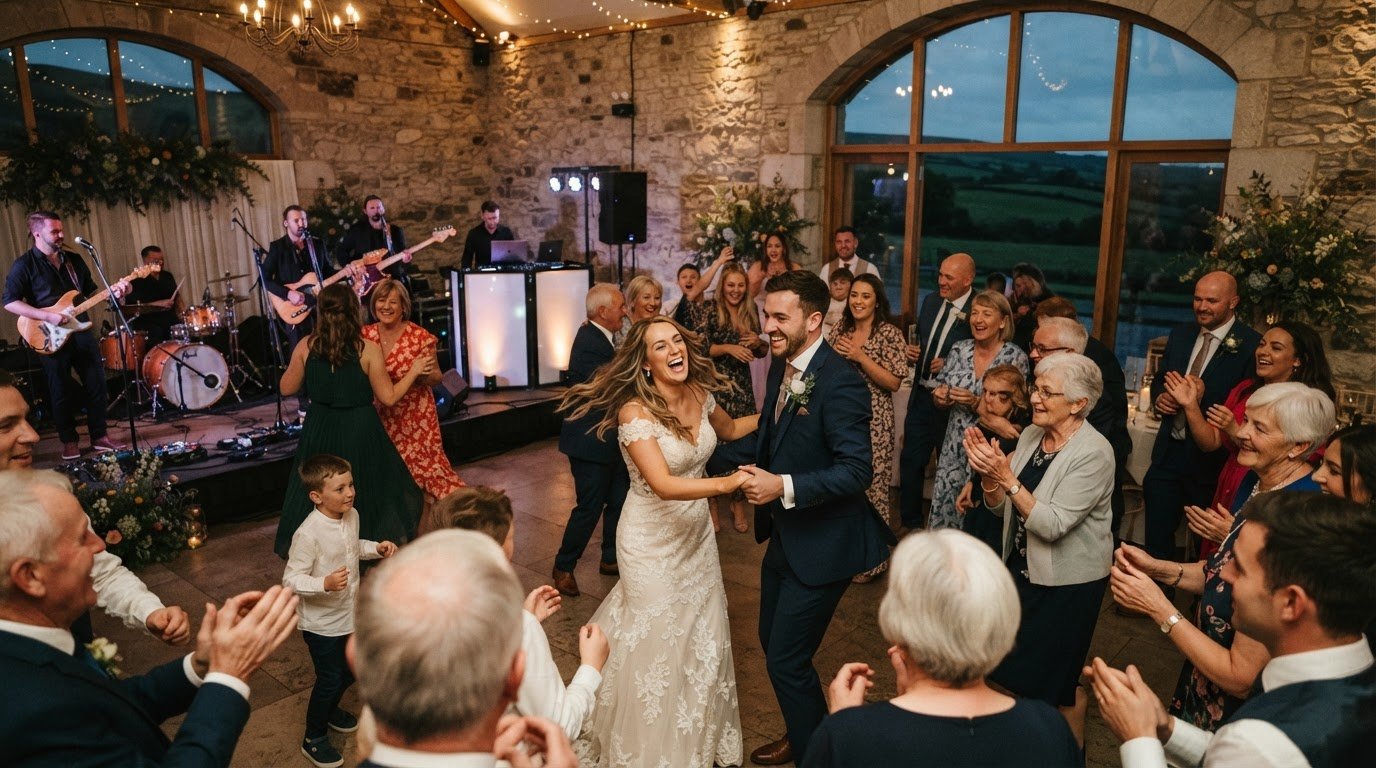
04 Oct How to Balance Your Taste with Guest Preferences at Your Wedding
What if the secret to a packed dance floor isn’t choosing between your favourite songs and everyone else’s? Planning how to balance your taste with guest preferences can feel like a tug-of-war, especially if you and your partner picture different kinds of reception or feel pressure to accept every request.
Your wedding music should still sound like you. The aim isn’t to please every guest with every track, but to create a celebration where your story leads and familiar favourites give different generations a way to join in. A thoughtful mix can honour your first dance, make room for the sounds you love and keep the party welcoming.
This guide gives you a clear, low-stress way to make those choices. You’ll learn how to agree on priorities, choose songs that can connect different guests and set boundaries for requests. With live-band energy and a DJ set, music from the 70s, 80s and 90s can build into a night that feels personal and full of momentum. The result is a celebration that sounds like you and gives guests plenty of reasons to join in.
Key Takeaways
- Keep your wedding music rooted in who you are, and use familiar songs to create welcoming moments for guests.
- When considering how to balance your taste with guest preferences, focus on a shared atmosphere and opportunities to join in, rather than trying to predict every individual’s favourites.
- Sort songs into must-plays, meaningful options and tracks you’d prefer to avoid. This makes decisions clearer as a couple.
- Set simple boundaries for guest requests so you can stay open to surprises without handing over the soundtrack.
- Bring your priorities together in a music plan that lets live-band energy and a DJ set shape a connected evening.
How to Balance Your Taste with Guest Preferences Without Losing Your Wedding’s Personality
You want the music to feel like your celebration, not a generic party. You also want guests to feel welcome and enjoy the reception. That can seem like a choice between playing what matters to you and choosing familiar songs for everyone else. It isn’t. A memorable wedding soundtrack can make room for both.
Balanced wedding music keeps the couple’s identity at its centre and uses inviting songs to create moments of connection with guests. Guest preferences offer useful context, but they aren’t a vote on every track. You’re hosting a celebration, not asking everyone in the room to approve the playlist.
Why wedding music can feel like a choice between you and your guests
Pressure often starts with a well-meant question: “Will everyone know this song?” A meaningful favourite may be unfamiliar to some guests, so couples sometimes replace personal choices with safer, more recognisable music. The result can feel polished but detached from the people celebrating.
You may also have different musical visions as a couple. One partner might picture a lively dance floor; the other may care most about particular songs, genres or a more relaxed feel. Neither preference has to win outright. A varied celebration can feel personal when the choices connect to your story and the music is paced with intention.
What a balanced wedding soundtrack should actually do
Think of the music as a sequence of moments, not one playlist that has to appeal to every guest at once. A first dance can reflect your relationship. The reception can move through different sounds and energy levels, while a familiar chorus gives guests a natural way into the celebration. That variety echoes the different elements found in wedding reception traditions, while leaving space for your own choices.
Separate the songs that define the day from the moments where you’re happy to be flexible. Your defining choices might include a first-dance song or a track tied to a shared memory. Flexible moments can make room for familiar favourites and changes in style. For example, a live performance of music from the 70s, 80s and 90s can offer recognisable touchpoints, while a DJ set adds further variety.
That’s the practical answer to how to balance your taste with guest preferences: decide what must feel like you, then create welcoming openings around it. You don’t need to predict every guest’s ideal song or please everyone with every choice. Set a clear direction, choose a few meaningful anchors and leave room for the celebration to move.
How to Understand Guest Preferences Without Letting Them Take Over
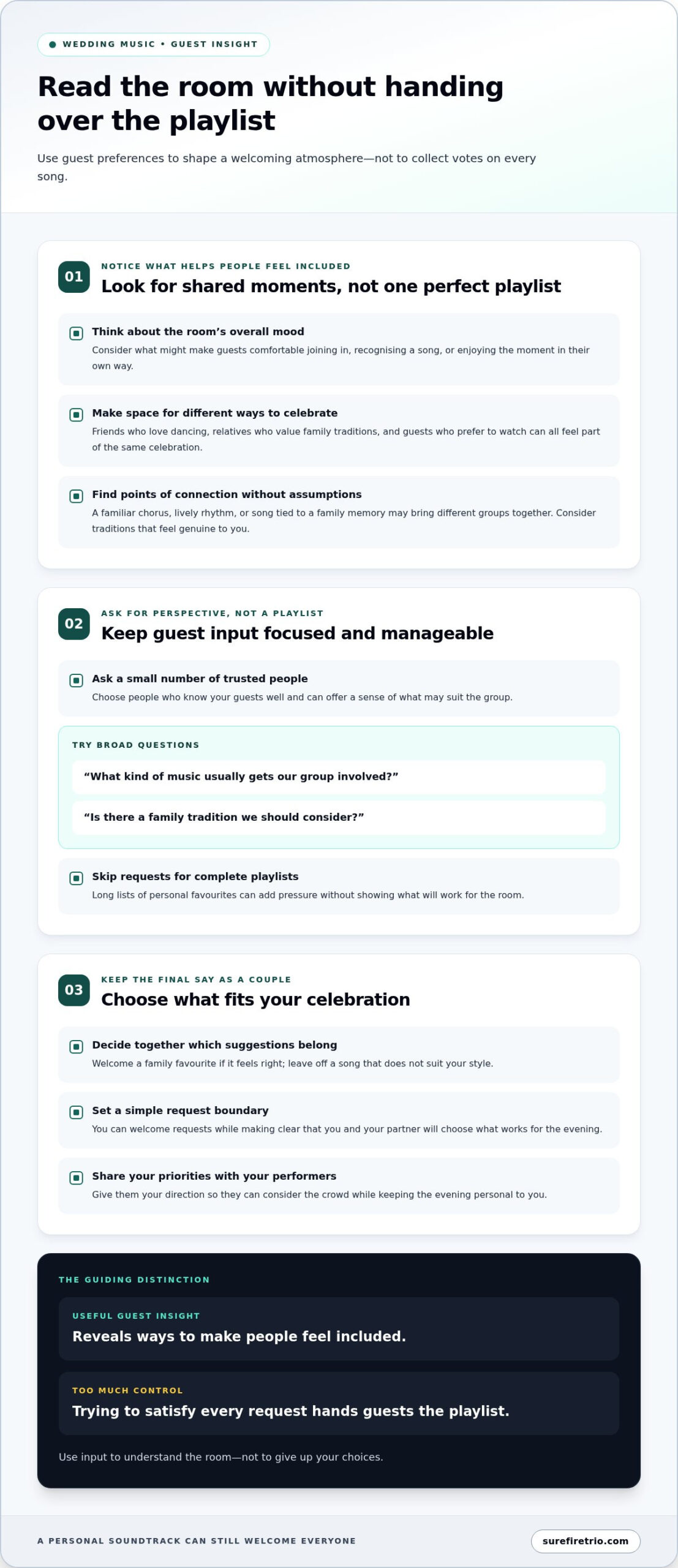
Guest insight can help you shape a welcoming reception, but use it to understand the room’s overall mood, not to keep a tally of requests. Think about the people you’re bringing together, how they know you and what might make them want to join in. Friends who love dancing, relatives who value a family tradition and guests who prefer to watch can all enjoy the same celebration without needing the same soundtrack.
Look for points of connection rather than making assumptions based on age or background. A familiar chorus, a lively rhythm or a song attached to a shared family memory may invite participation across different groups. If a cultural or family tradition matters to you, consider how to include it in a way that feels genuine to your relationship and meaningful to the people involved.
Which guest preferences are useful to consider?
Focus on the experience you want guests to have: feeling comfortable joining in, recognising a few songs or enjoying a moment that reflects your families. The Knot’s overview of what wedding guests care about highlights food and music as details guests notice. That’s a useful reminder to make the atmosphere inviting, not a reason to give up your choices. An individual request can be a helpful suggestion, but it doesn’t need to shape the whole reception.
How to gather input without handing over the playlist
Ask a small number of trusted people who know your guests well. Keep your questions broad: “What kind of music usually gets our group involved?” or “Is there a family tradition we should consider?” Avoid asking for complete playlists. A long list of personal favourites can create pressure without showing what might suit the room.
Then decide together which suggestions fit your celebration. You might welcome a family favourite while leaving a song that doesn’t suit your style off the plan. Set clear boundaries, too: invite requests if you like, while making it clear that you and your partner will choose what works for the evening.
Useful guest insight reveals ways to make people feel included; trying to satisfy every request hands them the playlist. That distinction is central to how to balance your taste with guest preferences. Share your priorities with your performers, too. A Band & DJ Package brings live music and a DJ set together, giving you room to consider the crowd while keeping the evening’s direction personal. Explore the Band & DJ Package as one way to bring those musical moments together.
How to Choose Wedding Music That Connects Your Taste with the Crowd
Try an anchor-and-bridge approach. Anchors are the songs or sounds that make the celebration unmistakably yours. Bridges are flexible choices that help guests find their way into the moment. Guest-friendly music doesn’t have to dilute your personality. It can give your personal choices a welcoming setting.
Placement matters as much as genre. A less familiar favourite may work beautifully at a meaningful moment, while a recognisable, upbeat song can bring people together later. Think about the energy you want and how one song can lead into the next. Don’t expect every track to appeal to every guest. This is a practical way to approach how to balance your taste with guest preferences.
Choose personal anchor moments that sound like you
Start with a short list of songs or styles that genuinely mean something to you as a couple. Your first dance is an obvious anchor, but a carefully chosen live performance can also set the tone. A customized first-dance song, for example, can make a familiar tradition feel distinctly personal. A few deliberate choices often say more than trying to control every track. You’re creating defining moments, not building a musical test of your identity.
| Music role | What it does | Possible example |
|---|---|---|
| Meaningful favourite | Establishes your story | A first-dance song with personal significance |
| Shared favourite | Creates a point of connection | A familiar song both of you enjoy |
| Adaptable dancefloor moment | Shifts the mood and invites participation | An energetic track that opens up the dancefloor |
Use flexible crowd-bridging moments to welcome more guests
Between your anchor moments, leave room for songs with broader familiarity and different energy levels. A live set featuring music from the 70s, 80s and 90s can offer a range of touchpoints, while your own favourites keep the soundtrack rooted in your taste. No selection will suit everyone, and it doesn’t need to. The aim is to invite people to join in, not to guarantee that every guest will love every song.
For more ideas to help shape shared dancefloor moments, explore this wedding party songs guide. If you’re weighing personal choices against familiar traditions, the Emily Post Institute’s wedding etiquette guidelines offer a useful perspective: consideration for guests can sit alongside choices that reflect you.
How to Turn Your Wedding Music Preferences into a Clear Plan
A clear music brief turns different tastes into decisions your performers can use. Focus it on the feeling you want at each part of the day, the songs that matter most and the boundaries that will help the evening stay true to you. This makes how to balance your taste with guest preferences a practical planning task, not a debate over every track.
Agree on priorities and create a short music brief
Work through these steps together, then write down the result in plain language:
- Agree on the atmosphere. Each partner names the mood they want, such as relaxed and intimate for one moment, then lively and dance-focused later. Note any non-negotiables, too.
- Choose your anchors. Select the songs or styles that feel essential, including a first-dance song or a meaningful live performance. If you disagree, talk about what the song represents and which moment matters most, rather than debating every track.
- Add flexible options. List songs or musical moods you’d both be happy to include if they suit the room. These let the evening move without taking focus away from your defining choices.
- Set request boundaries. Decide whether to welcome guest requests and how you’d like them handled. Add any songs or styles you’d prefer to avoid, with a brief, respectful note if needed.
Keep the brief concise enough to be useful. A few priorities, key songs and clear do-not-play guidance are easier to act on than a long list with no sense of what matters most. Sort songs into three labels: must-play, meaningful if it fits and please avoid.
Set request boundaries and plan for changing energy
Give different parts of the day their own musical role. Ceremony music can create a personal, considered mood; drinks reception music can provide a relaxed backdrop; a live band performance can lift the energy; and a DJ set can carry the celebration forward with variety. Treat these as guideposts, not rigid rules. A flexible plan leaves room to respond if the room’s energy changes.
For broader planning context, explore this wedding planning guide. Then share your music priorities with your performers so your preferences and the evening’s flow are part of the same conversation. Explore the Band & DJ Package to see how live performance and a DJ set can bring those moments together.
How a Live Band and DJ Can Help Your Wedding Music Feel Like You
A music brief gives performers a clear starting point, but the evening should feel natural rather than like a checklist. Share the songs that define your relationship, the overall mood you want and any tracks or styles you’d prefer to avoid. Add context where it helps: a song might matter because it’s tied to a family memory, or you may want the dancefloor to build gradually rather than start at full intensity.
Share your priorities with the people shaping the music
Give clear direction without trying to script every moment. Tell your performers which choices are essential, where they have room to adapt and what you hope guests will feel. A band and DJ can use that brief to shape the music around your priorities and the room’s energy. No playlist can predict every guest’s taste, and that isn’t the goal. Aim for a coherent musical direction with room to breathe.
This conversation is part of how to balance your taste with guest preferences: agree on the direction, then let the performers use their musical judgement to connect the moments. For a format that brings live performance together with a professional DJ set, explore the Band & DJ Package.
Bring the evening together with live music and a DJ set
Live music and DJ music offer different textures. A band can bring shared, in-the-room energy to familiar songs, while a DJ set can shift styles and keep the celebration moving into a different part of the night. Surefire Trio’s live performances include music from the 70s, 80s and 90s, offering a range of eras without suggesting that every song will suit every guest. The aim is variety with a clear point of view, not universal approval.
A customized first-dance song can make one defining moment especially personal, while the music around it gives guests space to join the celebration. Share your priorities and let the live set and DJ set work as parts of the same evening, rather than as separate soundtracks.
Ready to shape a celebration that sounds like you? Explore the wedding music options with Surefire Trio and start planning the soundtrack for your day.
Make Your Wedding Sound Like You
The answer to how to balance your taste with guest preferences isn’t to choose between personal meaning and a welcoming party. Set a few musical priorities, keep your defining songs and leave space for familiar favourites that invite guests into the celebration. A clear brief and thoughtful boundaries help you make those choices without trying to please everyone with every track.
Live music and a DJ set can bring different textures to the evening while keeping the mood connected. Surefire Trio’s live performances span the 70s, 80s and 90s, and its Band & DJ Package combines the band’s performance with a professional DJ set. The group is also known for five-star reviews.
Ready to shape a soundtrack that feels personal and full of life? Explore Surefire Trio’s live band and DJ entertainment and start imagining the music moments that will make your celebration yours. Your story, your soundtrack and a dancefloor ready for the party.
Frequently Asked Questions
How do you choose wedding music that both partners and guests will enjoy?
Start by agreeing on the atmosphere you both want, then choose a few songs that feel meaningful to you as a couple. Add familiar or upbeat selections where guests can join in, and leave some flexibility for the energy in the room. To work out how to balance your taste with guest preferences, focus on shared moments rather than trying to find a song every person loves.
Should wedding music reflect the couple or the guests?
It should reflect the couple while making guests feel welcome. Your wedding isn’t a public vote on the soundtrack, but it is a celebration you’re hosting. Choose defining songs that tell your story, then make space for music that invites people to participate. A personal first dance, for example, can sit alongside familiar dancefloor favourites without either choice taking away from the other.
How can we include different age groups in our wedding music?
Build variety into the evening instead of assigning a genre to each age group. Familiar songs from different decades can give guests shared touchpoints, while changes in tempo and mood help the dancefloor feel lively without becoming one-note. Consider which songs different groups might recognise, but avoid assuming someone’s taste based on age. No playlist needs to appeal to everyone at every moment.
Should we let wedding guests request songs?
You can welcome requests while keeping the final say as a couple. Decide in advance whether guests can make suggestions and how you’d like those requests handled. You might invite them to share songs they’d enjoy hearing, while making clear that requests will be played only if they fit the evening. This leaves room for a fun surprise without letting individual preferences dictate the whole soundtrack.
How many must-play and do-not-play songs should we choose?
There’s no fixed number that suits every wedding. Choose enough must-plays to communicate your defining moments and musical direction, then list only the songs or styles you genuinely want to avoid. Sort the rest into “meaningful if it fits” options. A concise, prioritised list is easier for performers to use than an exhaustive playlist where every track seems equally important.
Can a live band and DJ play music for different guest preferences?
Yes. A live band and DJ can bring different textures and musical variety to the reception. Surefire Trio’s live performance features music from the 70s, 80s and 90s, while its professional DJ set continues the celebration with further variety. Share your priorities and preferred mood with the performers so the different parts of the evening feel connected. No set can match every guest’s individual taste.
What if our wedding guests have completely different musical tastes?
Don’t try to solve every difference with a song-by-song compromise. Choose a few tracks that express who you are, then create variety through shifts in era, style and energy. Give each musical moment a purpose, from a meaningful first dance to livelier reception music. Some guests may prefer listening over dancing, and that’s fine. Aim for a welcoming celebration, not unanimous approval.
Sorry, the comment form is closed at this time.