


25 Sep DIY Wedding Music vs Professional Hire: Which Is Right for Your Wedding?
What if the playlist packed with your favourite songs still leaves you worrying about the sound, setup and dance-floor mood? That’s the real question behind DIY wedding music vs professional hire. A DIY playlist gives you plenty of control, but there’s more to manage than pressing play.
It makes sense to want music that feels personal and gets your guests moving. The challenge is keeping the right songs flowing as the room and energy change, while also handling equipment, setup and unexpected hiccups. Professional entertainment can ease that workload, but it still needs to suit your tastes and reception plans.
This guide compares both options across atmosphere, flexibility, preparation and practical demands. You’ll see what a DIY setup involves, where a playlist may need help adapting to the crowd, and how professional performers can shape different moments in the evening. A live band and DJ package is one option, not the only right answer. The best choice is the one that lets you enjoy the celebration as much as your guests do.
Key Takeaways
- DIY music means more than building a playlist. Check who’ll handle playback, equipment compatibility and sound tests before deciding.
- Use DIY wedding music vs professional hire to weigh the control you want against the responsibility you’re happy to delegate.
- A DJ, live band and combined band-and-DJ option create different experiences. Consider which best suits each part of your reception.
- Picture the atmosphere you want, then decide whether your designated music lead can stay focused on the role throughout the celebration.
- Consider whether a professional band and DJ service such as Surefire Trio fits your plans, while keeping your music choices and priorities at the centre.
DIY Wedding Music vs Professional Hire: What Are You Really Choosing?
A playlist filled with songs you love can make a reception feel unmistakably yours. Music helps shape the mood, from a meaningful first dance to a full dance floor later in the evening. Wedding music traditions include both live and recorded music, so the choice is less about one format being correct and more about how you want the celebration to sound and run.
The real difference in DIY wedding music vs professional hire is the balance between personal control and delegated responsibility. DIY usually means selecting and organising the tracks, then arranging how they’ll be played. Professional hire could mean a DJ playing recorded music, a live band performing songs, or a combination of the two. These are different experiences, and the right fit depends on your priorities and practical needs.
What counts as DIY wedding music?
DIY involves more than choosing songs. You’ll need playlists for the moments you want covered, a playback device, a suitable speaker setup and someone reliable to manage cues. Equipment arrangements vary: a venue may provide a sound system, or someone may operate it professionally, but that doesn’t automatically mean they’ll manage your playlist.
Before deciding, identify who will handle setup, check that devices connect to the system, and confirm who’ll adjust the volume and manage transitions. If the first-dance song ends and the next track needs to lift the room, who’ll be ready to make that happen?
What does professional wedding music hire include?
A DJ plays recorded music and can shape the sequence and energy of a set. A live band performs music in the moment, bringing a different sound and stage presence. Some providers offer a band-and-DJ combination, using live performance and a DJ set for different parts of the evening. Surefire Trio, for example, offers a band and DJ package. It’s one option, not a universal answer.
| Consideration | DIY | Professional hire |
|---|---|---|
| Control | You choose and organise the tracks. | You can discuss music preferences, while the provider manages the performance or set. |
| Preparation | You coordinate playlists, playback and equipment arrangements. | Confirm inclusions, timings and responsibilities with the provider. |
| Adaptability | A playlist follows its planned order unless someone changes it. | A DJ or live performer can shape the music as part of their set. |
| Playback lead | You assign someone to manage cues and sound. | Clarify who handles playback and other music duties. |
Neither approach suits every wedding. If personal curation matters most and someone can take responsibility on the day, DIY may fit. If you’d rather focus on your guests while an entertainer manages the music, professional hire may be worth considering.
DIY Wedding Music: The Work Behind the Playlist
A DIY soundtrack can be deeply personal, but the playlist is only one part of the plan. You’ll also need to coordinate when each track starts, who’s watching the system and what happens if something needs adjusting. If you enjoy organising details and have dependable help, those jobs may feel manageable. If you’d rather be fully present, factor them into your decision.
What needs organising before the wedding?
Build separate playlists for guest arrival, key moments, dancing and any planned breaks. Label them clearly, put songs in the intended order and note cues for moments such as the first dance. For ceremony selections, this ceremony music guide can help you think through how music may fit different parts of the ceremony.
Then speak with the venue about its sound system, available connections and permitted setup arrangements. Check that your playback device connects to the system, bring the necessary cables and power supply, and test the sound at a suitable volume in the room. Your designated helper should know how to start, pause and adjust playback, and be able to follow your cue sheet. Don’t leave the job to someone who’s also expected to make a speech or be in the wedding party.
- Prepare cues: Write down when each important track should start, including announcements and the first dance.
- Test the setup: Play tracks through the intended system and listen for connection or volume issues.
- Plan a fallback: Keep a second way to access the music and agree what the helper should do if a device, connection or power supply causes a problem.
Where can a DIY setup become stressful?
The pressure usually comes from managing the music while the celebration is unfolding. A fixed playlist won’t respond by itself if dinner runs late, a speech takes longer than expected or guests are ready to dance sooner. Someone needs to adjust the timing and choose what plays next. That can be a satisfying role for a capable helper, but it can also pull them away from the festivities.
Preparation reduces uncertainty, but it can’t remove every on-the-day decision. Walk the playback lead through the plan, make sure they can reach the controls and agree how they’ll handle a missed cue or unexpected pause. The key question in DIY wedding music vs professional hire is whether you want to keep that responsibility with your circle or hand more of the music management to an entertainer.
If you’re weighing up a live performance alongside a DJ set, you can explore a professional band-and-DJ option as an alternative to managing every cue yourself.
Professional Wedding Music Hire vs DIY: Compare the Practical Trade-Offs
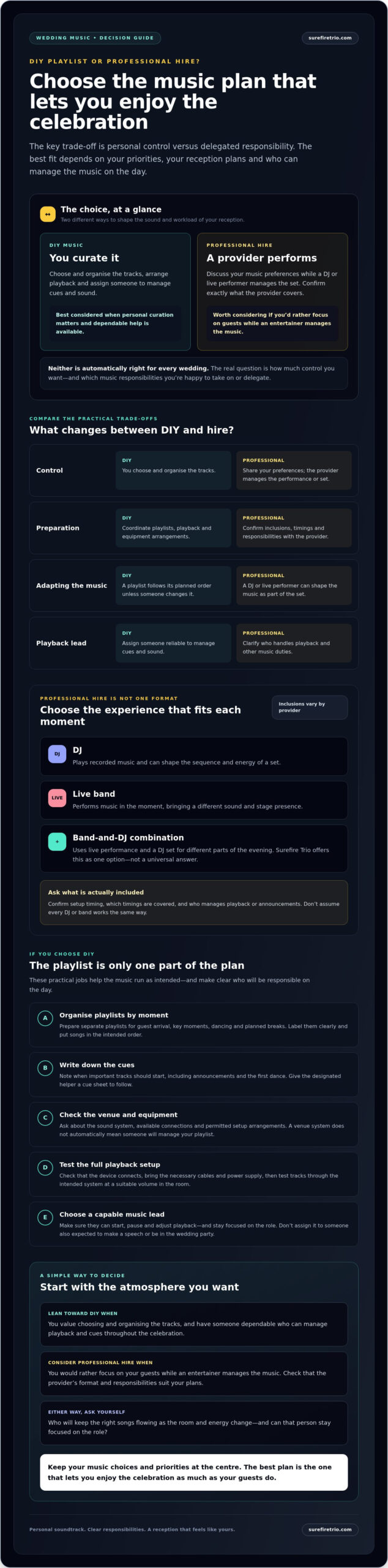
The core trade-off is who carries the responsibility and how much flexibility you want once the reception is underway. With DIY, you choose every track and sequence, but your helper must manage playback and timing. Professional entertainment shifts more of that work to the provider, while still leaving room for you to share preferences, key songs and any music you’d rather avoid.
| Factor | DIY playlist | Professional entertainment |
|---|---|---|
| Couple’s workload | Organise music, playback and a responsible helper. | Discuss your preferences and confirm the provider’s role. |
| Musical control | You select and sequence the tracks. | You can share guidance, but the format and provider determine how music is delivered. |
| Room responsiveness | A playlist follows its order unless someone changes it. | A DJ or live performers can shape their set as the evening develops. |
| Event-day responsibility | Your designated playback lead handles cues and adjustments. | Confirm which music tasks the provider is responsible for. |
How does live music differ from a playlist or DJ set?
A playlist and a DJ set both use recorded tracks. A playlist plays the order you’ve arranged; a DJ selects and mixes recorded music as part of a set. A live band performs songs, bringing instruments and vocals into the room. Performers can shape the energy through their delivery and song choices, but ask about repertoire and requests rather than assuming every song can be played. The Knot’s guide to ceremony music offers another perspective on choosing music for an event.
These formats create different experiences, so compare them by the atmosphere you want, your workload and how much day-of responsibility you’re comfortable taking on. Professional involvement doesn’t mean giving up your say: discuss favourite songs, important cues and do-not-play choices in advance. For broader Irish wedding budgeting context, see this Irish wedding budget guide. Entertainment costs depend on the provider and what’s included.
Can you combine DIY choices with professional entertainment?
Yes. You might curate music for selected parts of the reception and hire a band or DJ for others. Some providers also offer a combined band-and-DJ option, with live performance and recorded music serving different moments. Surefire Trio’s Band & DJ Package is one example, not a format offered by every provider.
Before booking, agree who controls playback, when any handover happens and who cues key songs. A shared list of favourite tracks can help start the conversation; browse these wedding party song ideas for inspiration. In DIY wedding music vs professional hire, a hybrid plan can preserve personal choices while reducing the amount your guests or wedding party need to manage.
How to Decide Between DIY Wedding Music and Professional Hire
Start with the feeling you want in the room, then decide how involved you want to be in creating it. Do you picture a carefully curated soundtrack that you or a trusted helper controls, live musicians bringing songs into the room, or a DJ choosing recorded tracks as the evening unfolds? The best fit matches both your preferred atmosphere and your appetite for day-of responsibility.
Which option fits your priorities?
- Choose DIY if you enjoy playlist curation and can rely on someone to manage the equipment, cues and timing while you celebrate.
- Consider professional hire if you want a DJ or live band to take responsibility for specific music periods. Share your preferences, important songs and do-not-play choices in advance.
- Explore a hybrid plan if you want personal selections alongside professional entertainment. For example, you might curate some tracks and book a band-and-DJ option for other parts of the reception.
Next, name the person who’ll manage the music on the day. Can they focus on that role, or will they also be giving a speech, supporting the wedding party or trying to enjoy the reception? If the plan depends on them being available at precise moments, make sure they’re comfortable with that responsibility. This is the practical heart of DIY wedding music vs professional hire: deciding who leads the soundtrack, not just which songs make the list.
What should you confirm before committing?
Check the venue’s sound policies, what equipment you can access, when setup can happen and whether any restrictions affect your arrangements. For professional entertainment, ask about repertoire and requests, performance timings, breaks, transitions and exactly what’s included. Confirm who handles playback and cues for key moments so there’s no uncertainty about responsibilities.
Before agreeing to a booking, read the payment terms and cancellation conditions, and ask the provider to clarify anything you’re unsure about. Terms vary, so don’t assume a particular payment schedule or cancellation arrangement is standard. A clear conversation helps you compare options on more than atmosphere alone.
If a professional option feels like the right balance of live energy and less music to manage yourselves, explore Surefire Trio’s wedding entertainment. Their Band & DJ Package is one possible fit for couples considering live performance alongside a DJ set.
Make Your Wedding Music Plan Feel Effortless, Not Overcomplicated
There’s no universal winner in DIY wedding music vs professional hire. It comes down to the balance you want between choosing every song and handing over some event-day responsibility. DIY keeps playback decisions close to you. Professional entertainment brings performers into the plan, while still allowing you to share the songs and moments that matter most.
For couples considering a live band alongside a DJ, the two formats can give different parts of the reception their own feel. Live performance brings music into the room; a DJ set offers recorded tracks. Surefire Trio is a professional wedding band and DJ service operating nationwide in Ireland. Its live music includes songs from the 70s, 80s and 90s, alongside professional DJ sets and first-dance song options. The Band & DJ Package combines live performance with a DJ set, but confirm the timings and inclusions with the provider.
What to ask a wedding band or DJ before booking
Get clear answers before making a decision. Ask what the booking includes, which parts of the event are covered and what you’ll need to arrange yourselves. Discuss favourite songs, requests, first-dance arrangements and any must-play or do-not-play choices. Then confirm the practical details in writing:
- What are the setup and sound arrangements, and when will the provider need access?
- What performance or DJ timings are included, and how are breaks and transitions handled?
- Who manages playback and cues between different parts of the entertainment?
- What are the payment terms and cancellation conditions?
These questions help you compare what’s actually included, not just the headline format. Check that the arrangement fits your venue and reception schedule, and don’t assume booking terms are standard from one provider to another.
How a band and DJ package can cover the evening
A combined option can bring a live band performance and a professional DJ set into one evening, with each providing a different kind of musical experience. Live music can create a distinct performance moment, while recorded tracks can offer another style or feel later on. The precise order, timings and responsibilities depend on the agreed details, so confirm how the handover works before booking.
If you want to explore that approach, talk with Surefire Trio about your wedding music. Share the atmosphere you’re hoping to create, the songs that feel personal to you and the level of involvement you want on the day. Then choose a plan that lets the music build while you stay present for the celebration.
Choose the Soundtrack That Lets You Celebrate
The choice in DIY wedding music vs professional hire comes down to what you want to manage yourselves. A DIY playlist offers hands-on control, but someone needs to take charge of playback, cues and adjustments. Professional entertainment can shift some of that responsibility to performers, while your song preferences still help shape the music.
There’s no single right setup. Focus on the atmosphere you want, who can manage the music on the day and how much responsibility you’d like to delegate. Then confirm the practical details, from timings and equipment arrangements to what’s included in any booking.
For couples considering live music alongside a DJ set, Surefire Trio provides a professional wedding band and DJ service nationwide in Ireland. The offering includes live performance, professional DJ sets and first-dance song options. It’s one route to a lively, personal celebration, not a one-size-fits-all answer.
Ready to explore whether it fits your plans? Talk with Surefire Trio about your wedding music, and take the next step towards a soundtrack that feels like you. Enjoy the planning, then enjoy the party.
Frequently Asked Questions
Is DIY wedding music a good idea?
Yes, DIY wedding music can work well if you enjoy choosing songs and have a dependable person to manage playback. Plan more than a single playlist: organise tracks for key moments and dancing, check the venue’s sound setup, and test connections and volume. Decide who’ll handle cues and troubleshoot on the day. If you’d rather not give a guest that responsibility, compare professional options too.
Can I use Spotify for wedding music?
Yes, Spotify can be one way to organise and play a wedding playlist, but test your full setup before the event. Check the account and device settings, playlist order, playback controls, internet access and how the phone or computer connects to the venue’s sound system. Have a backup way to access your chosen tracks and assign someone to manage playback, announcements and transitions so you’re not troubleshooting mid-celebration.
How much does professional wedding music hire cost in Ireland?
There’s no single standard price for professional wedding music hire in Ireland. Quotes depend on the type of entertainment, the event periods covered and what the provider includes. Ask for a clear quote in euros and confirm timings, setup, sound arrangements, payment terms and cancellation conditions before booking. Compare like with like: a DJ, live band and combined band-and-DJ option are different services and may have different inclusions.
What equipment do I need for DIY wedding music?
At minimum, you’ll need a music source, a way to play it through speakers, and any cables or adapters required to connect your device to the venue’s system. You may also need speakers if the venue doesn’t provide access to a suitable setup. Ask the venue what equipment and connections are available, then test the exact setup, volume and playback controls in advance.
Can you have a playlist and a live wedding band?
Do professional wedding bands bring their own sound equipment?
Equipment arrangements vary by band and booking, so confirm directly rather than assuming. Ask what sound equipment is included, what the venue needs to provide, who handles setup and when access is required. Also clarify whether the arrangement covers every part of your event or only the band’s performance. Check the details with the provider and venue before finalising your plans.
What happens if the DIY wedding playlist stops working?
A playback issue doesn’t have to derail the evening if you’ve agreed on a backup plan. Keep another device ready with access to the music, check cables and power beforehand, and make sure your playback lead knows how to switch sources or restart the system. Ask the venue what support or equipment is available. The key is having someone responsible for responding, rather than leaving you to fix it during the celebration.
Sorry, the comment form is closed at this time.