


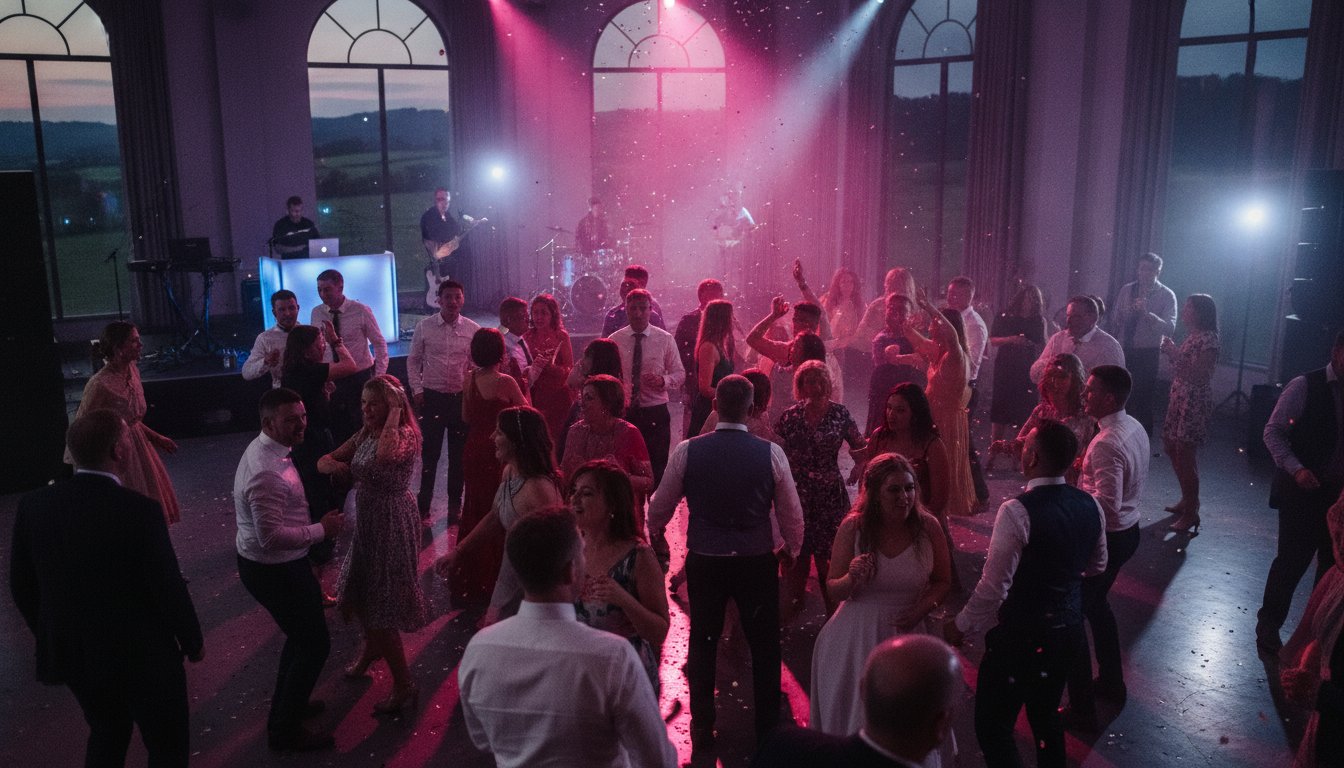
24 Jun How to Plan Wedding Music: The Ultimate 2026 Guide to an Electric Atmosphere
What if the secret to a packed dancefloor isn’t found in a generic Spotify playlist? Most couples spend months worrying about an empty room or a vibe that falls flat. You want every guest, from your teenage cousins to your grandparents, to feel the pull of the music. Learning how to plan wedding music is about more than just picking tracks. It’s about engineering a high-octane atmosphere that builds momentum and never lets go.
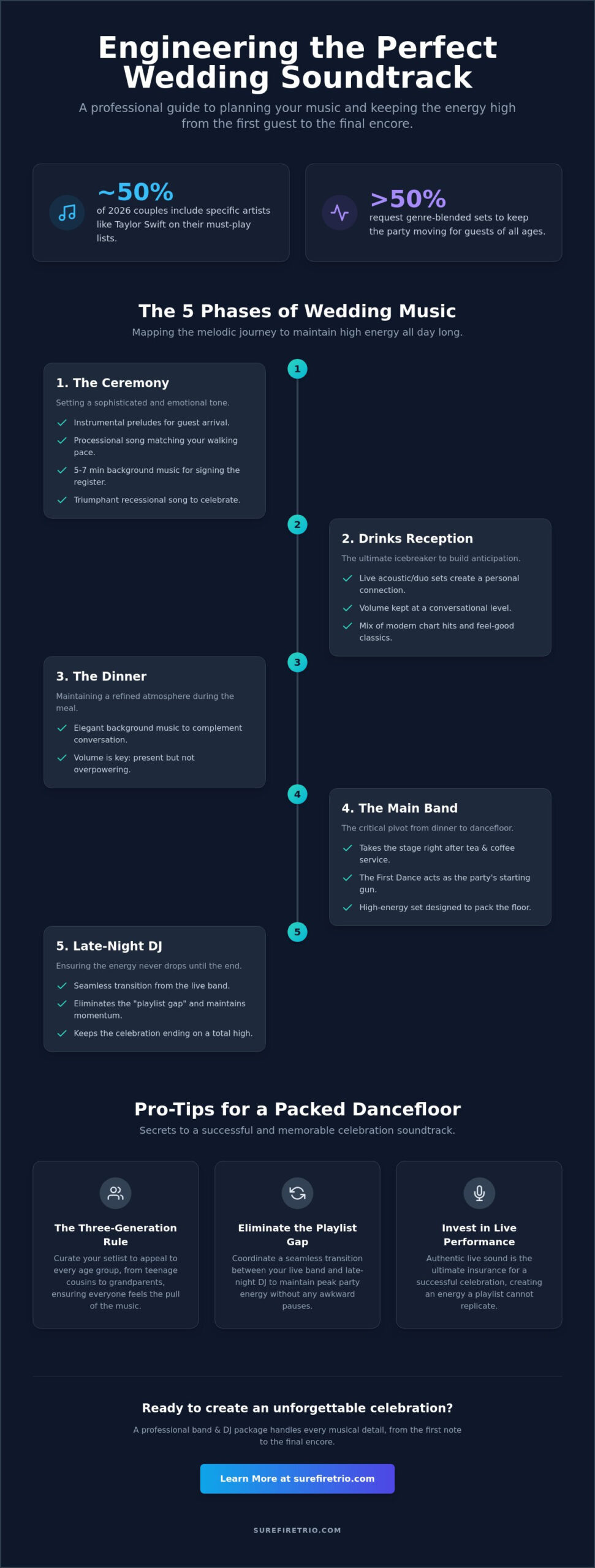
We know you’re balancing your personal favorites with the need to keep the party moving. With nearly half of 2026 couples including Taylor Swift on their must-play lists and over 50% requesting genre-blended sets, the stakes for your soundtrack are higher than ever. This guide provides a professional timeline to master your event’s rhythm. We’ll explore how to blend live energy with a seamless late-night DJ set to ensure your celebration ends on a total high. Get ready to transform your reception into an electric performance that keeps your guests talking for years.
Key Takeaways
- Map out the five essential musical phases to maintain high energy from the first guest’s arrival to the final encore.
- Master how to plan wedding music with our Three-Generation Rule to keep the dancefloor packed for every age group.
- Eliminate the playlist gap by coordinating a seamless transition between your live band and a high-energy late-night DJ set.
- Discover the secret to setting a sophisticated tone during critical in-between moments like the drinks reception and signing the register.
- Learn why prioritizing authentic live sound in your 2026 budget is the ultimate insurance for a successful and memorable celebration.
Mapping the Melodic Journey: Your 2026 Wedding Music Timeline
Your wedding isn’t just a party; it’s a carefully orchestrated production. Mastering how to plan wedding music requires looking at the day as a series of movements. You need a rock-solid energy map to keep the momentum surging through five distinct phases: the ceremony, the drinks reception, the dinner, the main band, and the late-night DJ. Each stage demands a specific sonic signature to ensure there’s never a dull moment or a dip in the atmosphere. Silence is golden until the first chord strikes.
Aligning these musical beats with your overall wedding planning Ireland 2026 strategy ensures your timeline remains fluid and professional. Don’t forget the logistics. Coordinate with your venue regarding “load-in” times. You want the heavy lifting and soundchecks finished before your guests ever set foot in the room. This prevents technical interruptions and maintains the magic of the performance. A professional setup is invisible; the impact is everything.
The Morning Build-Up
The day starts with anticipation. Instrumental preludes are your best friend here. They fill the space while guests arrive, providing a warm, welcoming backdrop. When it’s time for the entrance, choose a processional song that matches your walking pace. It’s a common trap to pick a track that’s too fast for a steady stroll. Keep the volume balanced so guests can chat easily. The history of wedding music shows these early moments set the essential tone for the celebration to follow.
The Evening Crescendo
The transition from dinner to the dancefloor is the most critical pivot of the night. The ideal time for your band to take the stage is right after the evening tea and coffee service. This prevents an afternoon slump where guests drift toward the bar. Your First Dance Song acts as the starting gun. It signals that the formal day is over and the party has begun. For the late-night shift, a combined Band & DJ Package ensures the energy never drops, moving seamlessly into a Late-night DJ set that keeps the floor packed.
The Ceremony & Drinks Reception: Setting a Sophisticated Tone
The ceremony is the soul of your celebration. It’s where the emotion peaks and the story begins. When you’re deciding how to plan wedding music for this segment, focus on the “in-between” moments that often get overlooked. While the processional captures the headlines, the signing of the register requires a specific sonic touch. This is a five to seven minute window where guests are waiting. Background instrumental music works wonders here; it keeps the atmosphere warm without demanding center stage. For a deeper dive into the traditional order of events, consulting a professional wedding ceremony music guide can help you map out every transition perfectly.
The transition from the formal “I do” to the celebratory drinks reception is a pivotal shift in energy. You want to move from reverence to relaxation. Live performance is the secret weapon for making drinks reception music feel truly personal. It creates an immediate connection that a generic digital playlist simply cannot replicate. It’s about building anticipation for the high-octane party waiting later in the evening.
Ceremony Music Essentials
Your recessional song should be a triumphant statement. It’s your “just married” anthem. Pick something with a pulse that matches the joy of the moment. Beyond song choice, consider your venue’s acoustics. High, vaulted ceilings in a church or old hall change sound requirements significantly; they often require more “fill” than a low-ceilinged modern space. For inspiration on tracks that leave a lasting impression, explore these wedding ceremony performances that resonate with guests long after the final note.
The Drinks Reception Vibe
The drinks reception is the ultimate icebreaker. An acoustic set or a vibrant duo provides the perfect background for cocktails and conversation. Keep the volume at a conversational level. Your guests want to catch up, but they also want to feel the energy of a live performance. Mix modern chart hits with classic feel-good tracks to cater to all ages. This balanced approach ensures everyone feels included before the dinner bell rings. If you want to guarantee this seamless flow from start to finish, you might consider how a professional band and DJ package can handle every logistical detail for you.
Maximising the Dancefloor: How to Curate the Ultimate Band Setlist
The dancefloor is the heartbeat of your reception. It’s where memories are made and shoes are kicked off. When you’re figuring out how to plan wedding music that actually works, you have to look beyond your own personal playlist. You need a strategy. We call it the “Three-Generation Rule.” A truly electric atmosphere requires a setlist that speaks to everyone from your flower girl to your grandmother. If you only play modern indie tracks, you lose the older crowd. If you stay strictly in the past, the younger energy fades. Success lies in the mix.
The undisputed kings of the wedding dancefloor remain the hits of the 70s, 80s, and 90s. These tracks have a universal pull that transcends age. They are the songs everyone knows the words to. When structuring your wedding party songs, use these classics as your foundation. Build momentum by grouping high-energy anthems together. This prevents the “stop-start” feel that can happen with a disjointed playlist. Trust the flow. Let the rhythm carry the night.
The First Dance: Your Moment
Your First Dance Song is the official opening of the party. You might choose a classic, soulful ballad or a high-energy surprise that shocks your guests. Whatever you pick, asking the band to play it live adds a layer of raw, authentic emotion that a recording just can’t match. It feels personal. It feels real. If you’re “dance-shy,” don’t worry. Have your band invite the bridal party and parents onto the floor after the first chorus. This takes the pressure off you and fills the floor instantly.
Reading the Room
A professional band does more than just play instruments; they read the crowd. This is why a rigid “do-not-play” list can be a party killer. You might hate a certain 80s pop hit, but if the energy is dipping and that track is the one to save it, your band needs the freedom to pivot. High-octane medleys are a secret weapon here. By blending three or four floor-fillers into one continuous stream of music, a band keeps people from finding an excuse to leave the floor. It’s about sustaining that peak experience until the very last note.
The Seamless Transition: From Live Band to Late-Night DJ
The band hits the final power chord. The crowd is roaring. Sweat is flying. This is the absolute peak of the night. It’s also the most dangerous moment for your dancefloor’s survival. If there’s a ten-minute gap while a DJ fumbles with cables, the energy evaporates. Guests head for the bar, the fresh air, or their beds. When you’re figuring out how to plan wedding music, you must eliminate the “playlist gap.” The handoff should be invisible. The music never stops; it only evolves.
Opting for a combined Band & DJ package is the smartest logistical move you can make. It streamlines everything. You don’t have two separate setups fighting for space or two different sound systems with clashing audio profiles. One high-quality rig serves the entire night. This ensures the bass stays punchy and the vocals remain crisp from the first set to the final encore. It keeps the stage area clean and maximizes the space for your guests to move. To ensure a seamless bridge, focus on these transition essentials:
- Shared audio equipment for consistent, high-fidelity sound quality.
- Lighting that shifts from stage-focus to total dancefloor-immersion.
- A DJ who knows the band’s setlist to avoid accidental song repeats.
- Constant communication between the band leader and the DJ for a perfect handoff.
Maintaining the Pulse
A professional DJ doesn’t just start a new set; they pick up the baton. They should ride the momentum the band created, perhaps starting with a remix of a classic before diving into modern floor-fillers. Using a dedicated Late-night DJ set allows the energy to shift into club territory as the night matures. Keep the lights low. Keep the volume high. Your DJ needs to be a master of reading the room, ready to take requests while ensuring the vibe stays within your preferred genres. It’s about a continuous surge of sound.
The Final Song of the Night
The “closer” is just as important as the first dance. It’s the collective exhale of the entire room. Many couples in Ireland favor the “Circle on the Floor” tradition, where everyone links arms for one massive, final anthem. It brings the whole room together for one last big moment. Managing the inevitable “one more song” requests requires a pro who knows how to satisfy the crowd without upsetting the venue’s strict 2 AM curfew. End on a high, but end with total professional control.
Ready to guarantee your dancefloor stays packed until the lights come up? Book a high-energy Band & DJ package today and let the experts handle the transition.
Professional Reliability: Securing the Best Entertainment for 2026
Authentic live sound is the number one factor in guest satisfaction. It’s the difference between a polite applause and a floor-shaking ovation. As you master how to plan wedding music, remember that professional reliability is your foundation. You aren’t just hiring people to play instruments; you’re hiring partners who ensure the night’s energy remains peaked. A seasoned trio brings a raw, high-octane energy that fills the room without overwhelming the space. Whether your venue is a rustic barn in Kerry or a grand ballroom in Dublin, nationwide availability is essential for a seamless 2026 celebration.
Quality is an investment in your peace of mind. When factoring music into your average wedding cost Ireland 2026 planning, prioritize the entertainment early. Cutting corners on your band often leads to technical failures or a lackluster performance that guests will remember for the wrong reasons. Choosing veterans who have seen every scenario eliminates the risk of a party that fails to launch. We don’t just show up; we deliver a peak experience. Expert hands handle the logistics so you can focus on the dancefloor.
What to Look for in a Professional Band
Booking for 2026
The best dates disappear fast. For popular 2026 weekends, a lead time of 18 to 24 months is now the industry standard. This gives you ample time to collaborate on your First Dance Song. Whether you want a custom arrangement or a specific cover, early booking ensures the band has time to perfect it. Finalize your “Run of Show” two weeks before the big day. This document aligns the band, the venue, and your timeline, ensuring every transition is handled with expert precision. Start your journey today and secure the electric atmosphere your celebration deserves.
Ignite Your 2026 Celebration
Your wedding deserves a soundtrack that pulses with life. It’s a performance. You’ve mastered the timeline and learned the power of the Three-Generation Rule. Now, it’s time to execute. Mastering how to plan wedding music is the ultimate difference between a polite gathering and a legendary, high-octane celebration. It requires a seamless transition from the first processional note to the final late-night DJ set. Every beat matters.
Professionalism is your safety net. You need the reassurance of authentic 100% live sound and the confidence that comes with five-star reviews across Ireland. Our all-in-one Band & DJ packages eliminate the risk of a lackluster party. We handle the logistics; you own the dancefloor. It’s a surefire way to guarantee your guests are still dancing when the lights come up. Don’t leave your atmosphere to chance. Trust the experts who live for the encore.
Check availability for your 2026 wedding with Surefire Trio and start building your electric atmosphere today. We can’t wait to see you on the dancefloor!
Frequently Asked Questions
How many songs do we need for a wedding ceremony?
You generally need five to six specific songs for a ceremony. This includes the prelude while guests arrive, the processional for your entrance, two tracks for the signing of the register, and a triumphant recessional. Choosing these early is a core part of how to plan wedding music that feels cohesive. It ensures every emotional beat of the ceremony is supported by the right sonic backdrop without any awkward silence.
Should we have a live band or just a DJ for our wedding?
A combination of both is the gold standard for an electric atmosphere. A live band brings raw, infectious energy that a recording can’t match, while a Late-night DJ set ensures the party continues with modern club hits. Most couples find a Band & DJ Package is the most seamless, stress-free option. It provides a continuous surge of energy from the first dance until the very last guest leaves the floor.
What is the best way to choose a first dance song?
Focus on a track that holds genuine personal meaning or matches your desired energy level. Whether it’s a classic ballad or a high-octane surprise, your First Dance Song should be a reflection of your style. Ask your band for their repertoire if you need inspiration for a track that works well live. They can often provide a professional arrangement that adds an authentic, raw layer of emotion to your big moment.
How long does a wedding band usually play for?
Most professional wedding bands perform for approximately two to two and a half hours. This is typically delivered in two high-energy sets with a short break, or one continuous performance if the dancefloor is already surging. The timing is designed to peak just as the late-night food arrives or the DJ takes over. This structure ensures the atmosphere stays electric without exhausting your guests before the final encore.
Can we give the band a list of songs we want them to play?
You should definitely share your favorites, but trust the band’s ability to read the room. Providing a “must-play” list of about 10 to 15 songs gives the performers a clear sense of your taste. A rigid, long list can sometimes limit their ability to pivot if they see the crowd’s energy dipping. Professional musicians use their intuition to keep the floor packed by selecting the right song at the right moment.
What happens if the band or DJ has an equipment failure?
When should we book our wedding music for 2026?
You should aim to book your entertainment 18 to 24 months before your date. Popular 2026 weekends are already seeing high demand across Ireland. Understanding how to plan wedding music involves securing your headline act early to avoid the heartbreak of your favorite band being fully booked. Early booking also gives you more time to collaborate on special requests and finalize the specific details of your musical timeline.
How much space does a three-piece wedding band need?
A professional three-piece band typically requires a stage area of about 4 meters by 3 meters. This footprint accommodates the drum kit, backline amplifiers, and PA system comfortably. It’s enough space for a high-octane performance without eating into the valuable real estate of your dancefloor. If your venue has a smaller stage area, most bands can adapt their setup as long as the power requirements and safety standards are met.
Sorry, the comment form is closed at this time.