


06 Nov Finding a Band That Loves Their Job for Your Wedding
A wedding band’s enthusiasm comes through in its performance and teamwork. Finding a band that loves their job means looking for genuine stage presence, strong musical connection and the experience to keep the music flowing. Musicians often build their careers through practice and live performances, while backline and instrument rentals can help shape the equipment available for a particular show.
For your wedding, that energy can help guests feel connected and ready to dance. Finding a band that loves their job also means noticing how performers work together and bring a room to life. This guide explores how musicians enter the industry, how to assess their performance, and how equipment choices can shape the work behind the scenes.
Key Takeaways
- Look beyond polished stage presence: notice how musicians listen, communicate and support one another during a performance.
- Use reviews and live recordings to get a fuller sense of a band’s consistency, sound and connection with an audience.
- Compare musical style, relevant experience and crowd interaction against the atmosphere you want for your wedding.
- Consider how a Band & DJ Package, a First Dance Song and a Late-night DJ set can shape the celebration from key moments through to the dance floor.
3. How can you tell if a band enjoys performing together?
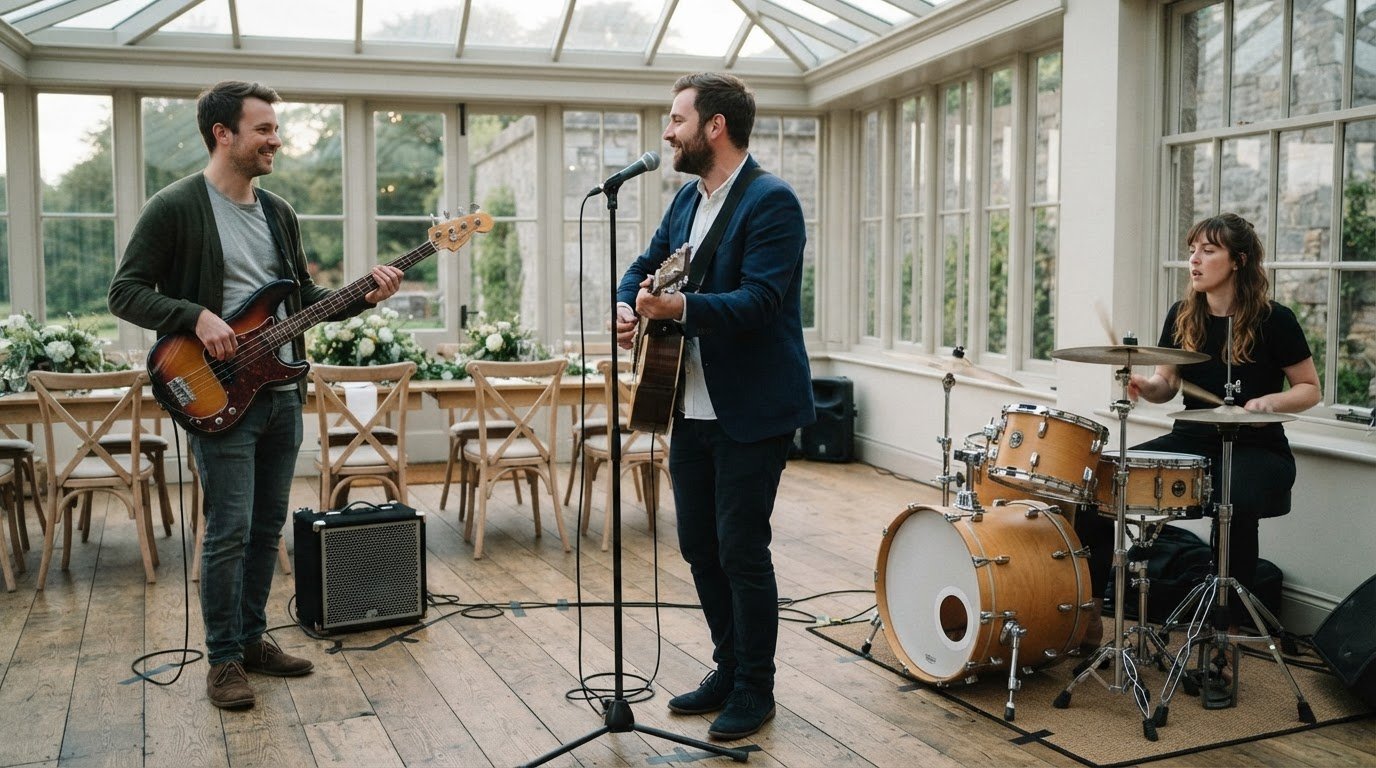
Watch how musicians interact between songs, not only during a big chorus. A guitarist sharing a grin with the singer, or a drummer signalling a clean transition, shows easy communication. Those small moments help a wedding set feel connected. Finding a band that loves their job can start with noticing whether performers are engaged with one another as well as the audience.
Notice how the group handles a musical change. If a singer adjusts a phrase and the other players follow smoothly, they’re listening in real time. In a live recording, look for eye contact, clear cues and space for each instrument. These signs reveal teamwork that polished sound alone can’t demonstrate. A smooth transition between songs can also show the musicians are comfortable sharing the stage.
Rehearsal leadership offers another clue. A music director typically hires musicians, runs rehearsals and may be responsible for the band. In rehearsal, players agree on arrangements and transitions. Look for musicians who contribute ideas, respond constructively and stay attentive when another member leads a section. That collaborative approach can carry through to a wedding performance.
Pay attention to how the group shares the spotlight. A keyboard player might support a singer’s verse, then step forward during an instrumental break without disrupting the song. That balance suggests the players value the overall performance, not just individual moments. A lively dance floor benefits when each musician supports the music and leaves room for others to shine.
Consider how the musicians work with material beyond familiar songs. A band assembled for a one-off television appearance or a full tour may be working on a specific project. Shared preparation matters in either setting. Finding a band that loves their job also means looking for performers who adapt to one another and create a cohesive sound, rather than simply playing side by side.
4. How can I check reviews and live recordings of a band?
Start with reviews that describe a real wedding detail, not just “brilliant band”. A comment mentioning the first dance, a packed floor or a smooth changeover gives useful context. Search the band’s name on Google and read several reviews, looking for recurring comments about timing, communication and how musicians handled the event.
Then compare reviews across different sources. A consistent pattern matters more than one glowing or critical post. If several couples praise a band’s ability to bring guests onto the floor, that suggests audience engagement is a regular strength. Notice whether reviews explain what happened, rather than relying only on general praise.
Choose live recordings over studio tracks to hear how the band performs in a room. A polished studio recording can’t show how musicians handle transitions or interact with an audience. In a live clip, listen for clear vocals, balanced instruments and smooth changes between songs. Watch whether the performers stay connected as the arrangement shifts.
Check that recordings show the same musicians and musical style you’re considering for your wedding. A short highlight reel can show stage presence, but a longer performance gives more context. Notice whether the energy stays consistent between songs and whether the band moves from a quieter moment into a lively dance-floor number without an awkward pause.
Use reviews and recordings together. Reviews describe the couple’s experience; live footage lets you hear and see the performance yourself. If a review praises a singalong, look for a recording where guests join in. If comments mention an easy-going atmosphere, notice how the band speaks to the room. This comparison makes the evidence more useful than either source alone.
People with practical experience around music venues may offer a different perspective from couples’ reviews. A music venue or recording studio runner fetches items needed during work, such as batteries, duct tape, coffee or lunch. That role is not itself a review of a band, but it can provide context about the work behind the scenes.
Working in venue security or checking IDs can help people get started at music venues and meet industry contacts. If you speak with people in these roles, keep their comments separate from what you can verify in reviews and live recordings. Use them as context, then judge the performance from direct evidence.
4. How do I compare bands by style, experience and audience interaction
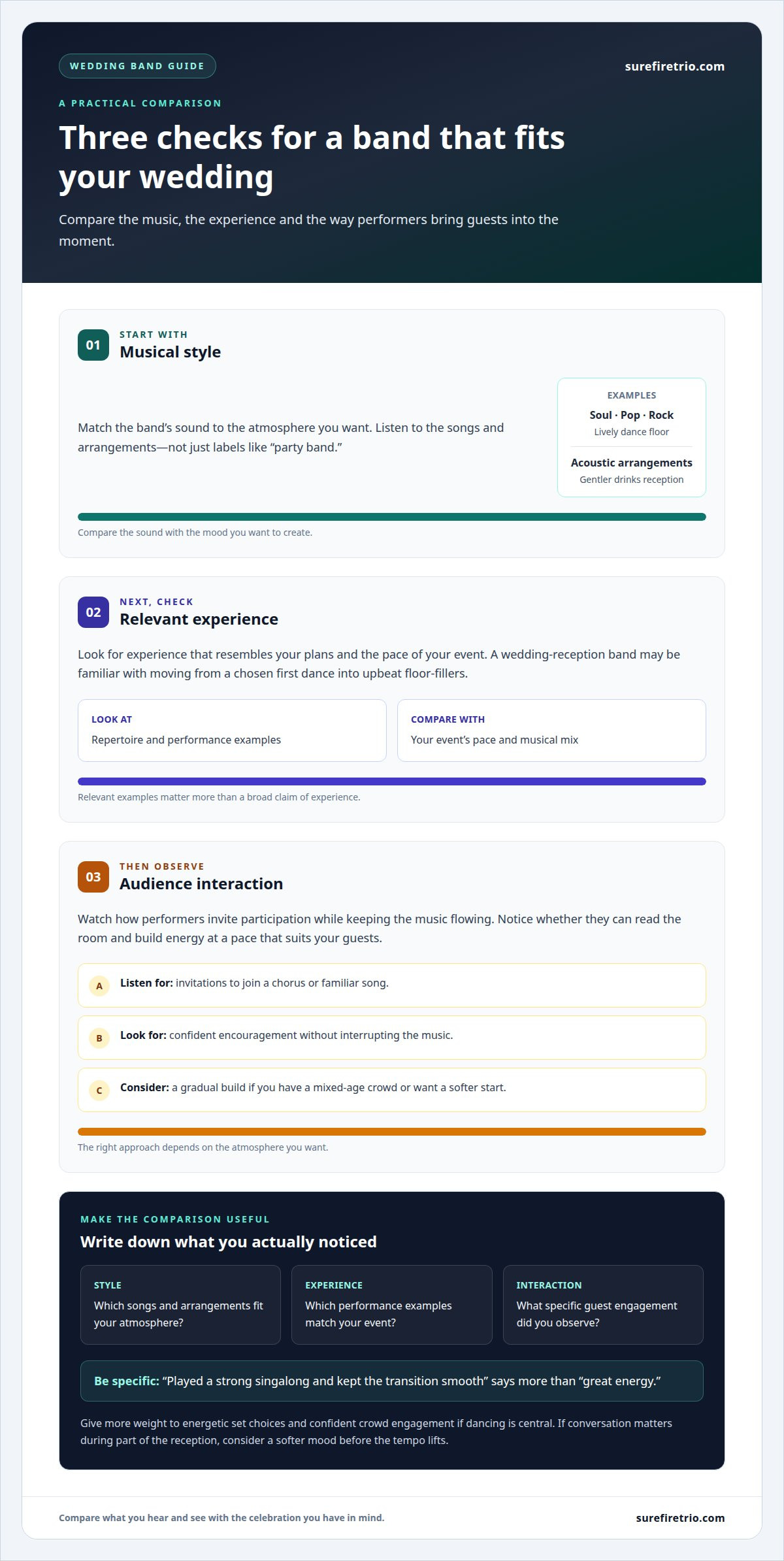
Start with musical style, then match it to the atmosphere you want at your wedding. A band playing soul, pop and rock may suit a lively dance floor, while acoustic arrangements can create a gentler feel during a drinks reception. Listen to the songs and arrangements, not just broad labels such as “party band”.
Next, compare experience that resembles your plans. A band used to wedding receptions may be familiar with moving from a couple’s chosen first dance into upbeat floor-fillers. Another group might have more experience with concerts or private parties. Look at its repertoire and performance examples to see whether its background fits your event’s pace and musical mix.
Audience interaction deserves its own comparison. Watch how performers invite guests to join a chorus, introduce a familiar song or encourage dancing without interrupting the music. A singer who reads a quiet room and builds energy gradually, for example, may suit a mixed-age crowd better than constant calls for participation.
Make a simple comparison note for each group. Record the styles you heard, relevant wedding experience and specific interaction you observed. “Played a strong singalong and kept the transition smooth” is more useful than “great energy”. This makes differences clearer when several bands sound appealing at first listen.
Finally, weigh each quality against your priorities. If dancing is central, give more importance to energetic set choices and confident crowd engagement. If conversation matters during part of the reception, consider whether the band can create a softer mood before lifting the tempo later. The strongest fit is the group whose style, experience and interaction suit the celebration you’re planning.
Band comparisons can also prompt questions about the wider work behind live music. Companies often post internship and job opportunities on LinkedIn. Regular blogging can lead to publicists, bands and managers reaching out for interviews and reviews. Music transcribers create sheet music from recordings and may work with arrangers on scores for ensembles, school bands, orchestras and cover bands. People with experience in a music-industry field can consider starting their own business. These paths show how musical skills extend beyond performance, while your band choice should still reflect the sound and guest experience you want.
How do music careers develop, and what role can rentals play?
Music careers can begin with practical work around live performance. Taking a door role or answering phones at a venue can help newcomers meet industry contacts. Venue security and checking IDs can also offer an entry point into the live-music environment, where professional relationships may lead to future opportunities.
For musicians, progress may start with side work before greater responsibility. A music director typically hires musicians, runs rehearsals and may be responsible for the band. They might assemble players for a one-off television appearance or a full tour, so preparation and collaboration matter across different kinds of work.
Not every music-industry role involves performing. A music transcriber creates sheet music from recordings, while a playback engineer triggers backing tracks during a live show. Music marketers may work on campaigns, and a music blog can serve as a writing portfolio. These examples show how different skills can open paths into music work.
Backline and instrument rentals can influence a wedding band’s setup by giving musicians access to equipment for a particular performance. The practical fit depends on the group’s instruments, musical approach and stage plan. Coordinating equipment needs during performance preparation helps keep the focus on delivering the music.
For couples, understanding this work behind the performance can add perspective when choosing wedding entertainment. If live music is central to your plans, explore wedding entertainment options as you shape the celebration’s soundtrack.
Surefire Trio: Band & DJ Package
Surefire Trio’s Band & DJ Package brings live music and DJ entertainment together for a wedding celebration. It suits couples who want the energy of musicians performing live, followed by a seamless shift into a DJ set. The repertoire includes music from the 70s, 80s and 90s, creating familiar sounds for guests to enjoy across the evening.
For a personal focal point, the First Dance Song gives your chosen moment its own musical spotlight. A Late-night DJ set can then keep the dance floor moving as the celebration continues. Together, these options shape the evening’s soundtrack around the moments that matter to you.
To talk through wedding entertainment with Surefire Trio, get in touch.
Set the Tone for Your Wedding Celebration
The music you choose can shape how the day feels, from the first notes guests hear to the moment the dance floor fills. Before making your decision, picture the atmosphere you want: warm and intimate, lively and full of singalongs, or a little of both. That vision gives your entertainment choice a clear purpose.
Finding a band that loves their job is about more than energy on stage. It’s about choosing performers whose approach feels right for your celebration and whose music brings your guests together. Let that connection guide your next step, and make room for the moments you’ll want to remember long after the last song.
Ready to talk through the sound you have in mind? Contact Surefire Trio about your wedding, and take the next step towards a celebration with a soundtrack that feels like yours.
Frequently Asked Questions
How do I discover bands that are passionate about their music?
Look beyond wedding promotion for signs of genuine musical curiosity. A band that explains its arrangement choices, shares the influences behind its set or takes on creative projects beyond standard performances shows more than polished presentation. Notice whether musicians describe how they adapt a song to suit their sound. Specific, thoughtful details can reveal a real connection to the music.
What questions should I ask a band before booking them?
Ask about the band’s wedding experience, repertoire and musical styles, and how it handles transitions, the first dance and audience interaction. You can also ask to see live recordings featuring the musicians and style you’re considering, and discuss equipment needs and plans for the evening’s music.
Sorry, the comment form is closed at this time.