


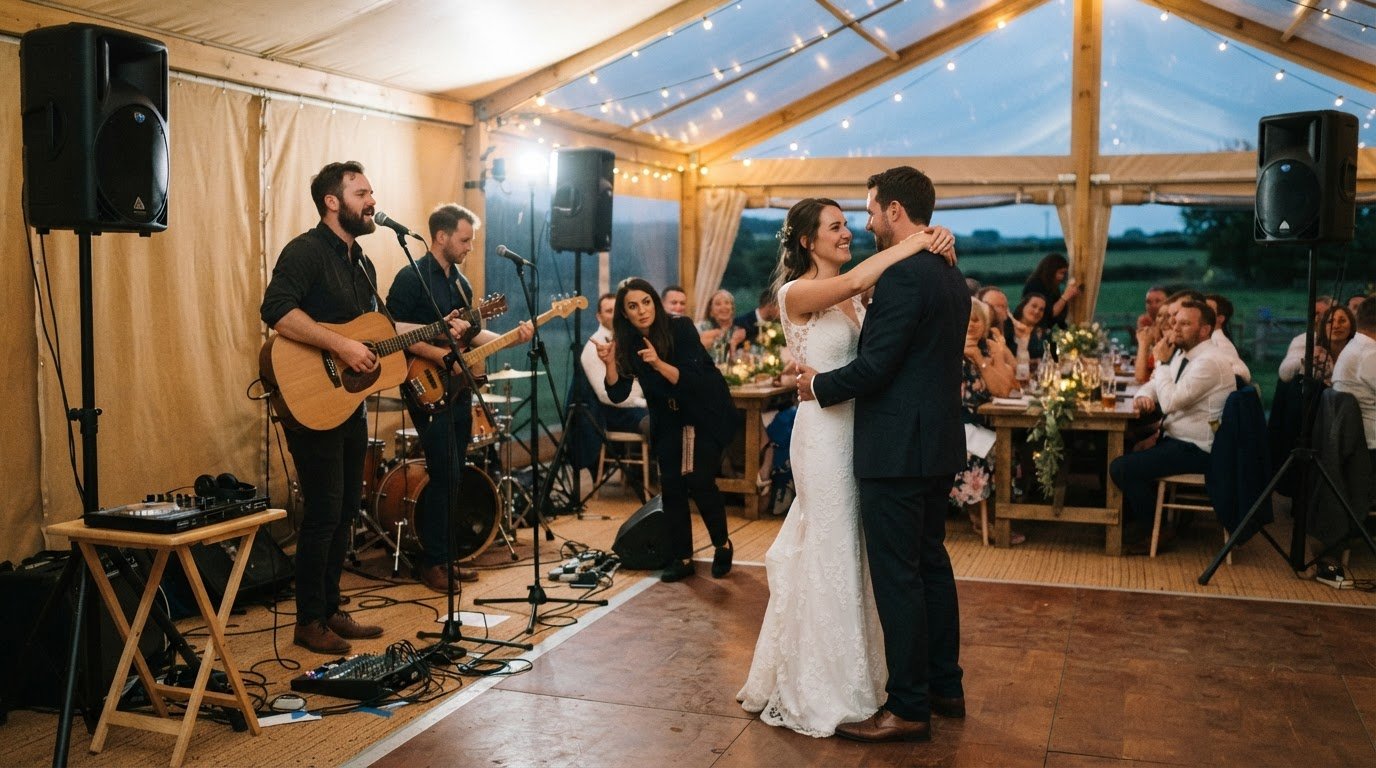
02 Nov How the band and planner can coordinate your wedding day
Yes, Surefire Trio can work with your wedding planner. Share the schedule, venue requirements and music plans so the band and planner can coordinate timings and supplier conversations. Clear communication helps avoid crossed wires and keeps the day flowing from the drinks reception to the dance floor.
There is plenty to bring together: ceremony moments, photographs, speeches, room changes and evening entertainment. The music needs to fit around those moving parts, while the venue’s setup arrangements, soundcheck rules, sound limits and finish time shape the schedule.
Coordinate the band’s timings with your planner by sharing the latest schedule and venue details, and agreeing who will handle supplier conversations. The planner and venue coordinator have different roles, so make hand-offs clear. This keeps the day organised behind the scenes and the music ready when it matters.
Key Takeaways
- Share the wedding-day timeline with the band and planner so music cues fit naturally around key moments.
- Put venue setup, soundcheck and noise requirements into the supplier discussions early.
- Clarify who is handling each conversation and decision, especially when the venue coordinator is involved.
- Align the band’s sets and breaks with the day’s flow to keep transitions smooth and the celebration moving.
1. Coordinating music and timing across the wedding day
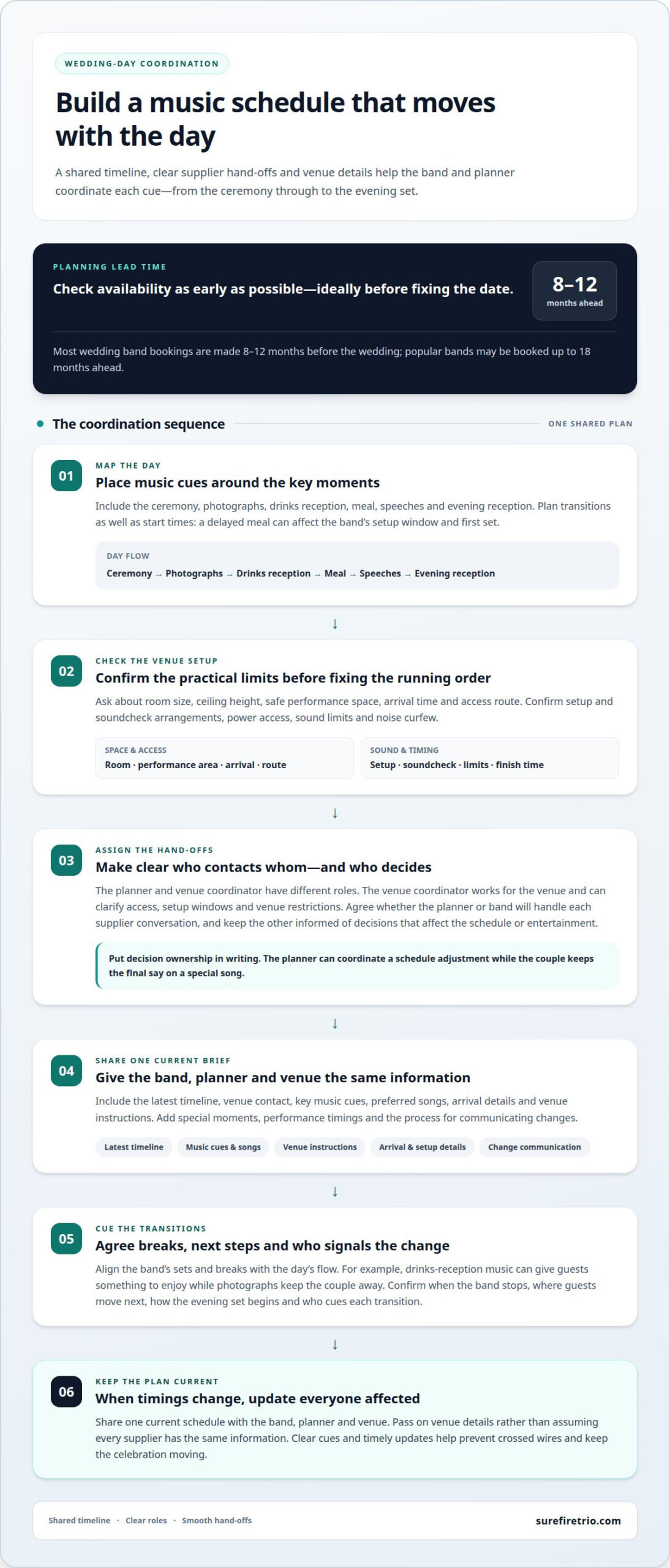
For an Irish wedding, build the music schedule around the day’s timings. Map each cue against the ceremony, photographs, drinks reception, meal, speeches and evening reception. Include transitions, not just start times: a delayed meal may affect the band’s setup window and first set. Share one current schedule with the band, planner and venue, and update everyone when timings change.
How far in advance should the planner contact the wedding band? As early as possible, ideally before you fix the date, so you can check the band’s availability. Most wedding band bookings are made 8-12 months before the wedding day, and popular bands may be booked up to 18 months ahead.
Ask the venue coordinator about room size, ceiling height, safe setup space, arrival time and soundcheck rules. Venue coordinators work for the venue, not for the couple, so their guidance centres on venue operations. Their recommendations can clarify access routes, setup windows and restrictions that shape the schedule. Pass those details to the planner and band rather than assuming each supplier has the same information.
Before confirming the running order, ask the venue whether the band’s setup will fit safely and when musicians can arrive. Venues may set rules for setup and soundchecks. Tell the band about sound limiters, volume limits and noise curfews; these can affect set length, equipment choices and the finish time. Agree the band’s breaks and transitions with the planner, including who cues the next part of the day.
For example, the planner can schedule drinks-reception music while photographs keep the couple away from guests. That gives guests something to enjoy if photos or formalities run late. Experienced visual teams such as Shutterink Photography often highlight that aligning portrait sessions with the entertainment schedule ensures smooth transitions throughout the day. Confirm when the band stops, where guests move next and how the evening set begins. A shared timeline turns those hand-offs into clear cues, keeping the celebration flowing without asking suppliers to guess.
2. Vendor negotiations and vetting
For couples booking an Irish wedding, vetting means looking beyond a polished stage photo. Ask whether the band has played weddings like yours and knows the venue’s size and acoustics. A large hall and an intimate reception room create different sound and space needs. Share the venue name and room details so the discussion stays specific.
Use a meeting or video call to discuss the band’s approach and judge whether communication feels clear. Ask about requests and genre changes: can the band work your must-have songs into a set that suits guests’ tastes? Share a shortlist of favourites, then agree how requests fit the performance. That makes your choices useful without turning the set into a last-minute playlist.
Review set lists, online reviews and live performance videos, or see the band at a wedding showcase. Look for evidence of lively performances and smooth transitions, not just a strong recording. Reviews can show whether the band delivered what it promised. Raise specific song choices during booking, especially if one track matters for a key reception moment.
Ask who will perform on the wedding night. Some Irish wedding-band organisations use one name for multiple line-ups and may book more than one wedding on the same date. Request clarity about whether the band booked is the band performing. Choosing a lead singer alone may mean different accompanying musicians, while regular members help preserve a consistent sound.
Keep negotiations transparent: record agreed songs, performance details and communication responsibilities in the booking information. A planner can help gather decisions, but the couple should understand what has been agreed. To judge whether the band will work with your wedding planner, notice how clearly it responds to practical questions and shares details. Explore wedding entertainment options as one way to shape the music around your celebration.
A meeting or video call can help assess chemistry as well as communication. Ask whether the band takes requests and mixes genres, and whether it can provide solo performances during drinks or Secret Singing Waiters.
Check set lists, online reviews and YouTube videos, and raise specific song choices in advance. Reviews can help establish whether promises were kept, including lively performances and smooth transitions; confirm that the band booked will perform on the wedding night.
3. Working with suppliers
Give the planner and band one shared event brief. Include the latest timeline, venue contact, key music cues, preferred songs, arrival details and venue instructions. Add special moments, such as a family entrance or a surprise for friends, so suppliers can coordinate without relying on memory. If anything changes, update the shared version and tell the people affected.
Can a wedding band liaise directly with the venue and suppliers? Yes. Direct contact can clarify practical details such as access arrangements or supplier timings. Agree whether the band or planner will make each call, and keep the other informed about decisions that affect the entertainment or schedule.
What equipment and setup requirements should the wedding planner confirm with the band? Ask the band what it needs for its performance, then give those requirements to the venue. Confirm the available performance space, setup and soundcheck arrangements, power access, arrival route and any sound restrictions. The venue can then flag conflicts before suppliers arrive.
Put the working arrangements in writing. Record the performance timings, music cues, planner contact and process for communicating changes. Agree who handles venue liaison and which decisions need the couple’s approval. For example, the planner can coordinate a schedule adjustment while the couple retains the final say on a special song.
Supplier coordination also includes the florist: once couples choose one, the checklist recommends securing the date with a small deposit. Tell the planner when that booking is complete, especially if flowers affect the room layout or entertainment space. A clear hand-off helps each supplier prepare for the same version of the day, giving guests a smooth, lively celebration rather than a string of disconnected moments.
Before committing to a date, check availability across preferred suppliers. The checklist advises couples in Ireland to check a preferred wedding supplier’s availability before fixing their wedding date. This is especially useful when a particular band or other supplier is central to the plans: confirm they can attend, then settle on a date and update the shared brief. If plans are still flexible, keep the planner informed while options are considered, so supplier conversations stay aligned.
4. Do wedding bands work with wedding planners?
Yes. A wedding band can coordinate with a planner so live music supports the couple’s plans and the day’s running order. The planner oversees the wider schedule, while the band focuses on performance details, music cues and its own setup. Agreeing these roles early helps avoid duplicated messages and unclear decisions. For example, the planner can signal when speeches finish, while the band prepares for its next set.
Make collaboration practical by naming one contact on each side. The planner can share relevant schedule changes, and the band can explain how they affect performance timing. If the meal runs late, they can discuss whether to adjust a set start or shift a music cue. Keep the couple involved in decisions about meaningful moments, such as the first dance or a surprise song.
Clear boundaries matter too. A venue coordinator represents the venue’s operational requirements, while the planner coordinates the couple’s event. The band needs venue information that affects its performance, including setup arrangements, soundcheck rules and restrictions. The planner can pass those details along, and the band can discuss technical requirements directly with the venue when needed.
Before the wedding, agree how updates will be shared and who makes each decision. An email thread or shared event document can record the final timings, approved song choices and contacts. Keep changes in the same channel rather than relying on separate calls or messages. That gives the planner, band and couple one clear reference on the day.
The strongest working relationship is collaborative, not complicated. The planner coordinates the wider event, and the band brings the music to life. With responsibilities agreed and key information shared, both can respond smoothly to changes while keeping the couple’s priorities at the centre.
Surefire Trio: Band & DJ Package
Surefire Trio’s Band & DJ Package brings live wedding music and DJ entertainment together, giving couples one music plan to coordinate with their planner. Live songs from the 70s, 80s and 90s can set the tone before the DJ keeps the celebration moving. Share your event timeline and key music cues with the planner so the entertainment fits the flow of your day.
Choose a First Dance Song to make that moment personal, then carry the energy into the evening with a Late-night DJ set. Surefire Trio’s Band & DJ Package brings live performance and DJ music together. Your planner can coordinate the timings while you choose the moments and songs that matter most.
Contact Surefire Trio to discuss music for your wedding day.
Set the music plan in motion
With the planning team aligned, turn the music brief into choices that feel unmistakably yours. Decide which moments deserve a personal soundtrack, what kind of energy you want guests to feel and how you’d like the celebration to build. Share those priorities with your planner and Surefire Trio so the details can take shape together.
If you’re still asking whether the band will work with your wedding planner, start by sharing your schedule and the atmosphere you want to create. Surefire Trio’s Band & DJ Package combines a hard-working, high-energy live performance, an upbeat style and an eclectic song list with DJ entertainment. A First Dance Song can make a key moment personal, while the DJ set carries the party forward.
Ready to explore the music for your wedding? Contact Surefire Trio to discuss your wedding. Make the plan yours, then look forward to the first note, the packed dance floor and a celebration that sounds like you.
Sorry, the comment form is closed at this time.