


27 Sep Sound Considerations for Outdoor Weddings: A Practical Checklist
What if the perfect outdoor setting makes your vows harder to hear? Open space doesn’t contain sound like a room does, and wind can affect how voices and music carry. That’s why sound considerations for outdoor weddings deserve a place on your planning checklist, alongside the layout and weather plan.
It’s natural to wonder whether every guest will hear the speeches, whether the music will feel comfortable rather than overpowering, and what happens if the weather turns. Early coordination can help prevent last-minute surprises. This guide covers the practical questions to raise with your venue and entertainment providers, from speaker coverage and sound limits to power access, rain protection and transitions between the ceremony, drinks reception and dancing. Share the venue’s outdoor constraints with your booked performers early. If you’re considering a band and DJ package, you’ll have a clearer list of details to discuss before the day.
Key Takeaways
- Outdoor sound needs a coverage plan because open space doesn’t contain audio like an indoor room does.
- Use the ceremony, reception and dance-floor layout to identify where guests need to hear speech, music or both.
- Make sound considerations for outdoor weddings part of your venue checklist, including sound limits, curfew, power access and a weather contingency.
- Ask prospective entertainment providers how they’ll coordinate performance timing and sound checks with the venue.
- Share your venue’s constraints early so you can discuss whether a band and DJ package fits your celebration.
Why outdoor wedding sound needs a different plan
Inside a room, walls and ceilings reflect and contain some sound. Outdoors, there are no enclosing walls to do that work, so voices and music disperse into open space. What guests hear depends on more than volume: wind, distance, background activity and seating positions all matter.
Outdoor sound coverage means clear, reasonably even audibility across the guest area, while recognising that sound may differ from one listening position to another. A sound reinforcement system amplifies and distributes audio for an audience, and its setup needs to suit the space and event. The Sound reinforcement system overview explains the basic purpose of this type of system.
Why an open-air setting changes what guests hear
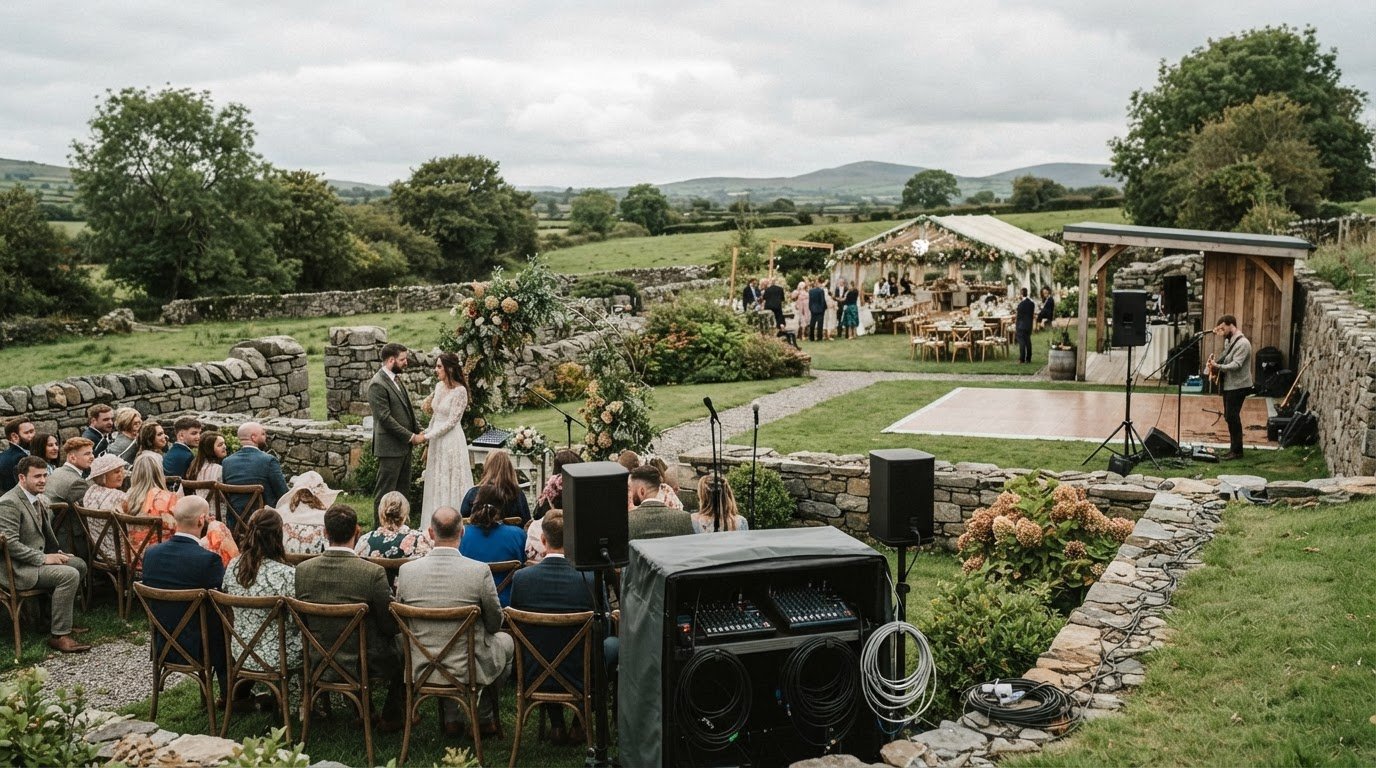
Imagine an outdoor ceremony where guests in the front rows hear every word, but those seated farther away struggle to follow a reading. Simply turning up the volume may make the nearest guests uncomfortable without fixing the uneven coverage. Clear speech depends on how sound reaches the audience, not just how loud it is.
Conditions can shift, too. A gust of wind may affect how well a voice carries, while nearby conversation, traffic or other venue activity can compete with the sound. Consider where the audience will sit, how far guests are from the speaking or performance area, and whether the surroundings are likely to be lively or exposed. Share those details with your venue and booked performers early.
Which wedding moments need the clearest sound?
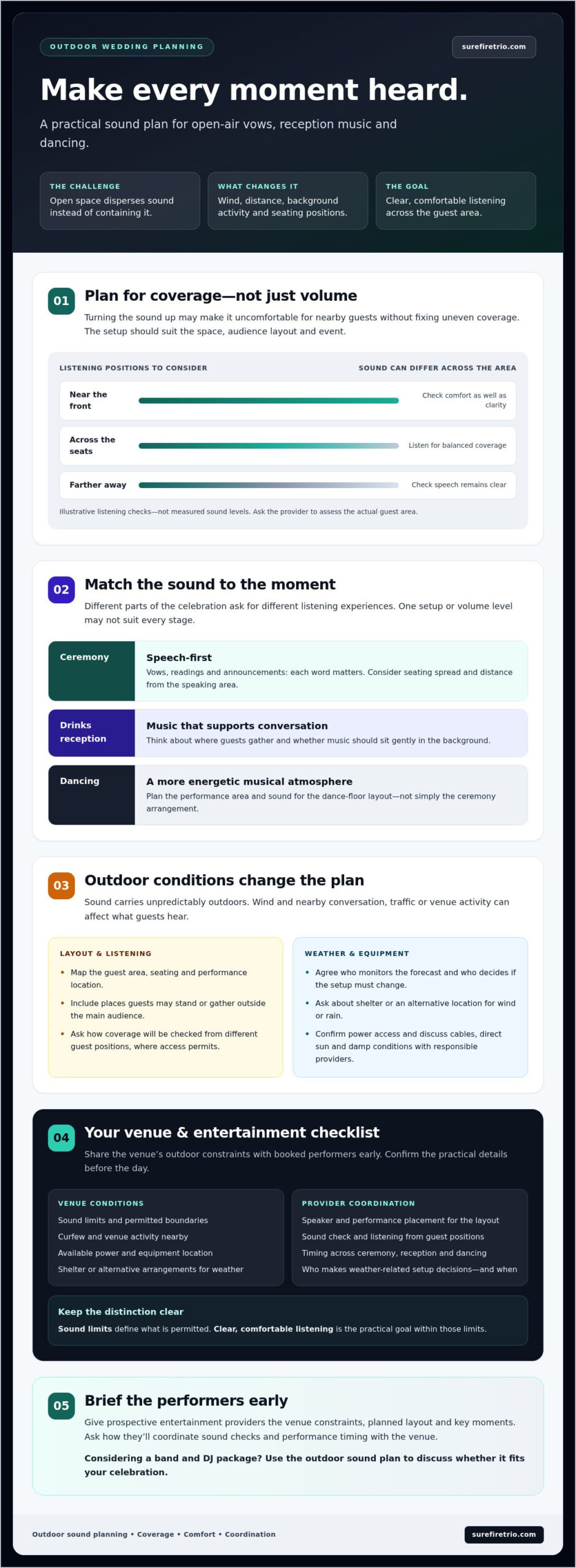
Start by listing the moments guests need to hear clearly. Vows, readings and announcements are speech-first, so each word matters. Drinks-reception music may sit more gently in the background, while dancing calls for a more energetic musical atmosphere. One setup or volume level may not suit every part of the day.
Guest placement matters as much as the programme. If seating spreads widely around the ceremony area, some guests may be much farther from the speakers than others. Note the seating plan, speaker and performance locations, and any spots where guests may gather outside the main audience. Discuss these details with your venue and entertainment provider rather than assuming louder sound will reach everyone clearly.
- Which spoken moments are essential for every guest to hear?
- Where will guests be seated, and where might they stand or move?
- Should music support conversation or lead the dancing at each stage?
These answers give you a clearer brief for matching sound coverage to the ceremony, reception and dance floor.
How outdoor wedding sound coverage, acoustics, and weather interact
Even a well-planned setup can sound different as guests move around an outdoor space. Speaker placement, the shape of the audience area and the distance between speakers and listeners all affect how evenly sound reaches people. For example, speakers near the performance area may serve nearby guests well while leaving those farther away with a quieter or less clear experience.
Wind and other outdoor conditions can change how sound carries across the space. The principles of outdoor sound propagation help explain why sound doesn’t travel in a perfectly predictable way outdoors. Your sound provider can assess the planned layout and help balance coverage, rather than simply aiming for maximum volume. A useful distinction: venue sound limits set the permitted boundaries; clear, comfortable listening is the practical goal within them.
Speaker placement, listening distance, and sound clarity
Sketch the guest area, performance area and any seating farther away. Share the plan with the venue and your entertainment provider, including places where guests are likely to gather. Ask how they’ll assess coverage across the space and whether the sound check can include listening from different guest positions, where venue access permits.
That walk-through can show whether speech is clear beyond the front rows and whether music feels balanced across the audience. Discuss what you hear with the provider before deciding that more volume is the answer. The aim is an appropriate listening experience across the planned guest area, not the loudest possible sound in one spot.
Wind, rain, and power: questions to settle in advance
Agree who monitors the forecast, who decides whether the performance setup needs to change, and when that decision will be made. Ask the venue what shelter or alternative arrangements may be available if wind or rain makes the planned location unsuitable. Direct sun and damp conditions also deserve discussion with the responsible providers. Don’t assume every setup can be exposed to the elements.
Power and cables need equal care. Confirm the location and availability of power with the venue and sound provider, then agree how cables will be routed so they don’t create hazards for guests or staff. Ask who is responsible for checking these details and what the fallback plan is if the agreed setup can’t be used.
- Where will speakers and performers be positioned, and which guest areas need coverage?
- Who makes weather-related setup decisions, and what contingency does the venue offer?
- Where are the power sources, and how will cable routes be kept safe?
Share the answers with your booked performers early. If you’re considering a wedding band and DJ service, include the venue layout, weather plan and power details when discussing how the entertainment can fit the day.
Compare sound needs for an outdoor ceremony, reception, and dance floor
The right sound plan changes with the moment. A ceremony puts every word in focus; drinks-reception music should leave room for easy conversation; dancing invites a bigger lift in energy. Use this comparison to brief your venue and entertainment provider. It turns a broad request for “good sound” into practical questions about each part of the day.
| Event moment | Sound purpose | Layout concern | Question to ask |
|---|---|---|---|
| Ceremony | Make vows, readings and music clear | Guests seated at the back or sides | How will spoken moments reach the whole seating area? |
| Drinks reception | Add atmosphere while conversation continues | Guests moving and gathering in different spots | Where will people mingle, and how will music suit those areas? |
| Dance floor | Give the music energy and momentum | Guests may cluster near the dance area or spread out | How will the sound plan adapt as the evening moves on? |
Ceremony sound: vows, readings, and music
Speech clarity comes first. Consider guests at the back and along the sides, not just those nearest the couple. Tell your provider which moments need to be heard clearly and ask how ceremony music will fit around readings and vows. If you’re gathering ideas, explore 10 Unforgettable Wedding Ceremony Performances & Music Ideas for 2026 alongside the venue’s layout details.
Reception and dancing: atmosphere without overwhelming conversation
At a drinks reception, music can shape the mood without competing with conversation. Dancing has a different purpose: the music takes the lead. If the reception and dance floor are in different areas, guests will move, listening distances will change, and the sound may need to be adjusted for the new layout.
A live band and a DJ set also create different performance needs, so share the venue’s constraints and event timings with prospective providers. If you’re planning drinks-reception music, Drinks Reception Music: The Ultimate 2026 Guide to Setting the Perfect Wedding Vibe offers another starting point for shaping the atmosphere.
Agree with the venue and entertainment provider how transitions will work, including when guests move between areas and when sound checks can happen. BizBash’s best practices for outdoor event audio also underline the value of considering the wider surroundings. A band and DJ package may suit couples who want live performance and a DJ set as part of the same celebration. Ask how the planned moments and venue requirements will be coordinated.
Sound considerations for outdoor weddings: what to confirm before the day
Turn your plans into a shared brief, then confirm each detail with the person responsible. Venue rules, equipment arrangements and weather decisions can vary, so get the answers from your venue and entertainment provider rather than relying on assumptions. For wider planning context, see Wedding Planning Ireland 2026: The Ultimate Guide to an Unforgettable Celebration.
Questions to ask the venue and entertainment provider
Work through this checklist and record who owns each task. Share the final details with everyone involved in the day.
- Venue rules: Ask the venue directly about permitted sound levels, performance timings, curfew and any restrictions that affect outdoor entertainment. Confirm the details in writing.
- Layout: Share the ceremony seating plan, performance area and reception or dance-floor locations. Flag distant seating and places where guests may gather.
- Sound needs: List the spoken moments that must be clear, along with when music should support conversation or lead the dancing. Ask how each part of the schedule will be covered.
- Responsibilities: Clarify who supplies, operates and checks any sound equipment required. Agree responsibilities with the venue and provider in writing, including who handles setup and any necessary adjustments.
- Power and access: Confirm available power, access times for setup, and how cables will be routed safely. Check these arrangements with the parties responsible for the site and sound.
- Weather plan: Ask what shelter or alternative location the venue can offer if conditions change, and who decides whether to move or adjust the setup.
- Sound-check timing: Agree when a check can take place and which guest positions can be tested, including the back and sides of the ceremony seating.
These sound considerations for outdoor weddings are most useful when everyone works from the same event schedule, layout and contingency plan. Send those documents to the venue and booked performers early, then update them if timings or locations change.
A simple sound-check and backup-plan sequence
Start by testing spoken words from the ceremony area, then listen from key guest positions. Check music from the reception and dance-floor areas too, if those locations are part of the plan. Where access permits, walk the audience space rather than judging the sound from beside the performers.
Before the day, name the person who will communicate weather or schedule changes and confirm who can approve adjustments. Keep an indoor or sheltered alternative available if the venue offers one, and make sure the relevant people know when it might be used. Clear roles help keep decisions calm and coordination straightforward.
Planning live music alongside a DJ set? Discuss your outdoor wedding sound plan with Surefire Trio and share the venue rules, schedule and layout as part of the conversation.
Choose wedding entertainment that fits your outdoor sound plan
Your venue’s layout and sound guidance are useful starting points when you contact entertainment providers. A clear brief helps them understand the setting and lets you compare how each provider communicates, coordinates and fits the atmosphere you want. Share the sound considerations that matter most to your day, rather than asking only whether a provider can perform outdoors.
What to share when asking a band about an outdoor wedding
Send the event schedule, venue guidance, audience layout and any known sound restrictions. Include where the ceremony, drinks reception and dancing will take place, especially if guests or performers will move between areas. Ask what details the band needs in advance and how it coordinates performance timing and sound checks with the venue.
Get clear on the scope of the booking, too. Confirm which parts of the day the entertainment covers and who is responsible for venue access, sound limits, power arrangements, equipment and weather decisions. Responsibilities may involve different providers, so establish who handles each item instead of assuming the band or venue will manage it all.
- What schedule and venue information do you need from us?
- How do you coordinate timings and sound checks with the venue?
- Which responsibilities sit with the entertainment provider, venue or another supplier?
- How would the plan change if the performance area or schedule needs to change?
Make the entertainment decision with confidence
Compare providers on more than musical style. Look for clear answers, a good fit with your schedule and atmosphere, and a shared understanding of coordination responsibilities. Live music can bring a performance-led feel to key moments, while a DJ set can shape the later celebration. Consider how each option suits the flow of your day and the venue’s confirmed conditions.
Surefire Trio performs at weddings across Ireland and offers live performances alongside a professional DJ set. Its band and DJ package may suit couples who want both as part of their celebration. Confirm the specific arrangements, responsibilities and suitability for your venue directly with the provider before booking. No sound plan should be assumed to fit every outdoor space.
Ready to discuss your schedule, venue guidance and entertainment plans? Discuss your wedding entertainment with Surefire Trio and confirm whether the offering suits your celebration.
Bring your outdoor sound plan together
Clear outdoor wedding sound starts with a plan that matches the space and the moments that matter. Confirm the venue’s sound limits, layout, power access and weather arrangements, then share those details with your entertainment provider. A sound check from key guest positions can help you assess whether vows, readings and music carry comfortably across the planned area.
These sound considerations for outdoor weddings also help you choose entertainment that fits the flow of your celebration. Live music can bring energy to the performance, while a DJ set can carry the party into dancing. The right choice depends on your schedule, venue guidance and the atmosphere you want to create.
Surefire Trio performs at weddings across Ireland, with live band and professional DJ entertainment, and is known for five-star reviews. Share your venue details and event plans, then discuss your wedding entertainment with Surefire Trio to confirm whether the offering suits your celebration.
With the practical details agreed in advance, you can focus on the vows, the music and the moments your guests will remember. Let the day find its rhythm.
Frequently Asked Questions
Is outdoor wedding sound harder to manage than indoor sound?
Outdoor sound can need a different plan, but that doesn’t mean every outdoor venue is difficult. Open space, wind, distance between guests and performers, and background activity can all change what people hear. A layout suited to the venue, clear priorities for speeches and music, and a sound check from key guest positions help you and your providers plan confidently. Ask the venue about sound restrictions before settling the schedule.
How do you make wedding speeches audible outdoors?
Agree which speeches, readings and announcements need to be heard clearly, then check microphone arrangements with the provider responsible for the sound setup. Ask for a sound check from several guest positions, including the back and sides of the seating area. Clear, even coverage matters more than simply increasing volume. Confirm the venue’s restrictions and when the area can be accessed for a sound check, as one setup won’t suit every venue.
Can wind affect sound at an outdoor wedding?
Yes. Wind may affect speech clarity and the performance environment, particularly in an exposed area, and conditions can change during the event. Share the ceremony and performance locations with your venue and entertainment provider so they can consider the setting when discussing the plan. Confirm who monitors the weather, who communicates changes and who is responsible for deciding whether arrangements need to change. Ask providers about suitable options rather than assuming a particular technical fix will work.
What happens if it rains during an outdoor wedding performance?
The response depends on the venue’s arrangements, the performers’ requirements and the conditions on the day. Before the wedding, agree whether there’s an indoor or sheltered alternative, who decides when to use it and how that change will be communicated to the venue, performers and relevant suppliers. Discuss the schedule and setup for the alternative in advance. Don’t assume equipment is weatherproof or that a performance can continue safely in every condition.
Do outdoor wedding venues have sound limits?
Sound requirements can vary by venue and event circumstances, so ask your venue directly about permitted sound levels, performance timings, curfew and any restrictions that apply to your booking. Don’t assume a rule at one venue applies everywhere. Once you have the venue’s guidance, share it with your entertainment provider before finalising the performance schedule and setup. This gives everyone a chance to plan within the confirmed requirements and raise questions early.
Where should speakers go at an outdoor wedding?
Speaker placement depends on the guest layout, performance area, listening distances and venue conditions. Share a seating or site plan with your sound provider and ask them to assess how sound will reach the important guest areas. Where access permits, listen from different positions during the sound check, not just beside the performers. Avoid assuming there’s one fixed number or arrangement of speakers that suits every site; confirm the approach with the provider.
Should we have a backup plan for outdoor wedding sound?
Yes. Confirm an indoor or sheltered alternative with the venue, if one is available, and agree who makes weather-related decisions and how updates reach the venue and performers. Include power access, any changes to the event schedule and who can approve adjustments in the contingency discussion. A clear plan helps reduce uncertainty and makes coordination easier, but it can’t guarantee the same conditions or listening experience if the event location or setup needs to change.
Sorry, the comment form is closed at this time.